
how to clean kitchen exhaust fan filter easily usually comes down to one thing: getting grease off fast without turning your sink into an oil slick.
If your range hood is loud, smells linger after cooking, or the fan feels weak, a clogged filter is often the culprit. The good news is most metal mesh filters clean up quickly with hot water, a degreaser, and a simple soak.
I’m going to walk you through a practical, low-drama routine, plus a quick table that tells you what method fits your filter type. You’ll also see a few “don’t waste your time” moves that sound helpful but often backfire.
Why your exhaust fan filter gets nasty so fast
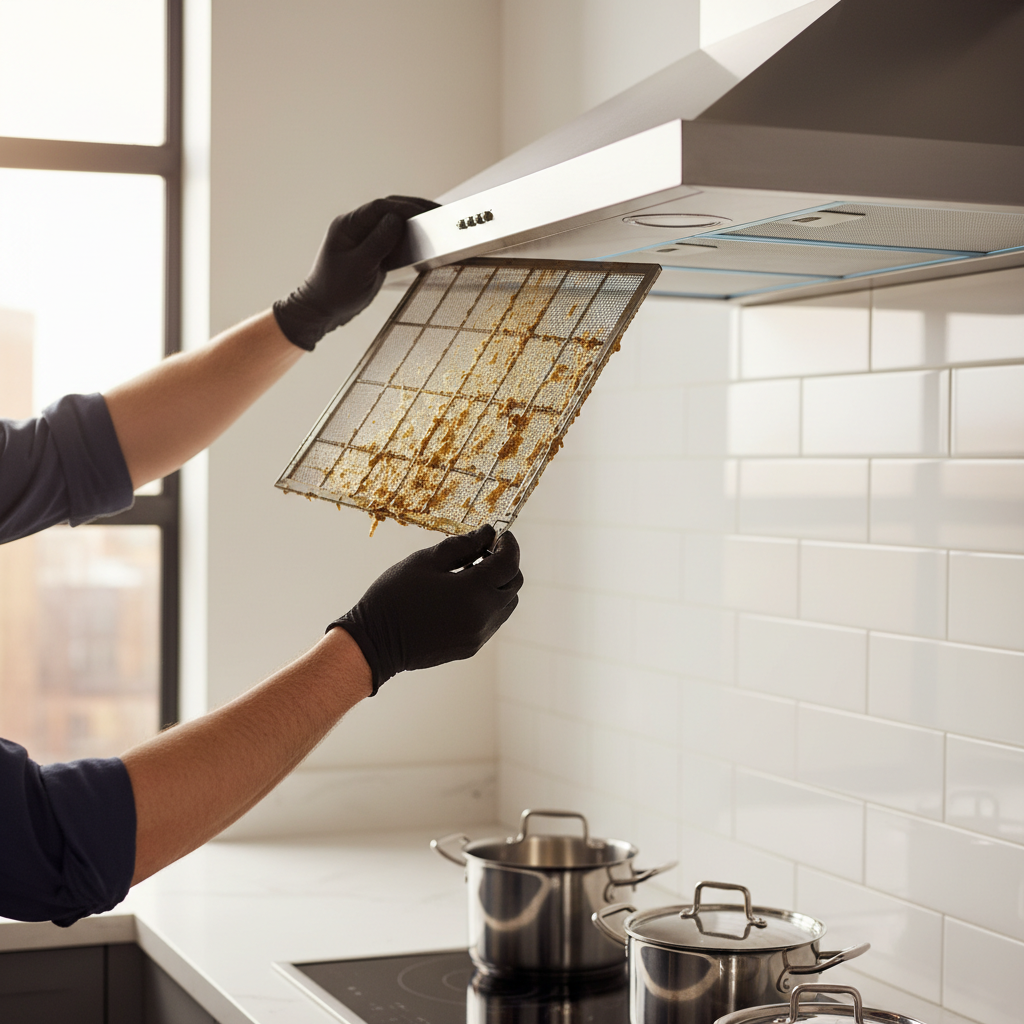
Grease isn’t just “oil in the air.” When cooking vapor cools down, it turns tacky and traps dust, smoke particles, and tiny food residues. That mix forms a sticky film that regular dish soap sometimes struggles to cut.
- High-heat cooking (stir-fry, searing, bacon) sends more aerosolized grease into the hood.
- Fan use habits matter, if the hood turns on late or switches off too early, more grease lands on the filter.
- Low airflow can be chicken-and-egg: a dirty filter reduces suction, which causes even more buildup.
- Wrong cleaning method can “bake on” grime, especially with very hot dishwasher cycles on certain finishes.
According to the U.S. Fire Administration, cooking is a leading cause of home fires in the United States, so keeping ventilation components reasonably clean is a sensible safety habit, not just a smell issue.
Know your filter type before you start (it changes everything)
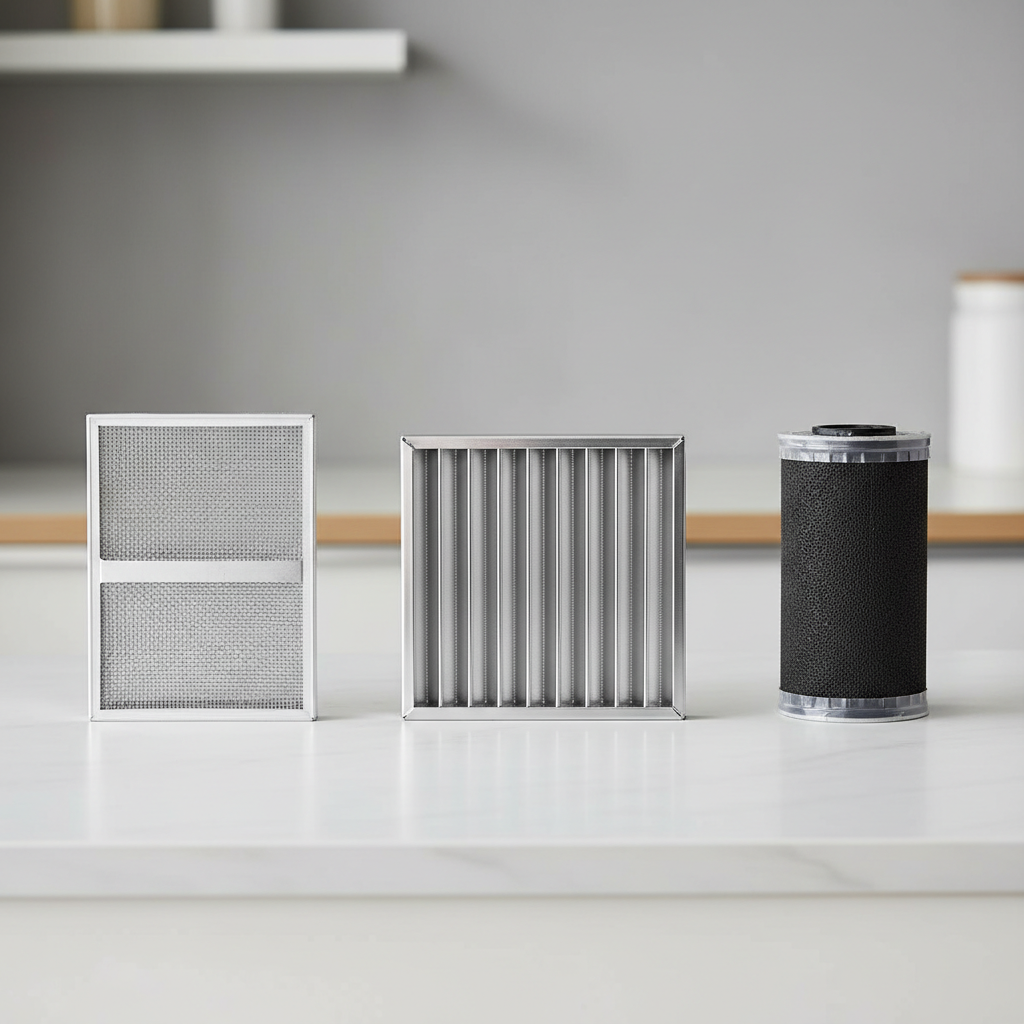
Before you soak anything, confirm what you’re cleaning. Many U.S. range hoods use aluminum mesh filters, but some use stainless baffle filters, and ductless hoods often include charcoal filters that you should not wash.
| Filter type | What it looks like | Can you wash it? | Fastest practical method |
|---|---|---|---|
| Aluminum mesh | Layered metal screen, lightweight | Usually yes | Hot soak + degreaser, then rinse |
| Stainless baffle | Thicker metal channels/slots | Usually yes | Hot soak, brush along channels |
| Charcoal/carbon (ductless) | Black pad or cartridge | No (commonly replace) | Replace per manual, wipe surrounding area |
| Hybrid/unknown | Model-specific | Depends | Check manual or manufacturer support |
If you’re unsure, look up the hood model number (often inside the hood or on the side panel) and confirm the filter material in the manual. It saves you from accidentally ruining a carbon insert.
A quick self-check: do you need a deep clean or just a refresh?
Not every filter needs a heavy-duty degrease. A quick check helps you pick the right intensity and avoid over-scrubbing.
- Light film: filter looks dull but you can still see clear openings, water runs through it quickly.
- Moderate grease: sticky feel, yellow-brown tint, airflow feels weaker, odors linger.
- Heavy buildup: visible gunk in corners, drip marks, fan sounds strained, filter feels “sealed.”
If you’re in the heavy camp, plan on a longer soak and a second round. This is also where people most want shortcuts, and where the wrong shortcut makes a bigger mess.
The fastest way to clean a metal filter (10–20 minutes of hands-on time)
This is the routine most people mean when they search how to clean kitchen exhaust fan filter easily, because it’s quick, repeatable, and doesn’t require specialty tools. Timing varies based on buildup, but the effort stays pretty manageable.
What you’ll need
- Sink or a shallow tub, large baking sheet, or dishpan
- Very hot tap water
- Degreasing dish soap or a kitchen-safe degreaser
- Soft brush or non-scratch scrub pad
- Old towel or drying rack
- Optional: baking soda for extra cutting power on stubborn film
Step-by-step
- Remove the filter carefully, note orientation so it goes back the same way.
- Pre-rinse with hot water to knock off loose grease, keep the filter angled so runoff drains away.
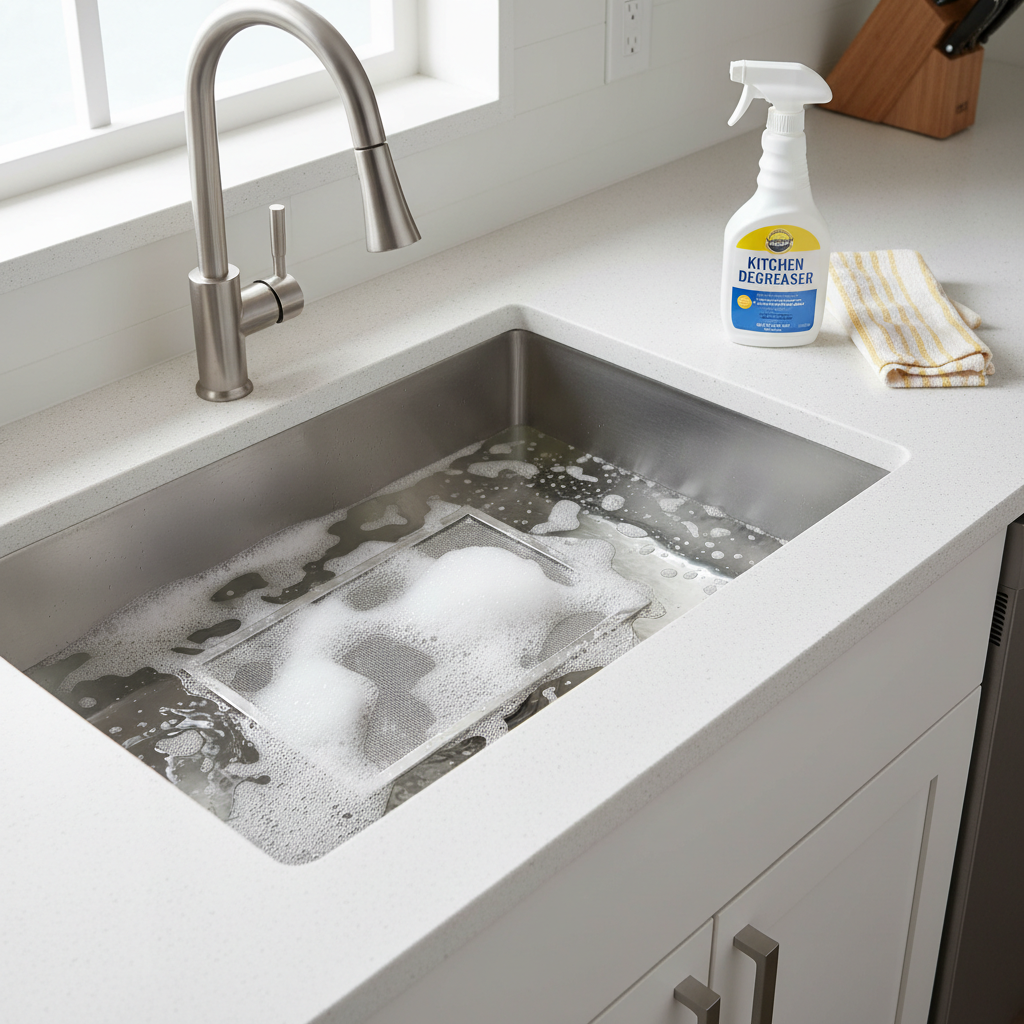
- Soak in hot water with dish soap or degreaser for 10–15 minutes. For baffle filters, make sure channels fill with solution.
- Agitate and lightly brush along mesh lines or baffle channels, pressure stays gentle so you don’t deform the metal.
- Rinse hot, then warm until water runs clear and no slick feel remains.
- Dry fully before reinstalling, to reduce any moisture-related odor or residue.
Quick key point: a soak does most of the work. The scrubbing part should feel like finishing, not fighting.
Stubborn grease? Here are 3 “upgrade” methods that usually work
If a normal soak leaves a tacky layer, don’t immediately reach for something harsh. Try one of these, and keep an eye on the filter’s finish, especially with aluminum.
1) Baking soda + hot water (good middle ground)
- Fill a tub with hot water, add a generous sprinkle of baking soda, then add dish soap.
- Soak 20–30 minutes, then brush lightly.
This combo often breaks the “old cooking oil” smell that plain soap leaves behind.
2) Degreaser dwell time (works when you’re impatient)
- Spray a kitchen-safe degreaser on the filter, let it sit 5–10 minutes.
- Then soak and rinse.
Letting product sit matters more than spraying more. If you rush, you’ll scrub harder, and that’s when mesh starts bending.
3) Dishwasher (convenient, but not always gentle)
Many metal filters can go in the dishwasher, but results vary by filter material and dishwasher settings. Aluminum can discolor in some machines, and heavily greasy filters may redeposit grime onto dishes later if you don’t run an empty cleaning cycle.
- Place filter on the bottom rack if it fits securely.
- Use a normal cycle, skip heated dry if you’re worried about finish changes.
- Run a quick rinse cycle afterward if the washer smells like grease.
When in doubt, check the manufacturer’s manual and play it safe.
Common mistakes that make cleaning slower (or damage the filter)
A lot of “hacks” look great in short videos and feel awful in a real kitchen. These are the ones that most often waste time.
- Using harsh abrasives that fray mesh or scratch stainless, which can make future grease cling more easily.
- Skipping the pre-rinse so you end up scrubbing grease that hot water would have loosened.
- Mixing cleaners blindly. Some combinations can release irritating fumes, if you’re unsure, don’t combine products.
- Reinstalling while damp, which can trap odor and attract dust.
- Ignoring the hood interior. A clean filter with a greasy fan shroud still smells when the heat kicks on.
Keep it easy next time: a realistic maintenance schedule
The easiest filter to clean is the one you never let get fully “sealed.” A simple routine keeps each session short.
- Heavy cooking (daily, high heat): rinse or soak about every 2–4 weeks.
- Typical home cooking: monthly or every other month often feels reasonable.
- Light use: every 2–3 months, but check for tackiness and odor.
Two small habits help more than people expect: run the fan a few minutes before cooking and keep it running for 5–10 minutes after. It reduces how much grease settles on the filter in the first place.
When you should stop and get help (or replace parts)
If you clean the filter and airflow still feels poor, the issue may sit deeper in the system: duct blockage, a failing fan motor, or a backdraft damper stuck closed. Some of that is DIY-friendly, some is not.
- Electrical smell, sparking, or unusual heat: turn the unit off and consider a qualified technician.
- Persistent smoke or weak suction even with clean filters: ductwork or blower may need inspection.
- Ductless hood with charcoal filters: if odors persist, replacement is often more effective than washing.
According to NFPA, good kitchen safety includes reducing grease buildup, if you suspect grease inside ducting, it may be worth consulting a licensed professional, especially in older homes.
Conclusion: the “quick clean” that actually stays quick
If you want how to clean kitchen exhaust fan filter easily to be a repeatable win, treat it like a short soak-and-rinse job, not a scrubbing contest. Identify the filter type, use hot water plus a degreaser, and let dwell time do the heavy lifting.
Tonight’s practical move is simple: pull the filter, do a 15-minute soak, and wipe the hood’s visible interior while it dries. Then set a reminder based on how you cook, your next clean should feel boring, and that’s the point.
FAQ
How do I know if my kitchen exhaust fan filter is aluminum or stainless steel?
Aluminum mesh filters are usually lighter and look like layered screen, stainless baffle filters tend to be heavier with defined channels. If you can find a model label inside the hood, the manual normally lists filter material.
Can I use vinegar to clean a greasy range hood filter?
Vinegar can help with some residue, but for thick cooking grease it’s often slower than a true degreaser. If you try it, use it as a follow-up wipe, not your main grease-cutting step, and avoid mixing it with other cleaners.
Is it safe to put a range hood filter in the dishwasher?
Many metal filters are dishwasher-safe, but aluminum may discolor and some dishwashers struggle with heavy grease. If you rely on the dishwasher, remove loose grease first and check the manufacturer’s guidance.
What’s the easiest way to clean a baffle filter without bending anything?
Soak it long enough that grease softens inside the channels, then brush along the channel direction with a soft brush. The bending usually happens when people press across the metal edges while the grease is still hard.
How often should I clean my kitchen exhaust fan filter if I fry food a lot?
In many households, every 2–4 weeks keeps buildup manageable. If you notice odor lingering or the fan gets louder, that’s your real-world signal to shorten the interval.
Why does my kitchen still smell after I cleaned the filter?
Often there’s grease on the hood interior, fan housing, or in ducting, so the smell returns when warm air hits those surfaces. Wiping reachable interior areas helps, and persistent issues may call for a deeper inspection.
Do charcoal filters in ductless range hoods need cleaning or replacement?
Most charcoal filters are designed for replacement, not washing, because washing can reduce adsorption performance. Check your manual for the correct schedule and part number.
If you’re trying to keep this routine truly low-effort, it helps to pick one method you’ll actually repeat, a tub soak with a reliable degreaser and a soft brush usually beats experimenting every time, and if you’d rather not guess your filter type, checking your hood’s model manual once saves a lot of trial and error later.