
How to organize spices in cabinet starts with one truth most people learn the annoying way, if you can’t see it, you’ll buy it again, then you’ll resent the cabinet every time you cook.
The good news is you don’t need a Pinterest-perfect setup or a full weekend project, you need a layout that fits how you cook, the cabinet you actually have, and the containers that won’t fight you every time you reach for cumin.
This guide walks through quick sorting, smart storage tools, a simple labeling approach, and a maintenance routine that keeps the system working after the first week.
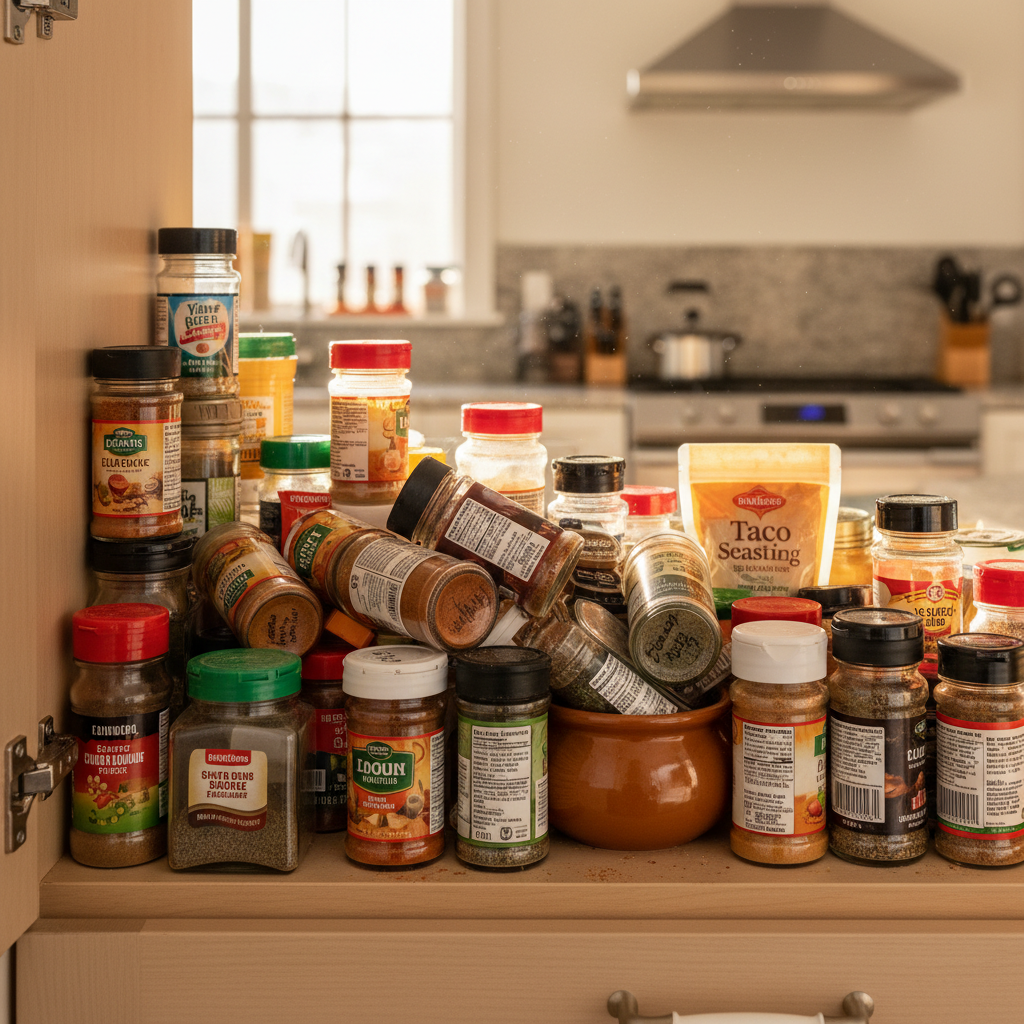
Why spice cabinets get messy (and what to fix first)
Most spice chaos comes from a few repeat patterns, and once you spot which one you have, the fix gets easier.
- Too many package shapes: tall grinders, short jars, flat packets, and big plastic shakers don’t stack neatly, so you end up with hidden back rows.
- No “home” for refills: refill bags drift into corners, then you forget what you already own.
- Single cabinet used for multiple jobs: spices mixed with baking supplies, oils, tea, or snacks usually means constant reshuffling.
- Labels face everywhere: even a decent collection feels unusable if names don’t face out consistently.
If you only do one thing today, pick one cabinet (or one shelf) and commit to spices living there, that decision alone removes a lot of friction.
A quick self-check: what type of spice user are you?
Before buying organizers, be honest about volume and habits, your “best” system depends on this.
- Weeknight cook: 15–30 core spices, you need speed and visibility more than category perfection.
- Recipe explorer: 30–60 spices plus blends, you need zoning and a way to prevent duplicates.
- Bulk buyer: larger containers and refills, you need a decanting plan and a refill zone.
- Shared kitchen: multiple cooks, you need simple rules, big labels, and minimal steps.
Also check your cabinet reality: shelf depth, height between shelves, and whether doors swing wide enough for racks, it sounds basic, but it prevents buying organizers that don’t fit.
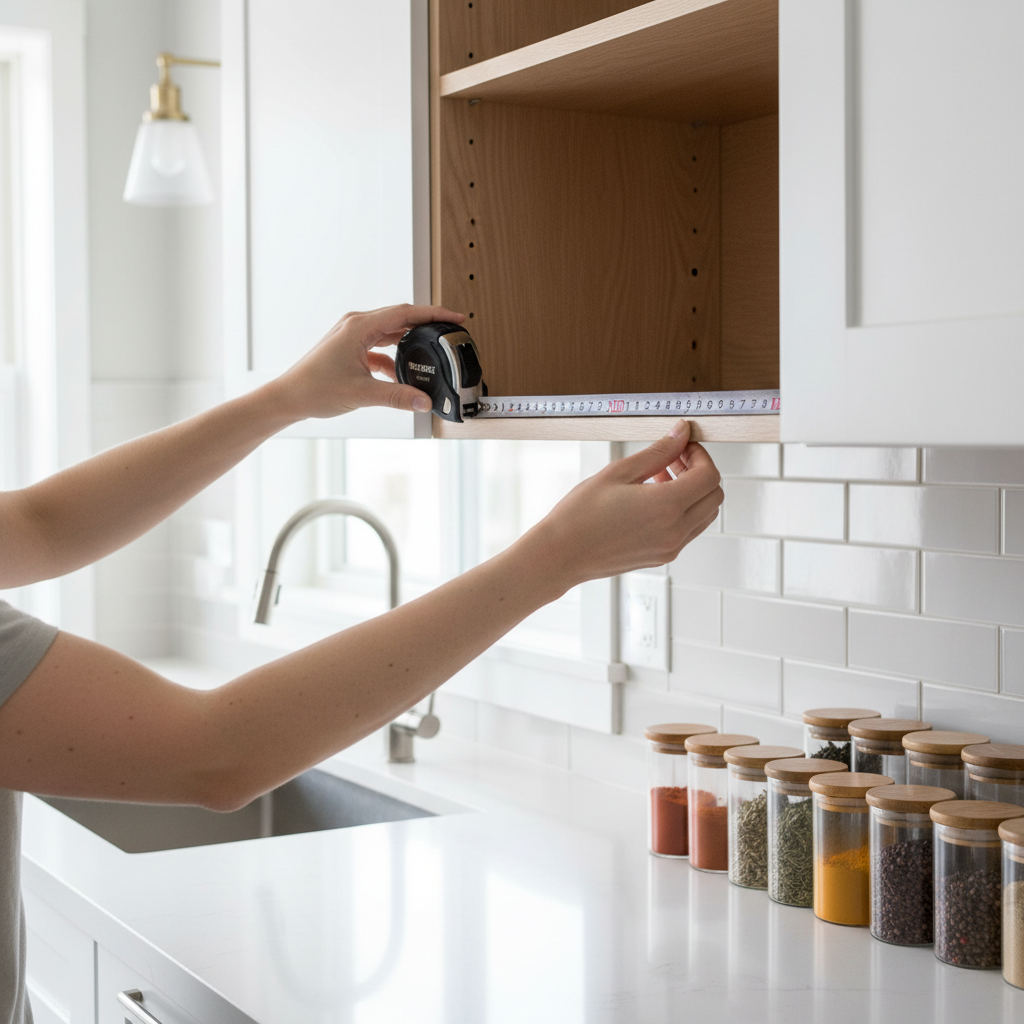
Choose a cabinet setup that matches your space
There are a few cabinet-friendly formats that work in most U.S. kitchens, the trick is choosing one that fits your cabinet dimensions and your tolerance for “extra steps.”
Tiered shelf risers (best for quick visibility)
If your cabinet is medium depth and you want to glance and grab, risers are usually the easiest. You’ll see more labels without pulling everything out.
- Works well with similar-height jars
- Less great with tall grinders unless your shelf height is generous
Pull-out bins or sliding trays (best for deep cabinets)
Deep cabinets hide spices in the back row, bins let you pull the whole “spice drawer” forward. It’s also friendly for mixed container shapes.
- Good for packets, jars, and odd sizes
- Look for sturdy handles and a low enough sidewall to read labels
Door-mounted racks (best when shelf space is tight)
Door racks can be great, but measure carefully. Many cabinets have shallow doors, and tall bottles may hit shelves when the door closes.
According to NFPA (National Fire Protection Association), combustibles should be kept away from cooking equipment and heat sources, so avoid placing spices right beside a stove area where heat and splatter are common, even if it feels convenient.
Step-by-step: how to organize spices in cabinet in under an hour
How to organize spices in cabinet quickly comes down to a short sequence, you’re building a system you can maintain on a tired Tuesday, not a museum display.
1) Do a fast purge without overthinking it
- Pull everything out onto the counter
- Toss obvious empties and clumped powders
- If you’re unsure about freshness, keep it in a “maybe” pile and decide later, smell and color often tell you enough for home cooking, but use judgment
2) Create three practical zones
- Daily drivers: salt, pepper, garlic powder, chili flakes, cinnamon, whatever you touch weekly
- Occasionals: specialty spices, less-used blends, holiday baking items
- Refills + overflow: bags, bulk containers, backup jars
Put daily drivers at eye level and front access, occasionals can live higher or on a riser, refills should never float loose behind jars.
3) Pick a sorting rule you’ll actually follow
- Alphabetical: fastest for shared households, less “chef-y,” more practical
- By cuisine: Mexican, Indian, Italian, etc., helpful if you cook in themes
- By function: baking, grilling, heat, herbs, great if you build recipes by “flavor job”
If you keep switching rules, pick alphabetical for the main shelf, then keep a small “baking” bin separately, that hybrid often sticks.
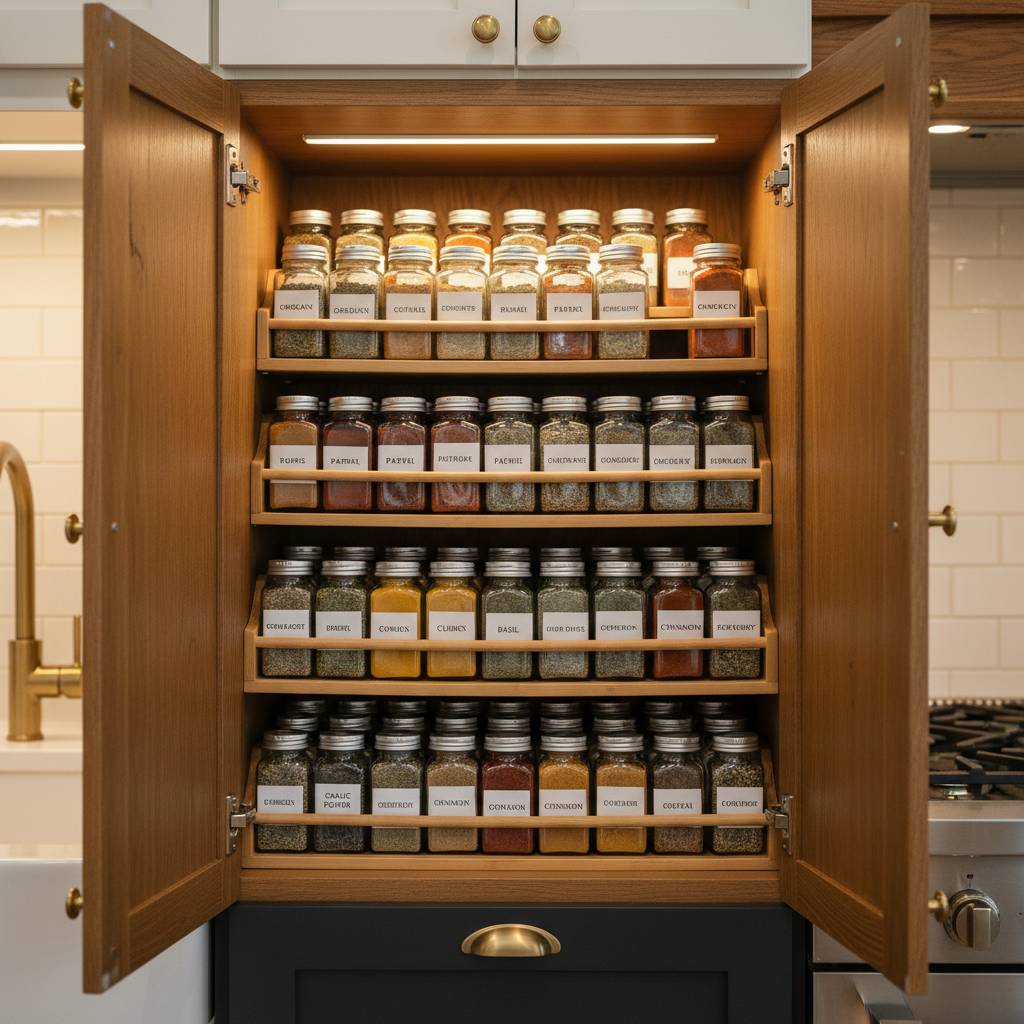
Containers, labels, and tools: what matters (and what’s optional)
You can organize with what you own, but a few upgrades reduce daily friction, which is what keeps the cabinet tidy long-term.
Containers: aim for “mostly uniform,” not perfect
- Match heights where possible, especially if you use risers
- Wide mouths make measuring easier and reduce spills
- Grinders can stay in original bottles, but consider grouping them in a bin so they don’t dominate the shelf
Labels: make them readable from your typical angle
- Front labels for shelves, top labels if you store spices in a bin and look down
- Use clear, high-contrast text, fancy script looks nice but slows you down
- Add purchase month/year if you’re the type who forgets, it’s optional but helpful
Tools that actually help
- Tiered risers for visibility
- 2–3 handled bins for packets, overflow, and “rarely used”
- Small funnel if you decant refills, it saves your patience
Optional, not required: matching jars for every spice, full custom label sets, complicated rotation rules. Those are nice, but many kitchens do fine without them.
A simple table: match your cabinet problem to the fix
If you’re stuck, this is the shortcut decision tool.
| Common issue | What you see | What usually works |
|---|---|---|
| Deep cabinet “black hole” | Duplicates, forgotten spices in back | Pull-out bin system, group by category |
| Too many jar sizes | Stacks fall over, labels hidden | Handled bins + top labels, or partial decanting |
| Not enough shelf height | Grinders hit the shelf above | Move tall items to a door rack or a separate bin |
| Shared household confusion | Things never go back in the right spot | Alphabetical main zone + clear “refill” bin |
| Too much “stuff” in one cabinet | Spices mixed with snacks and baking | Give spices one dedicated shelf, relocate extras |
Maintenance that keeps it organized (without constant redoing)
The cabinet doesn’t stay tidy because you tried harder, it stays tidy because the system has a small reset loop.
- One-minute reset: after cooking, put packets back into the refill bin, not behind jars “just for now.”
- Monthly glance: check for empties and add 2–3 items to your grocery list, not a full inventory.
- One-in, one-out for blends: if a new seasoning mix shows up, consider retiring one you don’t reach for.
- Keep a spare label sheet: if something gets decanted, label it immediately, unlabeled jars are where good systems go to die.
According to USDA (United States Department of Agriculture), storing foods in cool, dry places supports quality and helps prevent spoilage issues, so keep spices away from humidity hotspots like right above the dishwasher or next to a kettle when possible.
Common mistakes to avoid
- Buying organizers before measuring: a half-inch mismatch can make a rack unusable.
- Over-decanting on day one: decant your daily drivers first, then see if you even care about the rest.
- Storing spices by “vibes”: it feels intuitive until you’re hunting for oregano with a pan sizzling.
- Keeping everything forever: some spices hang around for years because they’re small, but old, dusty flavors can make food taste flat.
Wrap-up: a cabinet you can cook from
If your cabinet feels out of control, focus on visibility, a clear refill zone, and one sorting rule, that combo solves most of the real-world frustration.
Pick one improvement you can do today, measure your shelf and add a riser, or set up two bins and label the tops, then let the system prove itself for a week before you upgrade anything.
FAQ
How do I organize spices in a cabinet without buying anything?
Start by grouping into daily drivers, occasionals, and refills, then use small boxes or recycled containers as bins. Face labels forward and keep refills together so they stop floating around.
Is alphabetical or by category better for spices?
Alphabetical tends to work better for most households because it’s predictable, category sorting can be faster if you cook by “baking vs savory” or by cuisine, but it breaks if other people don’t share your logic.
What’s the easiest way to handle spice packets?
Packets behave better in a handled bin with top labels on the packets or clip-on labels, trying to stack them behind jars usually turns into a mess within days.
Should I store spices on the cabinet door?
You can, as long as the door closes without bottles hitting shelves. It also helps to avoid areas near heat and steam, because temperature swings can reduce quality over time.
Do matching spice jars actually help, or is it just aesthetics?
They can help if your main problem is mixed heights and unreadable labels, but you don’t need to replace everything. Many people get most of the benefit by standardizing just the top 15–20 spices.
How often should I replace spices?
It varies by spice type and storage conditions, smell and color are practical signals at home. If you have health or safety concerns about pantry items, it’s reasonable to be conservative and discard questionable products, and if you’re unsure, consider checking guidance from reputable food safety sources or asking a professional.
What if I have a tiny cabinet and a lot of spices?
Use a hybrid, keep daily drivers in the cabinet and move overflow to a labeled bin in a pantry or drawer. Trying to cram everything into one small shelf usually makes the “grab and go” part fail.
If you’re trying to make how to organize spices in cabinet feel effortless, a small starter kit often helps, one riser plus two sturdy bins and a simple label set can be enough to get control without turning this into a full kitchen overhaul.