
Best storage bins for closet organization usually come down to a simple match: your closet’s layout, what you store, and how often you need to grab it. Buy the wrong style, and you get sagging fabric cubes, cracked lids, or stacks you dread opening.
If you want a closet that stays organized past the first weekend, bins need to do more than “hold stuff.” They need to stack safely, label cleanly, fit your shelves, and make your everyday routines easier, not fussier.
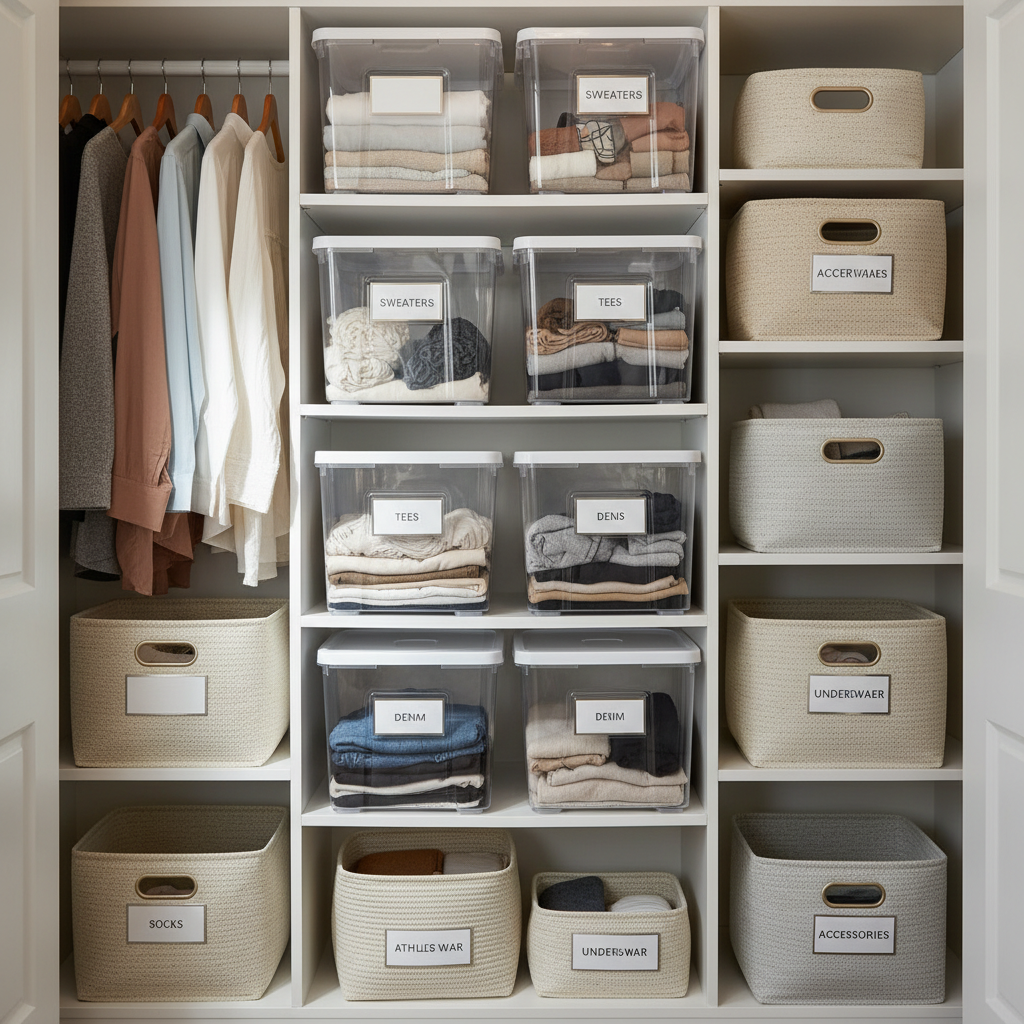
Below, I’ll walk through which bin types make sense for real closets, a quick sizing checklist, and a comparison table you can use before you click “add to cart.” I’ll also flag the common mistakes that waste money, like choosing a lid that blocks access or a bin depth that makes shelves unusable.
What actually makes a storage bin “best” for a closet
Closets have a specific problem: they’re shallow enough to waste depth, and tall enough to encourage unstable stacks. The “best” bin solves those two issues while fitting your habits.
- Fits your shelf depth, so you don’t lose space behind the bin or fight a bin that sticks out.
- Access style matches frequency, open-top or front-access for daily items, lidded bins for seasonal storage.
- Stacking strength, especially for plastic bins with lids that lock or seat firmly.
- Label-friendly, flat fronts, built-in label windows, or surfaces that take adhesive labels.
- Material matches the environment, breathable fabric for linens, sealed plastic for basements or dusty closets.
According to the U.S. Consumer Product Safety Commission (CPSC), tip-overs can be a home hazard, especially with children around. In closet terms, that translates to: avoid top-heavy stacks and unstable towers when a safer layout is possible.
Pick the right bin type for what you’re storing
Most people don’t need one “perfect” bin, they need two or three types used on purpose. Here are the closet workhorses and where they shine.
Clear plastic bins (with secure lids)
Great for seasonal clothes, holiday decor, memorabilia, and anything you want visible without opening. If you’re building vertical stacks, clear plastic tends to hold up better than fabric.
- Look for reinforced lids and a flat top for stable stacking.
- If dust is an issue, choose tight-sealing lids rather than loose-fit covers.
Fabric cubes and soft-sided bins
Perfect for sweaters, kids’ clothing, accessories, and “category storage” on open shelving. Fabric looks softer and often blends into bedroom decor better, but it’s not a great choice for heavy stacking.
- Choose stiff sides (cardboard or plastic panels) to prevent sagging.
- Skip flimsy handles if you’ll pull them out daily.
Woven baskets (seagrass, hyacinth, rope)
Baskets are the style pick, and they’re surprisingly functional for grab-and-go categories like scarves, hats, workout gear, or guest toiletries. They’re usually not dust-tight, so they’re better for items you cycle through.
- Use liners if the weave might snag delicate fabrics.
- Measure carefully, baskets vary more than “standard” plastic bins.
Front-access stackable bins
If your closet forces you to stack bins, front-access designs reduce the “pull out everything” problem. This is one of the most practical upgrades for best storage bins for closet organization when shelf height is limited.
- Check that the door opens fully on your shelf depth.
- Verify the hinge and latch feel sturdy, weak doors break first.
Under-shelf or under-bed style bins for closets
In reach-in closets, the floor area under hanging clothes is often wasted. Low-profile bins can hold shoes, handbags, or off-season items without blocking access.
- Look for low-friction bottoms or wheels if you’ll slide them often.
- Breathable fabric is helpful for shoes, sealed plastic can trap odors.
Quick sizing checklist before you buy anything
Most “bin regret” comes from ignoring two measurements: shelf depth and usable height. Do this once and you’ll stop buying bins that almost fit.
- Measure shelf depth: many closets land around 12–16 inches, but don’t guess.
- Measure shelf height: include room for your hand to grab a bin, not just the bin height.
- Pick a bin width system: choose one or two widths that tile across your shelf without odd gaps.
- Decide label placement: front-facing labels beat top labels for stacked or high shelves.
- Test weight: if you’ll store books, tools, or bulky gear, avoid thin plastic and soft fabric.
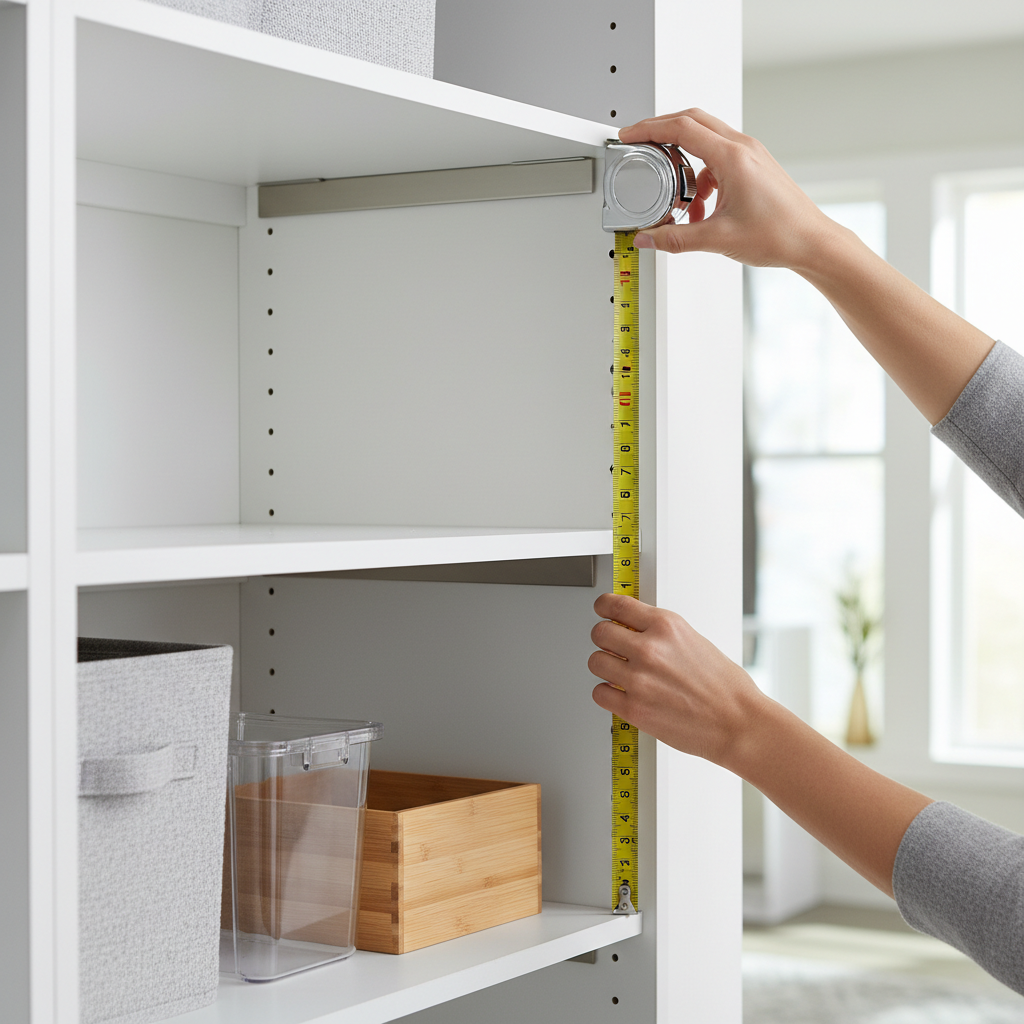
Key point: when in doubt, choose slightly shorter bins for high shelves. You’ll lose a bit of capacity, but you’ll gain day-to-day access, which is what keeps closets organized.
Comparison table: common closet bin options
This table won’t pick a brand for you, but it will help you pick a type that fits your closet and tolerance for maintenance.
| Bin type | Best for | Pros | Watch-outs |
|---|---|---|---|
| Clear plastic with locking lid | Seasonal clothing, keepsakes | Stackable, visible contents, dust protection | Cracking in cold garages, awkward access when stacked |
| Fabric cube (open-top) | Daily categories, kids’ items | Lightweight, easy pull-out, looks clean | Sagging sides, weak handles, not for heavy stacking |
| Woven basket | Accessories, linens, quick drop zones | Decor-friendly, flexible shapes | Dust, snag risk, inconsistent sizing |
| Front-access stackable bin | Stacked shelves, tight spaces | No unstacking to reach items, good visibility | Door hinges can fail, needs clearance to open |
| Low-profile under-hang bin | Shoes, bags, overflow storage | Uses dead space, easy slide access | Can block vacuuming, wheels add height |
How to build a closet bin system that stays organized
Buying bins is the easy part, the system is what sticks. Here’s a practical way to set up best storage bins for closet organization without over-planning.
1) Sort by “how often,” not by “what it is”
Daily items belong at eye level, weekly items can go higher or lower, seasonal items go to the top shelf or the deepest corners. This one change usually reduces messy piles.
2) Use fewer bin sizes than you think
Two sizes cover most closets: a medium bin for folded items and accessories, and a larger lidded bin for seasonal storage. More sizes look flexible, but they create gaps and visual clutter.
3) Create one “open bin” for in-between items
There’s always stuff that doesn’t know where to go yet, returns, dry cleaning, that belt you’re not sure about. Give it a home so it doesn’t become a chair pile.
4) Label for your future self
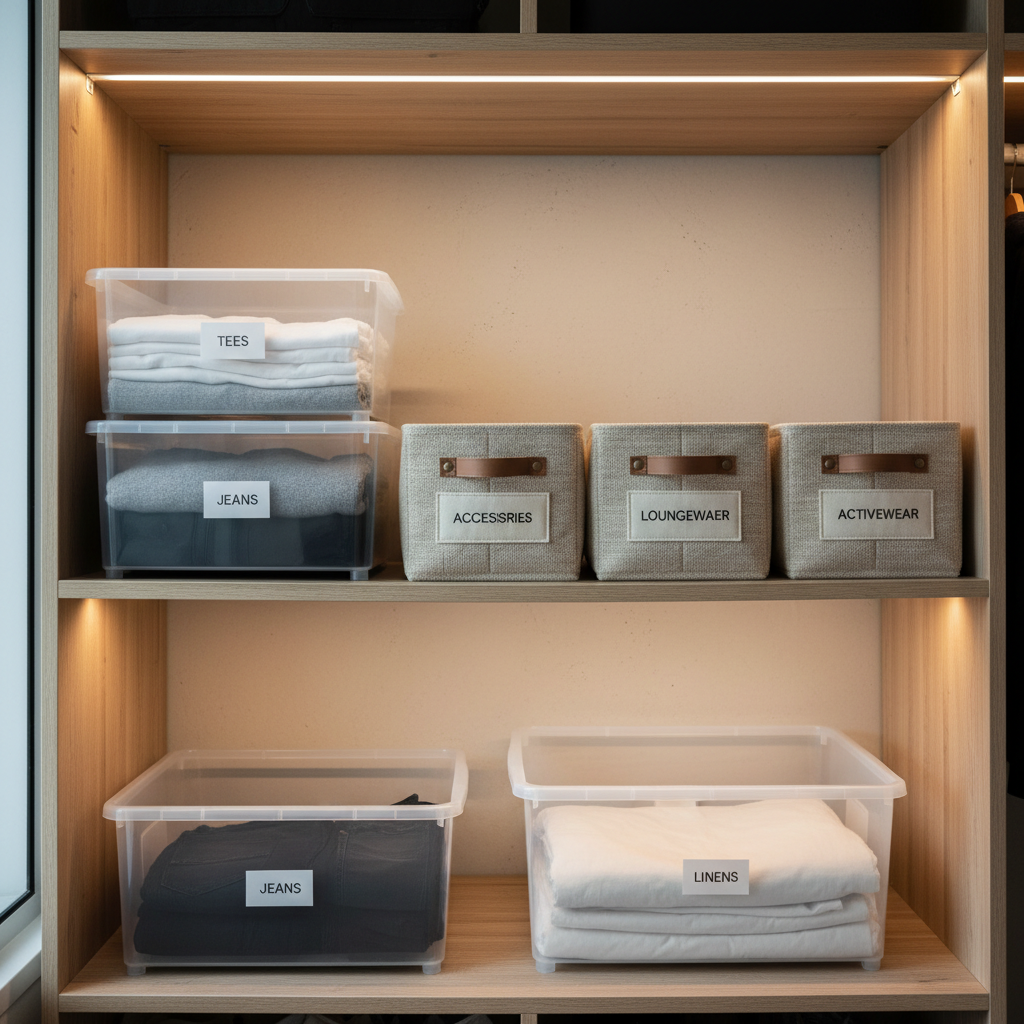
Use short labels that match how you search: “Gym,” “Work cables,” “Winter hats,” not “Misc.” If you’re storing sentimental items, add a date or season.
Common mistakes (and the fixes that actually help)
- Mistake: buying bins first, then trying to force categories.
Fix: do a 10-minute rough sort, then buy to match real piles. - Mistake: tall stacks of heavy bins on high shelves.
Fix: keep heavy items lower, use smaller bins up top, and consider a step stool if needed. - Mistake: lids that slow you down, so you stop using the bins.
Fix: use open bins for daily items, reserve lids for seasonal or dusty storage. - Mistake: “see-through solves everything.”
Fix: clear bins help, but labels still matter when you have multiples that look similar.
According to the National Association of Productivity & Organizing Professionals (NAPO), organizing systems tend to work better when they’re easy to maintain and match routines, not when they’re simply aesthetically pleasing. In practice, that usually means designing for speed and access.
Safety and material notes worth knowing
Closets look harmless, but heavy bins plus high shelves can be a bad combo. If you have kids, pets, or a narrow reach-in closet, stability matters.
- Ventilation: for shoes and damp gear, breathable bins reduce musty smells.
- Off-gassing: some plastic bins may smell at first; airing them out can help, and if you’re sensitive, consider consulting a professional about material choices in your home environment.
- Stacking: if a stack wobbles when you touch it, it’s not a “later” fix, it’s a now fix.
- Pest risk: in garages or basements, sealed bins often work better than fabric.
Conclusion: the simplest way to choose the right bins
The best closet setups don’t rely on perfect willpower, they rely on bins that make the right action the easy action. Start by measuring shelves, pick one daily-access bin style and one seasonal lidded style, then label like you actually live there.
If you want one next step today, choose a single shelf and upgrade it with matching bins and clear labels. Once that shelf feels effortless for a week, copy the pattern to the rest of the closet.
FAQ
What are the best storage bins for closet organization in a small apartment?
Front-access stackable bins and medium fabric cubes usually work well because they reduce the need to unstack and they fit shallow shelves. In tight spaces, access matters more than maximum capacity.
Are clear bins always better than opaque bins for closets?
Clear bins help you see contents fast, but they can look visually busy. If your closet is open or part of a bedroom, opaque bins plus good labels can feel calmer while staying functional.
What size bins fit standard closet shelves?
Many reach-in closet shelves are roughly 12–16 inches deep, but it varies a lot by builder and system. Measure your depth and pick a bin that leaves a little finger space in front for grabbing.
Should I use lidded bins for everyday clothes?
Usually no, unless dust is a major issue or you’re storing rarely used items. For daily use, lids add friction, and friction is what slowly breaks organizing systems.
How do I keep stacked bins from falling?
Use bins designed for stacking, keep heavier items lower, and avoid stacking higher than you can safely reach. If stability still feels questionable, switch to fewer stacks and more side-by-side bins.
Are fabric storage bins okay for long-term storage?
They can be, but they’re less protective against dust and pests than sealed plastic. For long-term storage in garages, basements, or older homes, sealed bins are often a safer bet.
What’s the easiest labeling approach that doesn’t look messy?
Pick one label style and place it in the same spot on every bin front. Short category names beat detailed inventories, and you can always keep a phone note for deeper lists.
Key takeaways
- Measure shelf depth and usable height before choosing bin sizes.
- Match access style to frequency, open bins for daily items, lidded bins for seasonal.
- Limit bin sizes to reduce wasted space and visual clutter.
- Label the front so you can find items without pulling everything out.
If you’re trying to choose best storage bins for closet organization and you want a faster path, bring your shelf measurements and a short list of what you store most often, then build a two-bin system around that. It’s less exciting than a full makeover, but it tends to hold up in real life.