
Walk in closet organization ideas work best when they start with how you actually get dressed, not how a perfect closet looks on Pinterest. If your closet feels “big but still messy,” it’s usually because storage is mismatched to your mix of hanging items, folded items, shoes, and the random in-between stuff that sneaks in.
The payoff is real though: a walk-in closet that stays organized cuts decision fatigue, reduces the “where did I put that” spiral, and makes laundry day less painful. The key is setting up zones that match your routine, then using a few repeatable rules so it doesn’t unravel after two weeks.
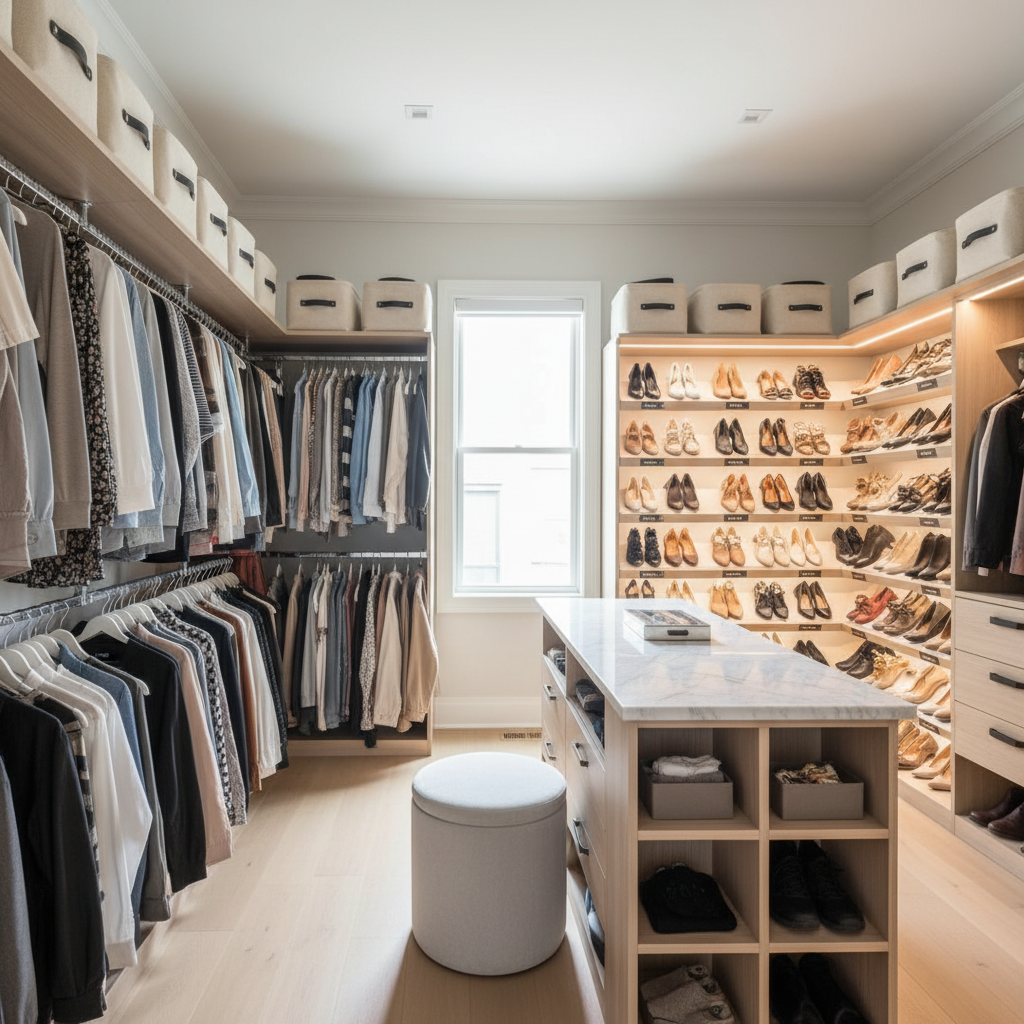
One more thing before you buy anything: many “organization” problems are really visibility problems. If you can’t see categories at a glance, you’ll overbuy, misplace, and pile. This guide focuses on practical setups for 2026 trends like modular systems and better lighting, but keeps the advice grounded in what’s easiest to maintain.
Why walk-in closets get messy (even when they’re large)
Most clutter comes from a few predictable friction points. Fix those, and the closet starts behaving.
- Too much single-height hanging space: long dresses take over, while tees and jackets fight for the same bar.
- No “landing zone”: bags, dry cleaning, returns, and tomorrow’s outfit end up on the floor.
- Wrong container mix: deep bins hide items, tiny boxes overflow, open shelves turn into leaning towers.
- Seasonal overlap: when winter coats live next to tank tops year-round, daily categories blur.
- Lighting is weak: dim corners cause “out of sight, out of mind” clutter.
According to the National Association of Professional Organizers (NAPO)... good organizing is less about buying products and more about creating systems you can repeat. In a closet, that usually means categories, limits, and easy resets.
A quick self-check: what kind of closet problem do you have?
Before you reorganize, identify your dominant pattern. Most people have one primary issue and one secondary issue.
- You have space, but can’t find items: visibility and category layout problem.
- You run out of hang space: wrong ratio of double-hang vs long-hang vs shelving.
- Shoes take over: storage type problem, usually no vertical shoe plan.
- It looks good, then collapses: reset routine problem, not a storage shortage.
- It’s a dumping ground: no “inbox” zone for temporary items.
If you’re not sure, do a two-day observation: notice what hits the floor, what lands on a shelf, and what you avoid putting away. That’s your fix list.
2026 layout ideas that actually make daily use easier
These walk in closet organization ideas are trending because they’re modular and routine-friendly, but they still work with older closets and rentals if you adapt them.
1) Build zones around “get-ready flow”
Put the most-used categories closest to your entry and mirror, then push occasional items farther back. It sounds obvious, but most closets are organized like a store, not like a morning.
- Daily tops and work pants at eye level
- Gym items in a single grab-and-go area
- Accessories near the mirror, not across the closet
2) Switch to a better hanging mix (double-hang wins for most)
Many closets have too much “long hang” space. If you don’t own a lot of dresses or long coats, converting part of that to double-hang can free up space without expanding anything.
3) Add an intentional “inbox” shelf or basket
This is the most underrated upgrade. Give returns, tailoring, dry cleaning, and “not sure yet” items one contained home so they stop multiplying on the floor.
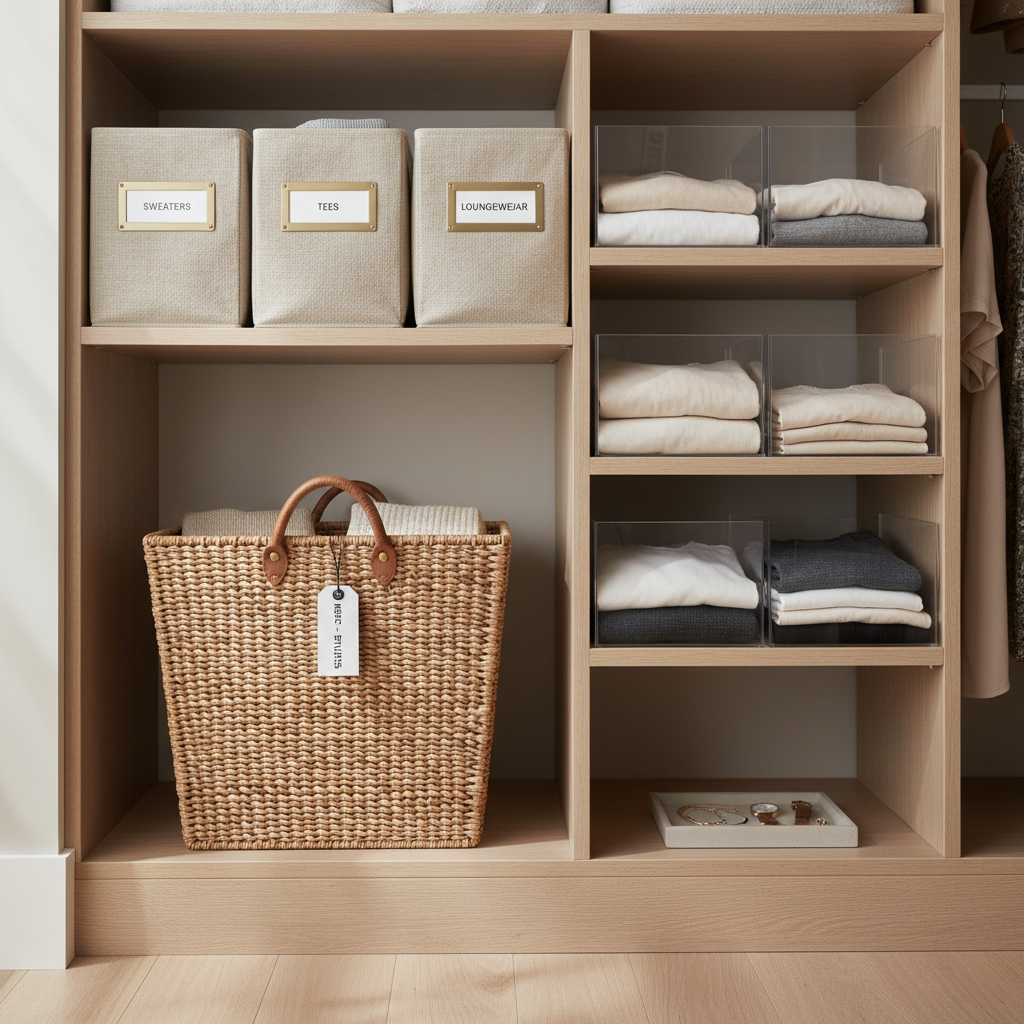
When you’re choosing storage, prioritize “open or shallow” for daily items, and “closed or deep” for seasonal or rarely used items. People often do the opposite and then wonder why it’s hard to maintain.
Storage solutions by category (what to buy, what to skip)
The fastest way to waste money is buying a matching set before you know what categories need containment. Go category by category, and buy in small batches.
Clothes (hanging + folded)
- Use uniform hangers to reduce snagging and visual noise, velvet or slim plastic for most items.
- Fold by file method in drawers or bins so you see every item from above.
- Skip extra-deep shelves for tees and sweaters unless you add shelf dividers.
Shoes
- For everyday shoes, use vertical racks or angled shelves so pairs stay visible.
- Clear shoe boxes look tidy, but only if you label them and commit to returning shoes.
- If dust is an issue, closed cabinets may work better than open shelving.
Accessories (belts, bags, jewelry)
- Belts and scarves do well on hooks or a pull-out rack near outfits.
- Handbags stay in shape with shelf spacing and simple inserts, tissue also works in a pinch.
- Jewelry: small trays beat tall stands if you want fast resets.
“Life stuff” (luggage, tools, linens)
If your closet doubles as household storage, accept it and design for it. Put bulky items up high, and use labeled bins so you’re not digging through mystery piles.
A practical plan: reorganize in one weekend (without overthinking)
These steps are simple, but the order matters. If you skip the measuring and jump to containers, you’ll redo it.
- Step 1: Pull everything off the floor and clear the “dump zone” first so you can see the real space.
- Step 2: Sort into rough categories (work, casual, gym, formal, shoes, accessories, seasonal).
- Step 3: Decide your prime real estate: eye-level and nearest sections go to daily categories.
- Step 4: Set limits: one shelf for sweaters, one bin for swim, one rack for everyday shoes.
- Step 5: Add labels you’ll actually read: short, obvious names beat cute labels.
If you live with a partner, agree on shared rules upfront, especially for “temporary” items. Otherwise your new system turns into a silent argument.
Closet lighting, mirrors, and small upgrades that feel high-end
Some upgrades are more about usability than aesthetics, but they end up making the closet look better too.
- Lighting: LED strips under shelves or in dark corners improve visibility. For electrical work, it’s usually safer to consult a licensed electrician.
- Mirror placement: a full-length mirror near accessories reduces back-and-forth trips.
- Drawer inserts: cheap inserts prevent “junk drawer” creep in a closet context.
- Shelf dividers: small thing, huge impact for stacks that slump.
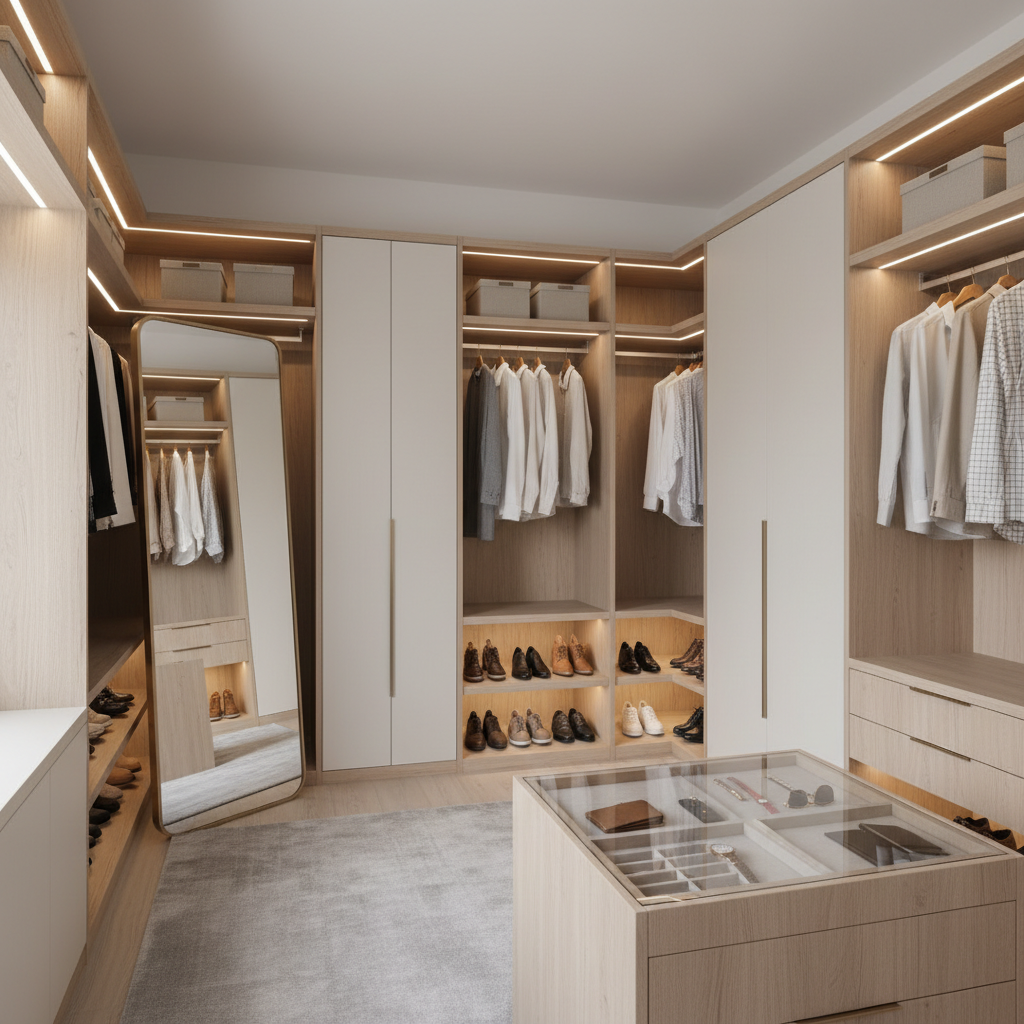
If you’re renting, focus on plug-in lighting, freestanding mirrors, and tension-rod add-ons. You can still get the “bright and easy” effect without permanent changes.
Common mistakes to avoid (the stuff that quietly ruins the system)
- Organizing by color first: it looks nice, but category-first is easier to maintain. You can color-sort within a category later.
- Buying containers before measuring: a classic way to end up with expensive, unusable boxes.
- Making shelves too deep: depth creates hidden stacks and forgotten items.
- No reset routine: even great walk in closet organization ideas need a 5-minute weekly reset.
A good rule: if putting something away takes more than one decision, you’ll postpone it. Reduce steps, reduce clutter.
At-a-glance guide: match ideas to your closet constraints
Use this table to pick the upgrades that make sense for your space and habits.
| Constraint | What usually helps | What to skip |
|---|---|---|
| Not enough hanging space | Double-hang conversion, slim hangers, seasonal rotation | More bins that steal hanging room |
| Too many shoes | Vertical rack, angled shelves, “everyday” shoe cap | Floor piles, deep baskets |
| Closet stays messy | Inbox basket, labels, weekly reset rule | Overly complex drawer dividers |
| Low visibility / dark corners | LED shelf lighting, lighter bins, open-front organizers | Opaque deep boxes for daily items |
| Shared closet | Defined zones, duplicate hooks, clear boundaries | One “misc” shelf for both people |
Key takeaways (save this before you start)
- Organize for your routine, not for a photo.
- Fix visibility with shallow storage and clear categories.
- Give temporary items a home so the floor stays clear.
- Set limits by shelf, bin, and rack so categories don’t spread.
- Do a weekly 5-minute reset and the system lasts.
Conclusion: make it easy to put things back
The best walk in closet organization ideas in 2026 still come down to one principle: make “putting it away” the path of least resistance. Pick a layout that matches how you dress, create a couple of containment zones for problem categories, then keep the reset simple.
If you want a low-effort next step, start with just two upgrades this week: add an inbox basket and adjust one section of hanging space to better match what you wear most days. Small changes are usually what make the whole closet finally feel under control.
FAQ
What are the most realistic walk in closet organization ideas for busy mornings?
Go with category zones near the entrance, a dedicated accessories spot by the mirror, and an “inbox” basket for temporary items. Busy mornings need fewer decisions, not more containers.
How do I organize a walk-in closet with lots of shoes but limited shelving?
Use vertical shoe racks, over-the-door organizers, or angled shelves that show the toe of each shoe. Deep bins tend to hide pairs and create duplicates because you forget what you own.
Is it better to use clear bins or fabric bins in a walk-in closet?
Clear bins help when you forget what you own, fabric bins look calmer and hide visual clutter. Many closets do best with both: clear for seasonal storage, fabric for daily categories that don’t need constant viewing.
How should I set up a shared walk-in closet without constant mess?
Define zones for each person, then agree on one shared “temporary” spot. The system breaks when both people use the same undefined shelf for random items.
What’s a simple weekly reset routine that keeps closets organized?
Put away the inbox items, rehang stray pieces, return shoes to their home, and do a quick scan for anything on the floor. Five minutes is realistic; an hour-long “reorg” usually won’t happen weekly.
Do closet systems make sense, or can I organize without one?
You can organize without a full system if you have basic hanging space and shelves, but modular add-ons help when the built-in layout doesn’t match your wardrobe. If you’re considering a custom install, measure first and plan categories before choosing components.
How can I improve closet lighting safely?
Plug-in LED options and motion-sensor lights are common low-risk upgrades. For anything hardwired or if you’re unsure about load and placement, it’s smart to consult a licensed electrician.
If you’re trying a few walk in closet organization ideas but keep getting stuck at “what should go where,” a simple zone plan and a short shopping list can save a lot of trial-and-error, especially if you want results without turning your weekend into a full remodel.