
Best lightweight vacuum cleaners for apartments are the ones that match your floors, storage limits, and noise tolerance, not just the lightest option on the shelf. In a small space, a vacuum that’s easy to grab and stash often gets used more, which matters more than having a powerhouse that lives in a closet.
Apartments also come with a few very real constraints: tighter corners, mixed flooring, neighbors on the other side of the wall, and usually less room for extra tools. The “wrong” vacuum isn’t just annoying, it can turn quick cleanups into a whole project.
This guide helps you pick the right style, avoid common feature traps, and narrow down choices based on your layout and cleaning habits. You’ll also get a quick comparison table and a practical checklist you can use before buying.
What “lightweight” really means for apartment living
In listings, “lightweight” can mean anything, so it helps to translate it into apartment reality. Most people mean a vacuum that can be carried one-handed, stored without a fight, and used without reconfiguring your whole home.
- Weight (in your hand, not just on paper): A 12 lb upright can feel heavier than a 10 lb stick if the balance is awkward.
- Storage footprint: A slim stick vacuum might fit behind a door, while a compact canister still needs hose space.
- Quick start factor: If it takes 3 minutes to assemble tools, it won’t be the “daily crumb” vacuum.
- Noise expectations: Apartments amplify sound, and late-night cleaning can become a neighbor issue.
Key takeaway: the best lightweight vacuum cleaners for apartments feel light in your daily routine, not only in spec sheets.
Apartment-specific buying checklist (use this before you shop)
If you want a fast way to self-sort options, this is it. Answer these and you’ll usually know which category fits.
- Your floors: mostly carpet, mostly hard floors, or mixed?
- Pets: shedding, litter scatter, or neither?
- Square footage: studio/1BR quick passes, or larger spaces where runtime and bin size matter?
- Storage: coat closet, utility closet, or basically none?
- Noise sensitivity: thin walls, baby naps, work-from-home calls?
- Allergies/asthma: you may benefit from better filtration and sealed airflow.
According to EPA, indoor air can contain a mix of particles and pollutants, so when allergies are in the picture, filtration and maintenance tend to matter more than people expect.
Types of lightweight vacuums: which one fits an apartment best?
Most apartment shoppers end up choosing between three styles. Each can be “lightweight,” but the day-to-day experience differs a lot.
Stick vacuums (cordless or corded)
These are popular for a reason: slim storage, easy grab-and-go, great for mixed floors. Cordless models add convenience, while corded models avoid battery anxiety.
- Best for: hard floors, area rugs, quick cleanups, small closets
- Watch for: small dust bins, reduced power on thick carpet, battery replacement costs over time
Compact uprights
If you have more carpet, a compact upright can be a better “main vacuum” while still staying manageable in weight.
- Best for: carpet-heavy apartments, deeper cleaning sessions
- Watch for: bulkier storage, maneuvering around tight furniture
Canister vacuums (compact)
Canisters often feel lighter in-hand because the motor rolls on the floor, and you move only the wand. They can also do well on hard floors and under furniture.
- Best for: hard floors, under-bed cleaning, tighter tool work
- Watch for: hose management, storage for attachments
Quick comparison table: match your apartment to the right setup
This table won’t pick a brand for you, but it helps you choose the form factor that usually works best in common apartment scenarios.
| Apartment scenario | Recommended type | Why it tends to work | Feature to prioritize |
|---|---|---|---|
| Studio, mostly hard floors | Stick (cordless) | Fast daily cleanups, easy storage | Soft roller / hard-floor head |
| 1BR mixed floors, area rugs | Stick (corded) or compact canister | Consistent power, flexible tools | Brush roll control + crevice tool |
| Carpet-heavy apartment | Compact upright | Better agitation for carpet fibers | Strong brush roll + easy height adjust |
| Pets (shedding + corners) | Stick or canister with tools | Tools matter as much as suction | Mini motorized tool + anti-tangle |
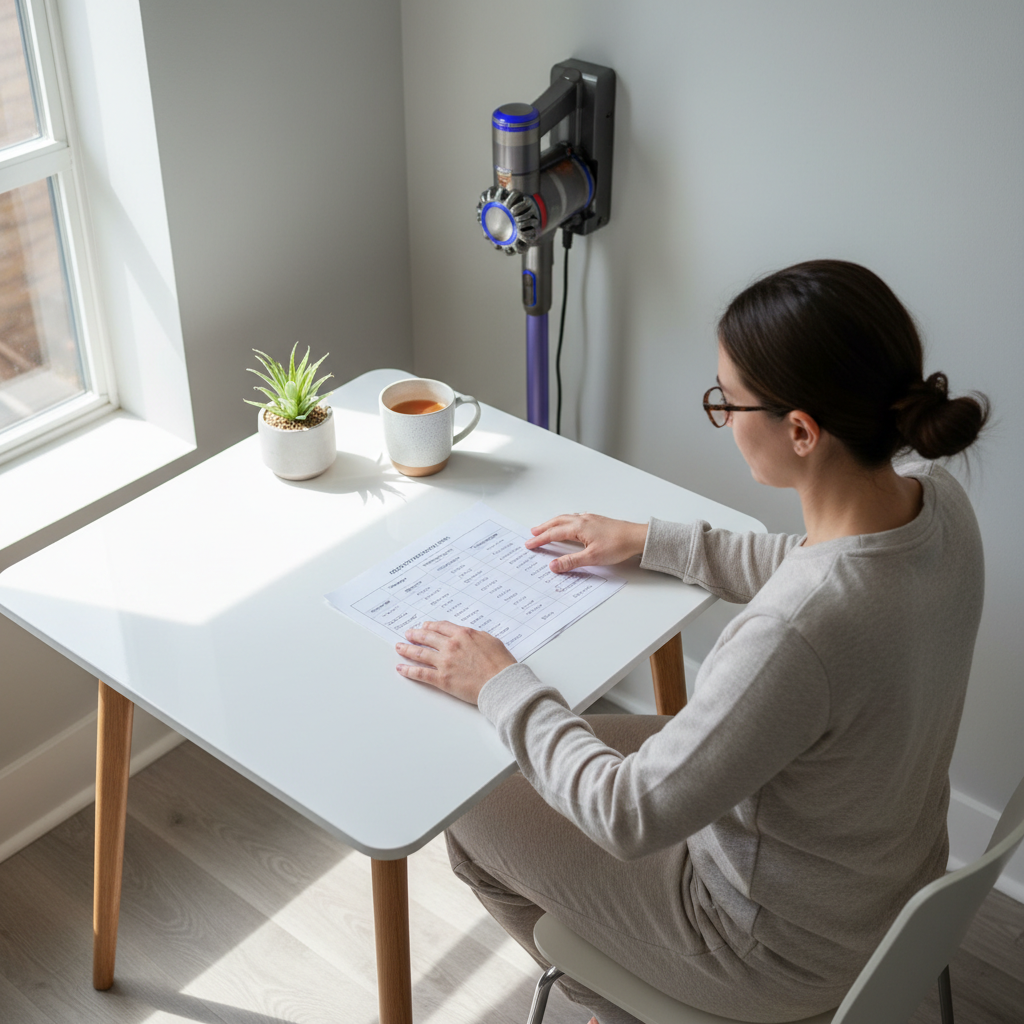
| Limited closet space | Stick (wall dock) or slim corded | Vertical storage, minimal footprint | Wall mount or freestanding design |
Features that matter most in small spaces (and the ones that get overhyped)
In apartments, the difference between “fine” and “love it” usually comes down to a handful of practical details.
- Maneuverability: swivel steering and a low-profile head make tight layouts easier.
- Brush roll on/off: helpful if you switch between rugs and hard floors, and to avoid scattering debris.
- Filtration: HEPA or “HEPA-like” claims vary, so look for clear wording about sealed systems if allergies matter.
- Bin emptying design: a messy bin discourages frequent emptying, and that hurts performance.
- Crevice + upholstery tools: apartment dust collects along baseboards and couch edges more than people admit.
What tends to be overhyped: ultra-high “air watts” marketing without context, giant accessory packs you never store well, and LED headlights as a deciding factor. Nice to have, not usually the reason a vacuum works for your place.
How to choose in 10 minutes: a practical decision path
If you’re staring at too many tabs, pick your path and ignore the rest. This is how many buyers narrow down the best lightweight vacuum cleaners for apartments without getting lost.
If you mainly have hard floors
- Start with a stick vacuum that has a hard-floor friendly head.
- Prioritize edge cleaning and easy bin emptying.
- If you hate charging, consider a corded stick, it’s less trendy but very straightforward.
If you mainly have carpet
- Lean toward a compact upright or a stick that performs well on carpet specifically.
- Look for brush roll performance and how it handles hair.
- Pay attention to head height and whether it “bogs down” on thicker piles, reviews often mention this.
If you have pets
- Choose for tools first: a mini motorized tool for upholstery can matter more than raw suction.
- Anti-tangle brush design saves time, especially with long hair.
- Expect more frequent filter cleaning, plan for easy access.
If storage is your biggest problem
- Pick a slim stick with a wall dock, if your lease allows mounting, or a model that stands on its own.
- Keep attachments minimal, two good tools beat eight mediocre ones you lose.
Real-world maintenance tips (keeps performance from dropping)
Lightweight vacuums can feel “weak” after a while, but many times it’s maintenance, not the motor. This is especially common in apartments where you vacuum little bits often.
- Empty the bin before it’s packed: airflow drops quickly once dust compacts.
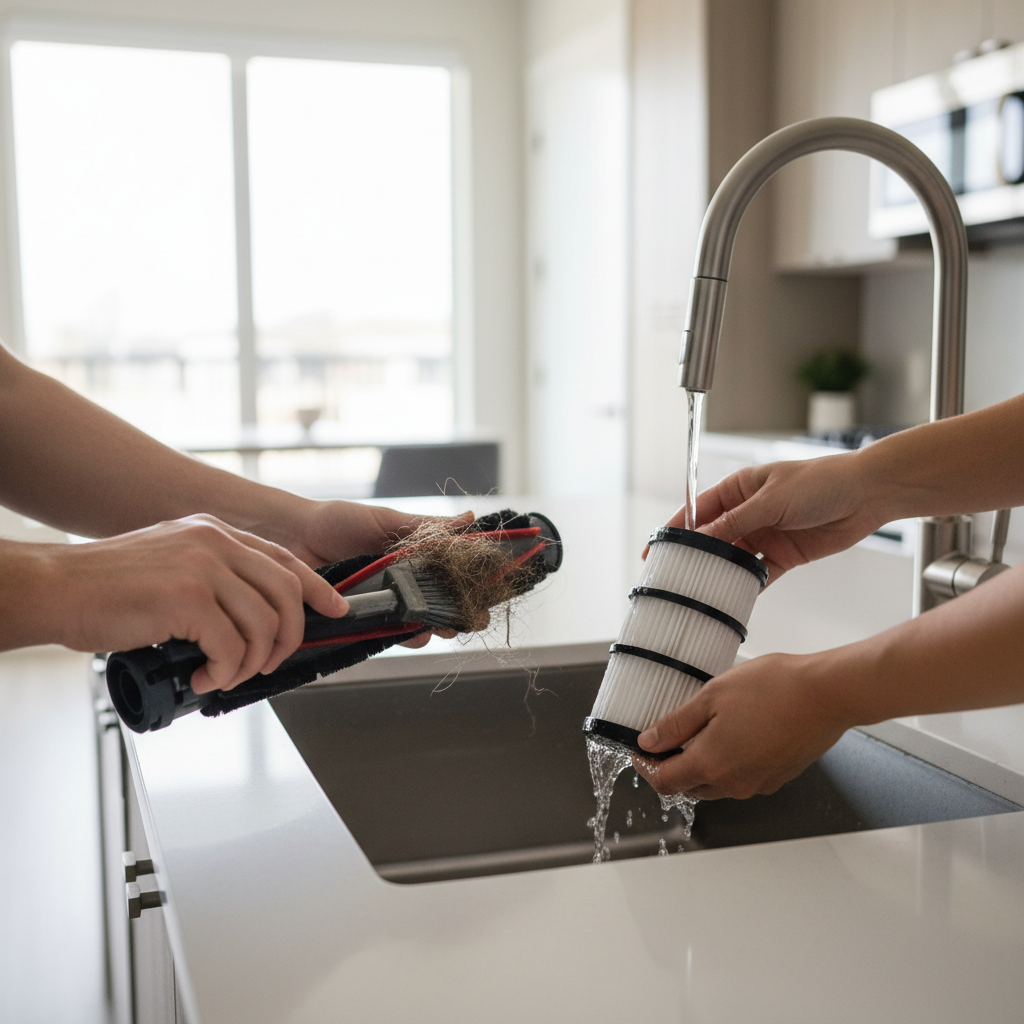
- Check the brush roll: hair wrap reduces pickup and can strain the motor.
- Wash or replace filters on schedule: follow the manual, drying fully matters to avoid odors or mold.
- Inspect the airway: a single sock or clump can block a stick vacuum surprisingly easily.
According to CDC, keeping indoor spaces clean and reducing dust buildup can support better indoor hygiene habits. If you have asthma or significant allergies, you may want to ask a healthcare professional what level of filtration is appropriate for your situation.
Safety and apartment-friendly use (noise, cords, air quality)
A vacuum is a pretty safe appliance, but apartment living adds a couple of practical safety notes.
- Cord management: if you go corded, avoid running cords across walkways, especially on stairs in walk-up buildings.
- Battery charging: charge in a ventilated spot, use the manufacturer charger, and avoid covering chargers with fabric.
- Noise timing: check your building’s quiet hours, and consider daytime deep cleans plus quick quiet touchups.
- Dust exposure: if emptying the bin triggers symptoms, consider doing it outside or using a bagged canister.
Conclusion: what to buy if you want fewer regrets
If you want one simple rule, buy for your floor type and storage first, then let weight break ties. In many homes, the best lightweight vacuum cleaners for apartments end up being a stick vacuum for convenience, unless you have wall-to-wall carpet where a compact upright still earns its keep.
Your next step: write down your floors and where the vacuum will live, then use the checklist above to pick a type before you compare brands. That alone cuts most “returns because it’s annoying” situations.
FAQ
What weight is considered lightweight for an apartment vacuum?
Many shoppers feel comfortable in the roughly 6–12 lb range, but balance matters as much as the number. If possible, try lifting it like you would at home, one hand on the handle, turning into a corner.
Are cordless stick vacuums powerful enough for apartments?
Often yes for hard floors and low-pile rugs, especially for frequent quick cleans. If you have thicker carpet or you want one vacuum to do everything, check carpet-specific performance and expected runtime on higher power modes.
Should I get a bagged vacuum in a small space?
Bagged models can be cleaner to empty and may help if dust bothers you, but you’ll store replacement bags and pay ongoing costs. In small apartments, that tradeoff can still be worth it if mess-free disposal is a priority.
Do I need a HEPA vacuum for allergies in an apartment?
It depends on how sensitive you are and what triggers symptoms. A sealed system with clear filtration claims helps more than vague “HEPA-style” language, and if you have medical concerns, it’s reasonable to ask a healthcare professional for guidance.
What features matter most for pet hair in apartments?
A mini motorized tool for furniture, an anti-tangle brush, and easy filter access usually beat chasing the highest advertised suction. Hair ends up on couches and in corners, so tools and edge pickup do a lot of the work.
How do I keep my vacuum from smelling in a small apartment?
Empty the bin regularly, clean the brush roll, and let washed filters dry completely before reinstalling. Odors often come from damp filters or debris stuck in the airway.
Is a robot vacuum a good “lightweight” solution for apartments?
Robots can be great for daily dust control, especially on hard floors, but many people still keep a lightweight stick or compact canister for corners, upholstery, and deeper cleans. Think of robots as support, not always a full replacement.
If you’re trying to choose between a few options and want a more “no overthinking” route, make a short list by vacuum type first, then compare only storage, noise, and the two tools you’ll actually use in your apartment.