
How to decorate a small nursery on budget usually comes down to two things, controlling clutter and choosing a few high-impact items that make the room feel finished without buying “everything.”
If you’re staring at a tiny space and a long baby registry, it’s easy to overspend on décor that looks cute online but adds zero function in real life. Small nurseries punish random purchases, one extra chair or bulky shelf can make the room feel tight fast.
This guide focuses on what actually moves the needle, layout choices that open up floor space, simple paint and lighting upgrades, and budget buys that still look intentional. I’ll also flag a few common “money traps” people hit when decorating for a new baby.
Start with a realistic plan (so the budget doesn’t leak)
Before shopping, decide what the room needs to do every day. In many homes, a nursery has to work as a sleep space, diaper station, and storage closet all at once, and that’s where budgets quietly break.
Try this quick planning checklist before you buy anything:
- Room measurements: wall lengths, window location, door swing, closet depth.
- Non-negotiables: crib or bassinet, safe sleep setup, diapering surface, laundry/hamper spot.
- Nice-to-haves: rocker, décor shelves, dedicated toy area, changing table.
- What can live elsewhere: extra clothes, bulk diapers, sentimental décor, larger toys.
When you’re learning how to decorate a small nursery on budget, this step matters because it keeps you from “decorating over” missing basics, which often costs more later.
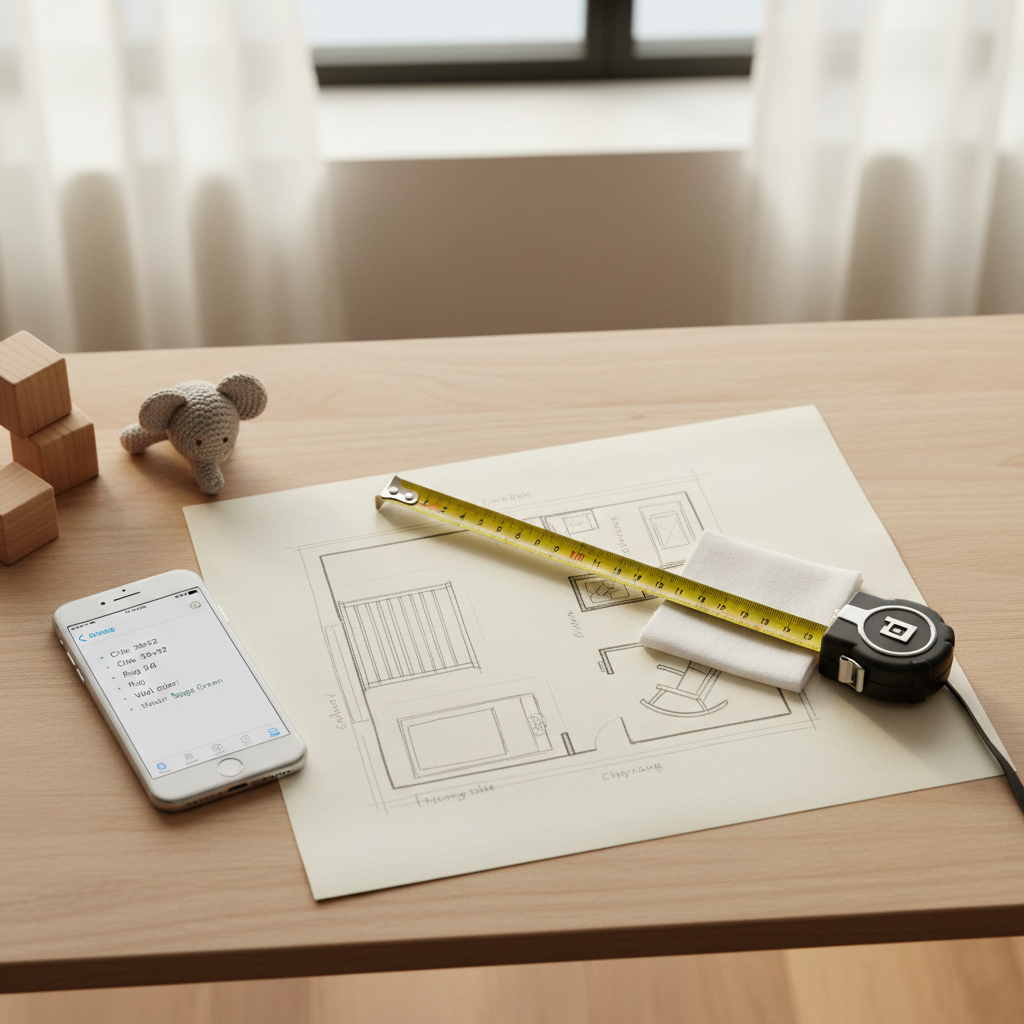
Design for the “tiny room reality”: layout beats décor
In a small nursery, layout creates the look. Good placement makes basic furniture feel polished, while a cramped layout makes even expensive pieces feel chaotic.
Three layout moves that usually work
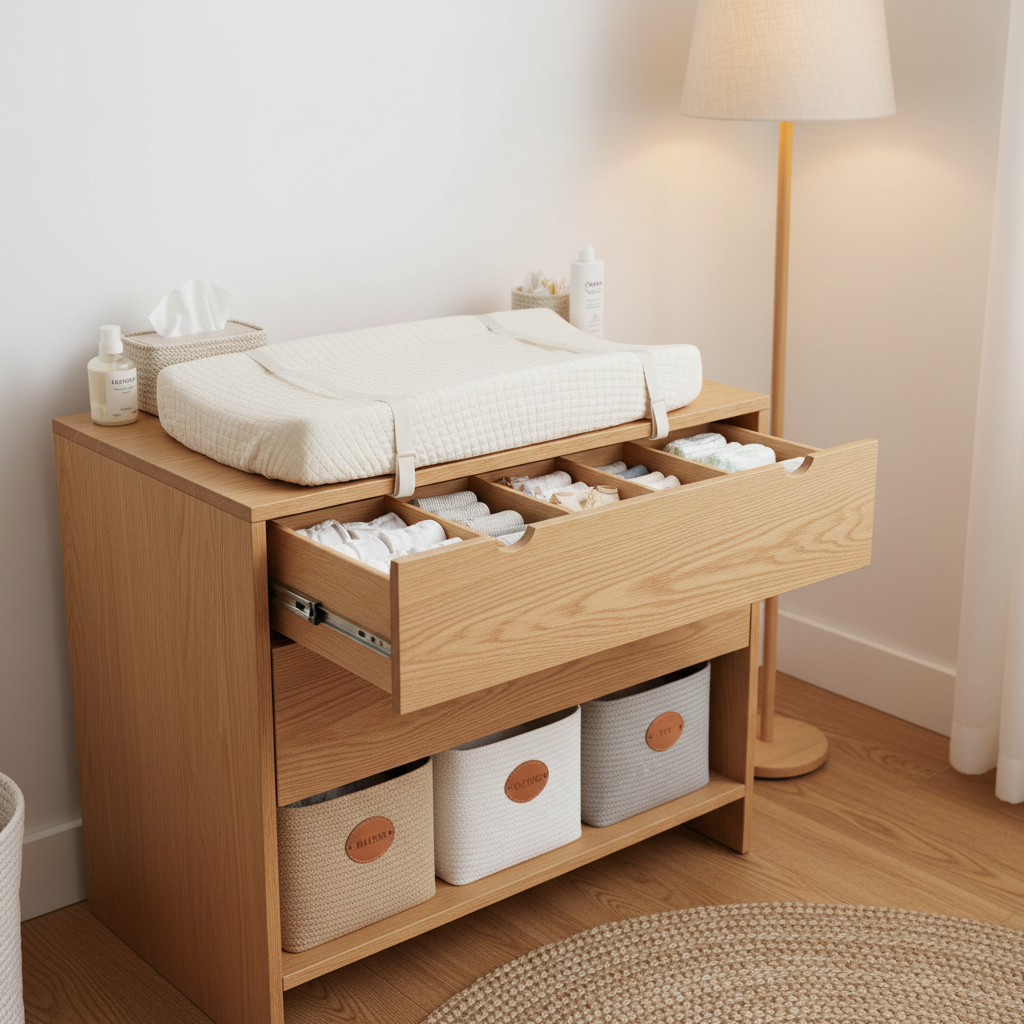
- Use the dresser as the changing station: add a secured changing pad on top, store diapers in top drawers. This saves the footprint of a separate changing table.
- Keep a clear “night path”: crib to changing spot to door should be an easy walk, especially for midnight feeds.
- Go vertical: a couple of wall hooks, a slim shelf, or over-the-door storage often beats another piece of furniture.
Safety note: anchor dressers and bookshelves to the wall, and keep cords out of reach. According to the U.S. Consumer Product Safety Commission (CPSC), tip-overs are a serious hazard, and anchoring is one of the simplest prevention steps. If you’re unsure what anchors fit your wall type, a handyman or contractor can help.
Pick a simple color story (cheap, calming, and hard to mess up)
Paint and textiles are usually the cheapest way to make a nursery feel “designed.” The trick is limiting the palette so the room looks cohesive even if your furniture is a mix of hand-me-downs and marketplace finds.
A reliable approach: choose 1 neutral base, 1 soft accent, and 1 darker grounding color.
- Base: warm white, light greige, pale beige
- Accent: dusty blue, sage, muted blush, soft terracotta
- Grounding: black, walnut, deep navy, forest green (in small touches)
If you want an accent wall, keep it behind the crib or behind the dresser, not on every wall. A single focal wall reads intentional, multiple bold walls often shrink the room visually.
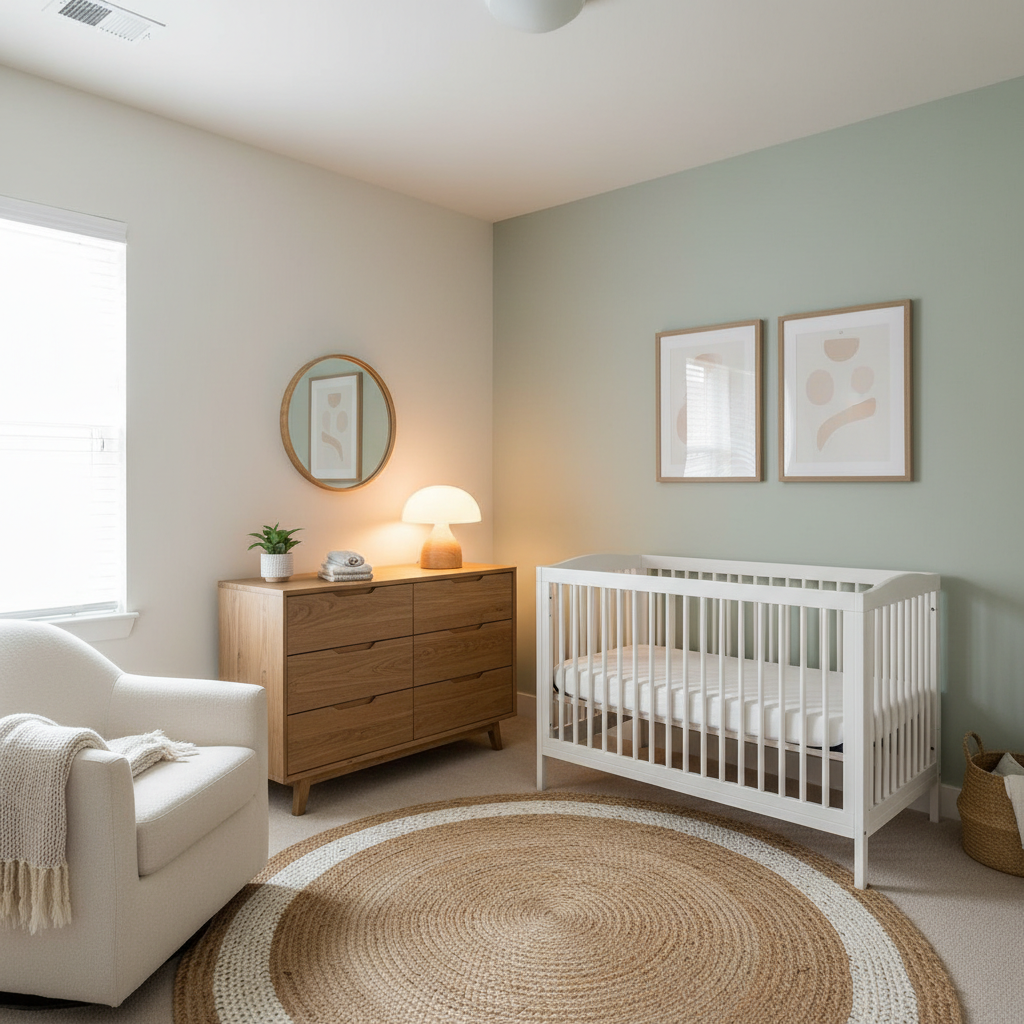
Spend where it counts: a practical budget breakdown
When people ask how to decorate a small nursery on budget, they often mean “how do I make it cute,” but the smarter question is “what purchases reduce stress every day.” Comfort and storage usually beat trendy décor.
Here’s a simple way to allocate money, adjust based on what you already own:
| Category | Why it matters in a small nursery | Budget-friendly approach |
|---|---|---|
| Lighting | Sets mood for naps, helps night changes | Warm bulb + dimmable lamp, skip fancy fixtures |
| Storage | Clutter shows immediately | Bins, drawer dividers, wall hooks, under-crib storage |
| Textiles | Instantly softens the room | One washable rug, simple curtains, neutral crib skirt if needed |
| Wall decor | Adds “finished” look without taking space | Printable art, thrifted frames, removable decals |
| Statement item | Creates a focal point | Pick one: mirror, mobile, large framed art, or a bold lamp |
Key point: if you can only upgrade one thing, upgrade lighting. A warm, dimmable setup makes even basic furniture feel cozy.
Use “small-space decorators” that look expensive but cost less
Some elements read high-end because they add structure, not because they’re pricey. In small rooms, that effect is even stronger.
- Matching storage bins: same color and shape, labels optional. Visual calm is the goal.
- Oversized art (just one): one larger piece often looks cleaner than a gallery wall in a tight room.
- Mirror placement: a mirror can bounce light, but avoid placing it where it reflects the crib directly if that feels visually busy.
- Two-tone window treatment: simple curtains plus a blackout roller shade, practical and polished.
- Hardware swap: changing dresser knobs can shift the whole vibe for low cost.
For anyone learning how to decorate a small nursery on budget, these are the “quiet upgrades” that tend to photograph well and feel nicer day to day.
DIY and secondhand, but keep safety and cleanability in mind
Secondhand is often where the budget wins happen, especially for dressers, frames, lamps, and rugs. The line to hold is safety and what you can realistically clean.
Usually safe to buy secondhand:
- Dresser (anchor it), side table, solid wood shelves
- Picture frames, baskets, décor objects placed out of reach
- Lamps (check cord condition, use correct wattage bulb)
Items many parents choose to buy new:
- Crib mattress and sleep surfaces, for hygiene and fit
- Anything with missing parts, recalls, or unclear history
Safety note: According to the American Academy of Pediatrics (AAP), safe sleep guidance emphasizes a firm, flat sleep surface and keeping soft items out of the sleep area. If you have questions about your specific setup, a pediatrician can help interpret what applies.
A step-by-step setup you can finish in a weekend
If you want a straightforward plan, this sequence avoids rework and keeps purchases focused.
- Step 1: Clear the floor. Remove anything that doesn’t belong in the nursery. Small rooms need fewer “maybe” items.
- Step 2: Place the crib/bassinet. Aim for a spot that doesn’t block closets and allows airflow; avoid putting it tight against heavy curtains or cords.
- Step 3: Create the changing zone. Dresser + secured changing pad + a small caddy with essentials.
- Step 4: Add lighting. Warm bulb in a lamp, optional night light, and blackout solution if naps are tough.
- Step 5: Add one rug and one wall focal. This is the moment it starts looking “done.”
- Step 6: Finish storage. Bins, dividers, hooks. Keep frequently used items within arm’s reach of the changing spot.
Practical tip: hold off on filling every wall. Babies change fast, your routines will change too, so leaving a little blank space is not a failure, it’s flexibility.
Common mistakes that waste money (and how to avoid them)
Most budget blowups come from buying items that solve imaginary problems. The nursery looks cute, but the routine feels harder.
- Buying décor before storage: décor lands on every surface, then you buy more furniture to hide clutter.
- Oversized rocking chair: measure first, and consider a compact glider or a supportive armless chair with a small ottoman.
- Too many small accessories: lots of tiny items read messy in small spaces. Pick fewer, bigger pieces.
- Ignoring lighting temperature: cool white bulbs can make the room feel clinical. Warm bulbs are usually more nursery-friendly.
- Over-optimizing for “future toddler”: design for the next 6–12 months, not an imagined room three years out.
When to ask for help (or at least a second set of eyes)
Some situations make a small nursery trickier, and getting advice can prevent expensive do-overs.
- Rental limitations: if you can’t drill or paint, a local handyman can suggest removable mounting methods that suit your walls.
- Unusual room shape: narrow rooms or awkward alcoves sometimes need a custom storage approach.
- Safety concerns: if you’re unsure about anchoring furniture, window blind cords, or electrical issues, consult a qualified professional.
And if you’re feeling stuck, take a few photos from the doorway and each corner, you’ll spot layout issues faster than when you’re standing in the room.
Conclusion: a small budget can still look intentional
How to decorate a small nursery on budget isn’t about hunting the perfect theme, it’s about choosing a clean layout, calming colors, and a couple of upgrades that make daily care easier.
Your next two actions: measure the room and commit to a “dresser-as-changing-station” plan, then pick one focal element such as an accent wall or one oversized art piece. Once those are in place, the rest becomes simple.
If you want a more predictable shopping path, make a short list with price limits per category, then buy in order of function first and décor second, your space and your wallet both feel better.
FAQ
How much should it cost to decorate a small nursery on a budget?
It varies a lot based on what you already own, but many families keep costs manageable by reusing a dresser, focusing on lighting and storage, and limiting décor to one focal piece plus textiles.
What makes a small nursery look bigger without remodeling?
Less visual clutter, lighter wall color, and taller storage usually help more than adding mirrors everywhere. A single large wall art piece can also feel “bigger” than multiple small frames.
Is it okay to use a dresser as a changing table?
In many cases, yes, as long as the changing pad is secured, the surface is stable, and the dresser is anchored. If you’re uncertain about safe setup details, ask a pediatrician or a certified childproofing professional.
What are the best budget nursery decor items that don’t take space?
Printable art in thrifted frames, removable decals, wall hooks, and a simple mobile can add personality without eating floor space, which matters most in tight rooms.
How do I decorate a nursery if I can’t paint (rental-friendly)?
Use peel-and-stick wallpaper on a single wall section, rely on textiles for color, and choose décor that hangs with removable strips, though weight limits matter so check the product guidance.
Should I buy a rug for a small nursery?
A washable rug often earns its keep because it softens the room and defines the space, but pick the right size so it doesn’t bunch under doors or create tripping edges.
What should I avoid putting near the crib?
Avoid cords, heavy frames that could fall, and soft items in the sleep area. According to the American Academy of Pediatrics (AAP), keeping the sleep space clear supports safer sleep.
If you’re trying to pull a nursery together quickly and you’d rather not guess what’s worth buying, a simple approach is to share your room measurements and a few photos with a designer or organizer who understands small spaces, even one short consult can save you from the common “wrong size, wrong place” purchases.