
Best memory foam mattresses for small bedrooms come down to three things you can actually control in a tight space: the mattress size you pick, how thick it is, and whether it sleeps cool enough when airflow around the bed is limited.
If you’ve ever tried to walk around a bed that “barely fits,” you already know the problem isn’t just comfort, it’s layout. A mattress that feels amazing in a showroom can turn your room into a maze at home, and suddenly changing sheets or opening a dresser becomes a daily annoyance.
This guide focuses on practical picks and setup decisions that matter in smaller rooms: which firmness tends to work for common sleep styles, what to look for in cooling and edge support, and how to avoid the common traps like choosing a mattress that’s too tall for your frame and nightstand height.

Quick decision table: what to buy for a small bedroom
If you want a fast answer before you go deep, start here. Think of this as “what tends to work” in many small-room setups, not a rule that fits everyone.
| Small-bedroom need | What to look for | Why it helps |
|---|---|---|
| More walkway space | Full, Twin XL, or Queen with a slim frame | Keeps clearance for doors, dressers, and laundry flow |
| Bed feels “too big” visually | 10–12 in. mattress height | Lower profile looks lighter, often easier to get in/out |
| Sleep hot (common in tight rooms) | Gel/phase-change cover, perforated foam, breathable knit | Improves surface airflow and reduces heat buildup |
| Share the bed, move a lot | Medium to medium-firm, decent edge support | Better usable space near edges, less “rolling off” feeling |
| Budget-driven but want durability | High-density base foam, reputable warranty terms | Holds shape longer than very soft, low-density builds |
Why small bedrooms change what “best” means
In a larger room, you can get away with a mattress that’s tall, plush, and a bit warm, because you have space around it. In a smaller bedroom, those tradeoffs show up fast.
- Heat can feel worse: less airflow around the bed, plus bedding piled close to walls, can make memory foam warmth more noticeable.
- Edge support matters more: when the bed dominates the room, you end up sitting on the edge more often, to put on shoes, fold laundry, or just carve out usable floor space.
- Height affects everything: very thick mattresses can make the bed tower over your nightstand, and deep-pocket sheets become a recurring cost.
- Noise and motion isolation are “feel” issues: in small rooms, partners or pets moving can feel closer and more disruptive, so memory foam’s motion control can be a real win.
According to the Federal Trade Commission (FTC), shoppers should be careful with marketing claims and focus on what’s written in the warranty and return policy, which matters a lot for mattresses you can’t test long-term in-store.
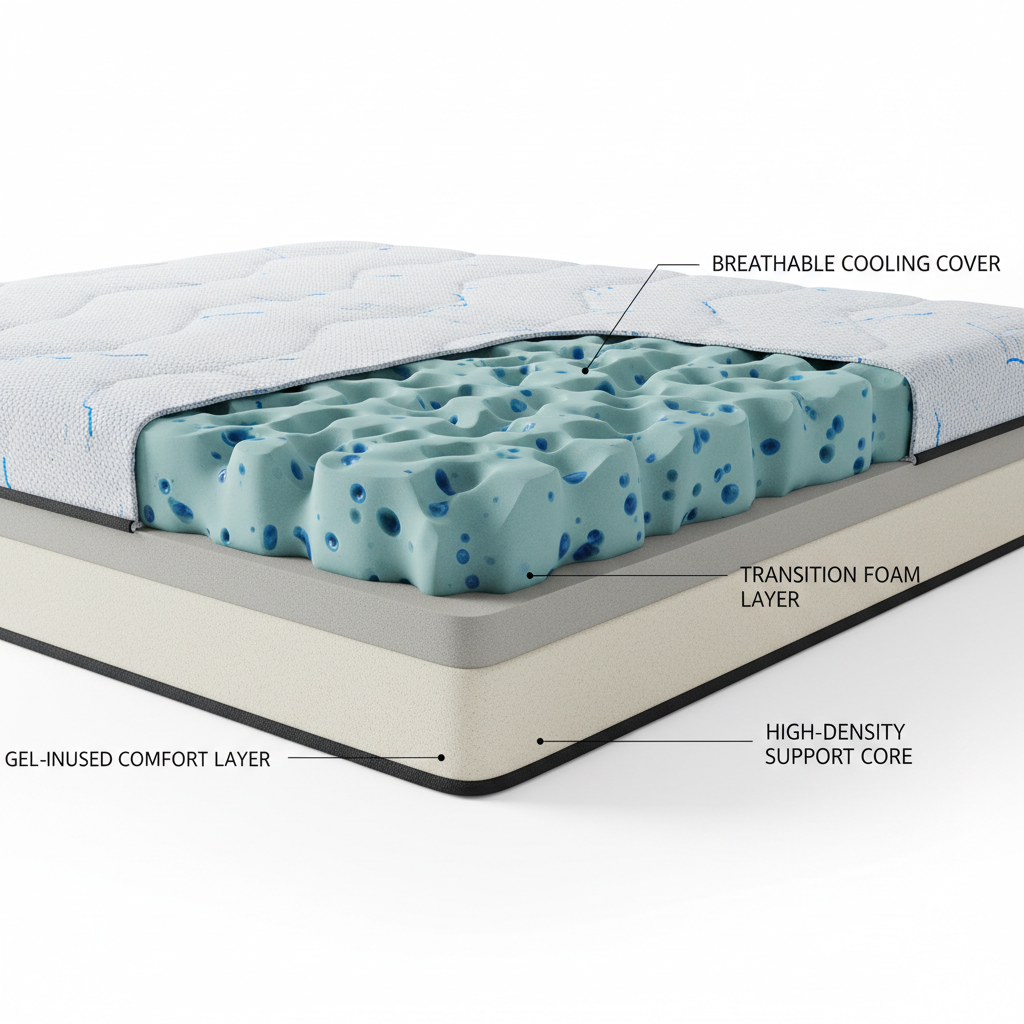
What to look for in memory foam when space is tight
Memory foam can be a great small-bedroom material because it absorbs motion and often works well on slim platform frames. The trick is picking features that match the room, not just your body.
1) Cooling features that are more than “just gel”
“Gel” alone doesn’t guarantee a cool bed. In many cases, you’ll get better results from a breathable cover and foam design that lets heat move away from the surface.
- Breathable knit cover or phase-change fabric (it can feel cooler on contact).
- Perforated or open-cell foam structures that allow more airflow.
- Not too soft on top: very plush foam can let you sink deep, which may trap more heat.
2) Edge support you can actually use
If your bed sits close to a wall, you might rely on the outer 6–10 inches more than you expect. Look for reinforced perimeter foam or a firmer base layer that doesn’t collapse at the edge.
3) Thickness that matches your frame and routine
For many small rooms, 10–12 inches is a comfortable middle ground. Thinner can feel firmer or less “luxury,” thicker can feel bulky and raise your sleeping height enough to be annoying with short frames or tall nightstands.
Best memory foam mattresses for small bedrooms: top picks by scenario
You’ll see a lot of “best overall” lists online, but small bedrooms are more personal than that. Here are the scenarios that tend to decide happiness after the first week.
Scenario A: You want the most floor space (but still adult-comfort)
- Size bet: Full or Twin XL, depending on height and whether you share the bed.
- Feel bet: Medium (not ultra-plush), so you don’t sink and overheat.
- Build bet: 10–11 in. profile on a slim platform frame.
Scenario B: You share a small room and need every inch of usable mattress
- Size bet: Queen, but pair it with a narrow frame and minimal headboard.
- Key feature: stronger edge support so the bed doesn’t feel smaller than it measures.
- Feel bet: medium-firm if either person sleeps on their back or stomach often.
Scenario C: You sleep hot and the room runs warm
- Top priority: breathable cover + airflow-friendly foam design.
- Nice-to-have: moisture-wicking protector (a thick, cheap protector can cancel cooling).
- Realistic expectation: memory foam may still feel warmer than springs for some people, so returns matter.
Scenario D: You want pain relief without the “stuck” feel
- Look for: a responsive transition layer (often called “adaptive foam”).
- Avoid: extremely soft top layers if you’re a combination sleeper who changes positions.
- Tip: medium or medium-firm tends to balance pressure relief and mobility for many bodies, but weight and sleep style can change that.
Self-check: are you choosing the right size and firmness?
Before you buy, answer these quickly. The goal is to avoid the common “I picked the popular option, now my room feels smaller” regret.
- Clearance check: Can you keep about 24 inches of walking space on at least one side, or will you be sidestepping every day?
- Door/drawer check: Will doors and dresser drawers open fully without hitting the bed corner?
- Bed height check: With your frame, will the top of the mattress land roughly at knee height? Too high can feel awkward in a small room.
- Sleep style check: Side sleepers often like more pressure relief, back sleepers often do well with balanced support, stomach sleepers often need firmer support to reduce hip sink.
- Heat check: Do you already wake up warm? If yes, prioritize cooling features and lighter bedding, not just a “cooling” label.
According to the American Chiropractic Association (ACA), a supportive sleep surface can matter for comfort, but “supportive” is individual, which is why matching firmness to your sleep posture tends to work better than chasing a single ideal.

Practical setup tips that make a small bedroom feel bigger
A good mattress helps, but the setup often decides whether the room feels calm or cramped.
- Choose a slim frame: chunky rails and oversized headboards can “steal” visual space even if the mattress size stays the same.
- Keep bedding breathable: heavy comforters and thick protectors can trap heat, which can be more noticeable with memory foam.
- Use under-bed storage carefully: great for space, but if it blocks airflow under the bed, the mattress may sleep warmer in some setups.
- Rotate when recommended: many foam mattresses can benefit from occasional rotation to even out wear, check the brand guidance.
- Don’t ignore sheets: if you go with a thicker mattress, budget for deep-pocket sheets, otherwise you’ll fight corners every week.
Common mistakes (and the fixes)
Most people don’t mess up on “foam vs springs,” they mess up on the boring details.
- Mistake: buying the tallest mattress because it sounds premium.
Fix: start with room scale, 10–12 inches is often plenty for comfort without visual bulk. - Mistake: trusting cooling buzzwords.
Fix: look for a breathable cover and airflow-friendly foam design, then protect it with a thin, quality protector. - Mistake: ignoring edge support.
Fix: if you sit on the edge daily, prioritize stronger perimeter support even over extra plushness. - Mistake: skipping return-policy fine print.
Fix: read trial length, pickup fees, and whether returns require original packaging, policies vary a lot.
When it makes sense to get professional input
If you’re buying mainly for back, hip, or shoulder pain, it’s easy to assume a new mattress will “fix” it. Sometimes it helps, sometimes it doesn’t, and pain can have multiple causes.
- If pain is persistent, severe, or getting worse, it’s reasonable to consult a qualified healthcare professional for individualized advice.
- If you have medical needs like limited mobility or recovery requirements, consider asking about bed height and firmness that make transfers safer and easier.
- If allergies are a concern, look for clear material disclosures and consider an encasement, but avoid making assumptions about “hypoallergenic” labels.
Conclusion: a small room can still get great memory foam sleep
The best choice usually isn’t the fanciest model, it’s the mattress that fits your room and your habits without creating daily friction. Aim for the right size, keep an eye on thickness, and treat cooling and edge support as “small-bedroom features,” not add-ons.
If you’re shopping this week, measure your clearance, pick a firmness that matches your main sleep position, then shortlist two or three options with clear trial and return terms. That sequence saves time and reduces the odds of a cramped-room regret purchase.