
Best small kitchen sinks for tiny kitchens usually come down to three things: the right bowl size, the right mount style, and accessories that do half the “countertop work” for you. If your sink feels too shallow, too wide, or always cluttered, it’s not just annoying, it slows down every meal and cleanup.
Small kitchens punish bad proportions, a sink that looks fine online can block a drawer, collide with a faucet, or leave no landing space for dishes. The good news, a compact sink can still handle real cooking if you choose dimensions and features with intention.
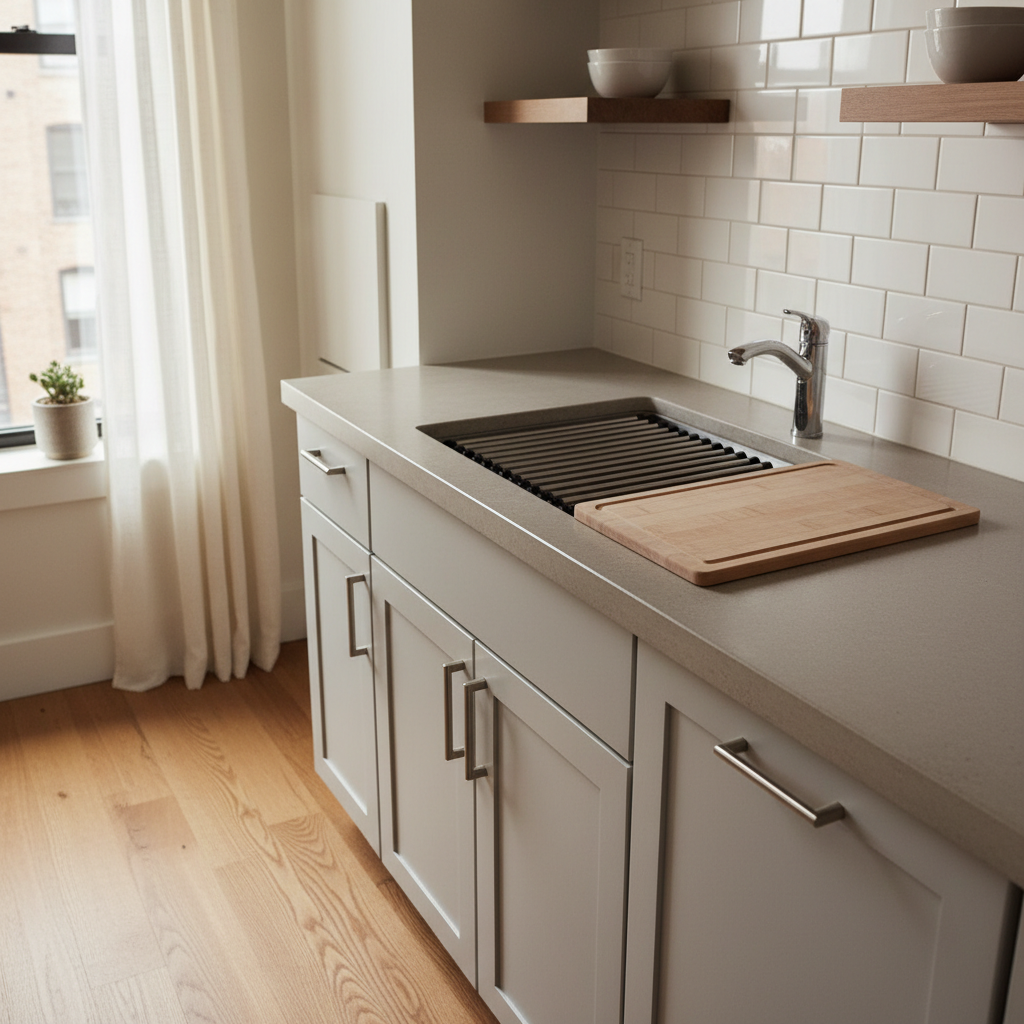
This guide focuses on what actually matters when shopping: practical size ranges, single vs double bowl tradeoffs, materials, and the little add-ons that make a small sink feel bigger. You’ll also get a quick checklist and a comparison table to narrow options fast.
What makes a small sink “best” in a tiny kitchen
For most people, the “best” option is the one that fits your cabinet, matches how you cook, and doesn’t create daily friction. Tiny kitchens don’t leave room for wishful thinking.
- Cabinet compatibility: the sink has to fit the base cabinet width and leave room for clips, brackets, and plumbing.
- Usable bowl depth: deeper bowls hide dishes and reduce splashing, but can feel harder on your back depending on countertop height.
- Work surface recovery: built-in ledges and accessories matter more than an extra inch of bowl width.
- Easy cleaning: tight corners and fussy finishes become a chore fast in small, high-use spaces.
According to NKBA (National Kitchen & Bath Association)... careful space planning and ergonomic considerations are central to functional kitchen design, which is exactly why sink size and placement deserve extra attention in small layouts.
Size and layout basics (dimensions that usually work)
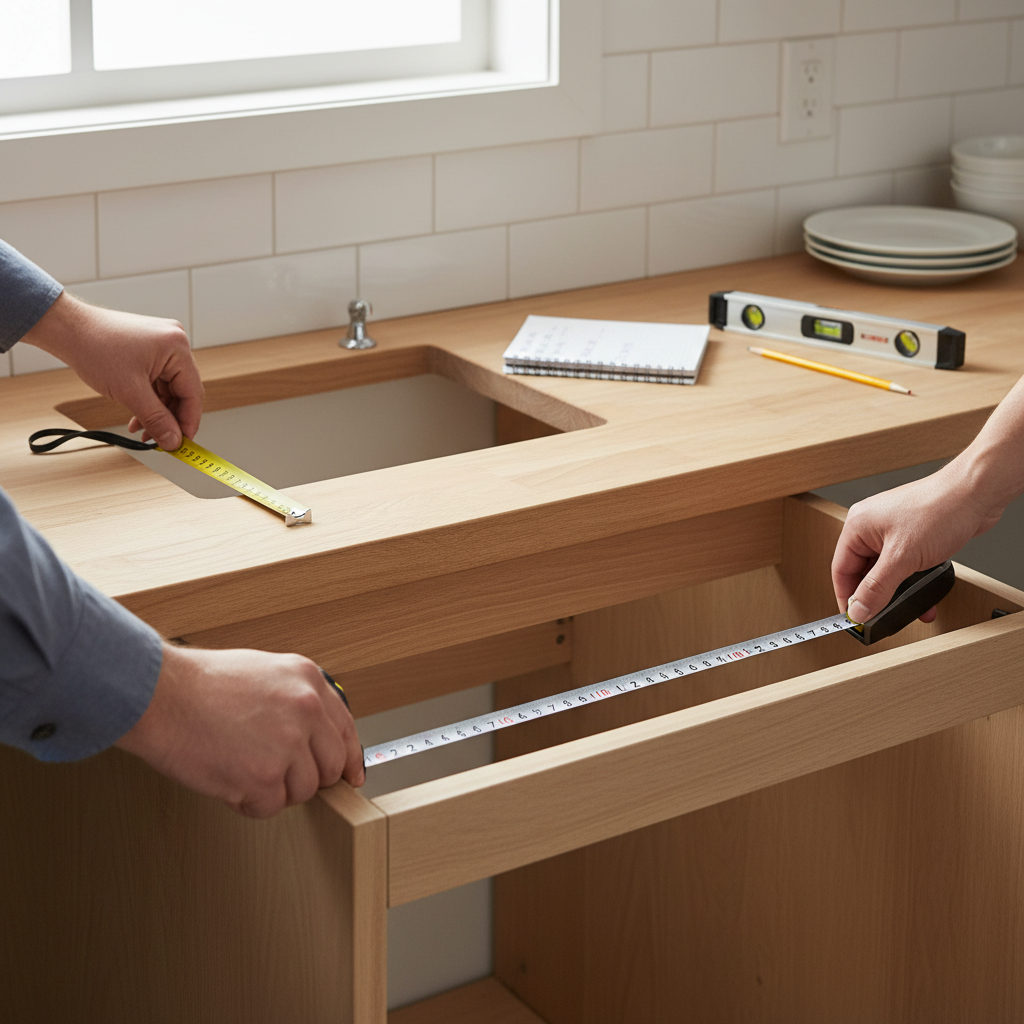
If you only remember one thing, remember this: measure the cabinet and the “clearance zone,” not just the countertop cutout. In tiny kitchens, an inch can decide whether your trash pullout still opens.
Common sink width ranges for small kitchens
- 15–20 inches: best for bar/prep sinks, studios, or ultra-narrow sink bases.
- 21–25 inches: a sweet spot for many small apartments, still workable for pots with the right depth.
- 26–30 inches: “compact standard,” good if you cook a lot but still need counter space.
Depth: don’t chase “deeper” blindly
Many shoppers default to 9–10 inches deep because it sounds premium. It can be great, but if your faucet has low reach or you’re shorter, that depth may increase splashing and awkward angles. A lot of small-kitchen wins happen around 7–9 inches, especially with a good spray faucet.
Quick tip: if you regularly wash sheet pans or large sauté pans, prioritize a wider single bowl over a small double bowl, even if the double looks “more functional” on paper.
Top sink types for tiny kitchens (what to choose and why)
There’s no single winner, but there are clear “best fits” depending on how your kitchen is used. Below are the types that most often earn their keep in small spaces.
Small single-bowl undermount
Great when you want the countertop to feel uninterrupted and you can swing an undermount-compatible counter (often solid surface or stone). Cleanup is easy because crumbs wipe straight in.
- Best for: minimal look, frequent cooking, easy wipe-down
- Watch for: cabinet reinforcement and professional install needs
Compact top-mount (drop-in)
Sometimes the best small kitchen sinks for tiny kitchens are the simplest, a drop-in can be easier and cheaper to install, especially in older apartments or laminate counters.
- Best for: rentals, quick remodels, budget-friendly swaps
- Watch for: rim collecting grime if you’re not consistent about wiping
Workstation sink (small size, big leverage)
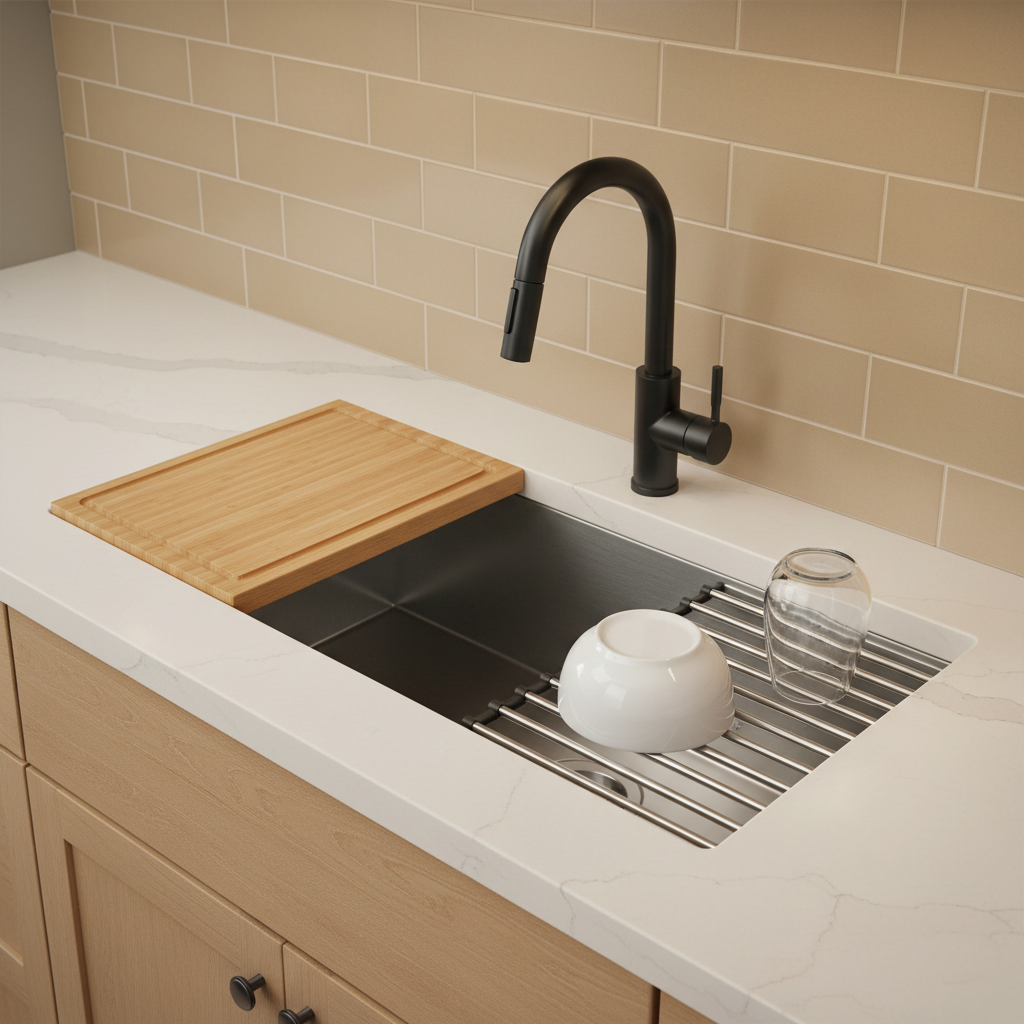
Workstation models include ledges that hold a cutting board, colander, or drying rack. In a tiny kitchen, that’s basically “free counter space,” and it can change your workflow more than sizing up the basin.
- Best for: limited prep area, people who cook at home often
- Watch for: accessory quality and replacement availability
Corner sink (only for specific layouts)
Corner sinks can rescue awkward floor plans, but they can also create dead counter space if the surrounding corners aren’t planned well. Choose this when the layout forces it, not because it looks clever.
Material and finish choices that hold up in small spaces
In tiny kitchens, the sink gets used hard because there’s less room to “stage” dishes. Materials that forgive scratches and water spots often feel better long term.
- Stainless steel (16–18 gauge): common, versatile, lighter to install, can show water spots, a brushed finish typically hides wear better than mirror polish.
- Fireclay: classic look, durable surface, heavier and may need cabinet support, chipping risk exists if you drop heavy cookware.
- Granite/composite: good sound dampening and scratch resistance, color matters because light colors may show stains depending on what you cook.
According to EPA (United States Environmental Protection Agency)... water efficiency matters in the home, so pairing a small sink with an efficient faucet and mindful habits can reduce waste without turning dishwashing into a slog.
Comparison table: which small sink setup fits your space
Use this as a shortcut when you’re stuck between “I want more bowl” and “I need more counter.”
| Option | Why it works in tiny kitchens | Main compromise | Who it suits |
|---|---|---|---|
| 21–25" single bowl, top-mount | Easiest install, flexible for many counters | Rim cleanup | Rentals, quick upgrades |
| 24–28" single bowl, undermount | Clean look, wipes crumbs easily | Install cost/complexity | Owner remodels |
| 18–22" workstation sink | Accessories add “workspace” without more counter | Accessory dependency | Frequent cooking in tight layouts |
| Small double bowl | Separates tasks (soak vs rinse) | Each bowl may feel too small | Light cooking, hand-wash routine |
Self-check: are you choosing the right sink size and style?
Before you buy, run through this list. It’s the kind of stuff that causes returns and “why does this feel wrong?” frustration.
- Base cabinet width measured in inches, and confirmed against the sink’s minimum cabinet size.
- Faucet reach matches bowl size, so water lands near the drain, not on the rear wall.
- Drain position makes sense for your cabinet storage and plumbing, rear drains often free more usable space under the sink.
- If you use large pans, you can fit one flat in the bowl, or you’re comfortable washing at an angle.
- Countertop material supports your mount choice, undermount may not be realistic on some counters.
If you check three or more boxes and still feel unsure, it’s usually because your kitchen needs a workflow decision: do you want the sink to be a wash station, or a prep station, or both. That answer points you toward standard vs workstation fast.
Practical steps to choose and install without regret
Shopping small feels simple, but mistakes are common because listings highlight “overall size” while ignoring how you actually use the basin.
Step 1: Measure the cabinet and the “real world” constraints
- Measure inside cabinet width, not just the face frame.
- Note nearby obstacles: dishwasher edge, drawer boxes, trash pullout hardware.
- Check faucet hole spacing or whether you need a deck plate.
Step 2: Pick a bowl shape that matches your dishes
- Rounded corners: easier to clean, slightly less “square capacity.”
- Tighter corners: more usable footprint, but you’ll want a brush that fits.
Step 3: Use accessories to “grow” the sink
- Roll-up drying rack for air-drying without a counter drainer.
- Custom-fit cutting board to prep over the bowl.
- Bottom grid to reduce scratches and keep dishes elevated.
Safety note: if you’re altering plumbing, cutting countertops, or dealing with garbage disposals, it’s often worth talking to a licensed plumber or qualified installer, especially in older buildings where shutoff valves and drain slopes can be unpredictable.
Common mistakes buyers make in tiny kitchens
- Choosing a small double bowl to “be organized”: many end up with two bowls neither of which fits the pan that matters.
- Ignoring sound control: thin stainless can be loud in small apartments, look for padding or coatings if noise bothers you.
- Buying for looks, not faucet reach: a great-looking compact sink can splash constantly with the wrong faucet geometry.
- Over-optimizing depth: deeper isn’t always more comfortable, especially if you hand-wash daily.
Key takeaways (so you can decide today)
- Measure the cabinet first, then shop within the minimum cabinet size.
- In most tiny kitchens, a single bowl beats a cramped double bowl.
- Workstation accessories often deliver more value than adding a few inches of width.
- Choose materials and finishes you can live with daily, not just in product photos.
If you’re trying to land on the best small kitchen sinks for tiny kitchens, start with your cabinet width and your biggest “problem dish,” then pick the mount and accessories that recover counter space. Once those two pieces match, most of the decision stress disappears.
If you want, share your base cabinet width and whether you have a dishwasher next to the sink, and you can narrow to a short list quickly without guessing.
FAQ
- What size sink is best for a tiny kitchen?
Many small kitchens do well with a 21–28 inch sink, but the best choice depends on your base cabinet and how big your cookware runs. - Is a single-bowl sink better than a double-bowl in a small kitchen?
Often yes, a compact single bowl is usually easier for washing pans, while small double bowls can feel limiting unless you mostly wash small items. - Are undermount sinks worth it in small kitchens?
They can be, mainly because wiping crumbs straight into the sink feels smoother when counter space is tight, but your countertop material and install budget matter. - What’s a workstation sink and does it really help?
A workstation sink has ledges for accessories like cutting boards and racks, in tiny kitchens it often helps because it turns the sink area into extra prep space. - Will a deeper sink prevent splashing in a small kitchen?
Sometimes, but depth alone doesn’t solve splashing, faucet height, water pressure, and where the stream lands in the bowl usually matter just as much. - What material is easiest to maintain in a small apartment kitchen?
Stainless steel is a common low-stress option, especially brushed finishes, composites can also be easy if you’re okay with the look and color maintenance.