
How to decorate a small laundry room starts with one honest goal: make the space easier to use, then make it look intentional, because “pretty but annoying” never lasts in a laundry zone.
If your laundry area feels cramped, it usually isn’t just the square footage, it’s the mix of visual clutter, poor lighting, and storage that doesn’t match how you actually do laundry. The good news is small rooms can improve fast with a few targeted upgrades.
A lot of people assume decorating means adding more items, but in a laundry room it often means editing first, then choosing a few finishes and organizers that pull double duty. Below, you’ll get a practical plan, plus a quick checklist and a small-room “swap table” you can copy.
Start with function: the layout mistakes that make small rooms feel smaller
Before paint chips and baskets, fix the friction points. When a laundry room feels tight, it’s commonly because the workflow forces you to shuffle, turn, and stack things in the worst places.
- Clear the “landing zone” problem: you need at least one surface or hamper spot for in-and-out laundry, even if it’s narrow.
- Doors that fight the room: bulky swing doors, bi-folds that block access, or an appliance door that hits a wall make the space feel half its real size.
- Floor storage creep: mops, detergent jugs, and random bins end up on the floor, shrinking walk space and adding visual noise.
- Lighting that flattens everything: dim overhead fixtures can make whites look gray and the room feel like a utility closet.
According to ENERGY STAR, washers and dryers should have adequate ventilation and clearance for safe operation and maintenance, so any layout “hack” still needs breathing room and access for service.
Quick self-check: what kind of small laundry room are you decorating?
This is the fastest way to choose upgrades that actually fit your situation. Answer these in 60 seconds, then follow the matching tips in later sections.
- Is it a closet laundry? (behind doors, no extra floor space)
- Is it a hallway or pass-through? (you walk through it to reach another room)
- Is it a combined mudroom/laundry? (shoes, coats, pet stuff share the zone)
- Is it a corner in a garage or basement? (unfinished walls, moisture, utility hookups visible)
- Do you fold in-room? If yes, you need a real folding surface, not “sometimes the washer top.”
When people search how to decorate a small laundry room, they often want one universal idea, but these room types behave differently, especially around doors, noise, and storage.
Make it feel bigger: color, lighting, and “quiet” surfaces that help
Small laundry rooms look best when the finishes don’t compete. You can still have personality, just keep the large surfaces calm and let a few details carry the style.
Color choices that usually work in tight utility spaces
- Soft whites and warm off-whites: forgiving under mixed lighting, easy to match with baskets and hardware.
- Light greige or pale taupe: hides scuffs better than pure white, still reads airy.
- One controlled accent: a muted sage door, a navy cabinet, or a patterned wallpaper panel, but keep it to one focal spot.
Lighting matters as much as paint. If you can, swap in a brighter LED fixture with a neutral color temperature, and add a small under-shelf light strip for task lighting. According to the U.S. Department of Energy, LED lighting uses less energy and lasts longer than many traditional options, so it’s often a practical upgrade in a high-use utility room.
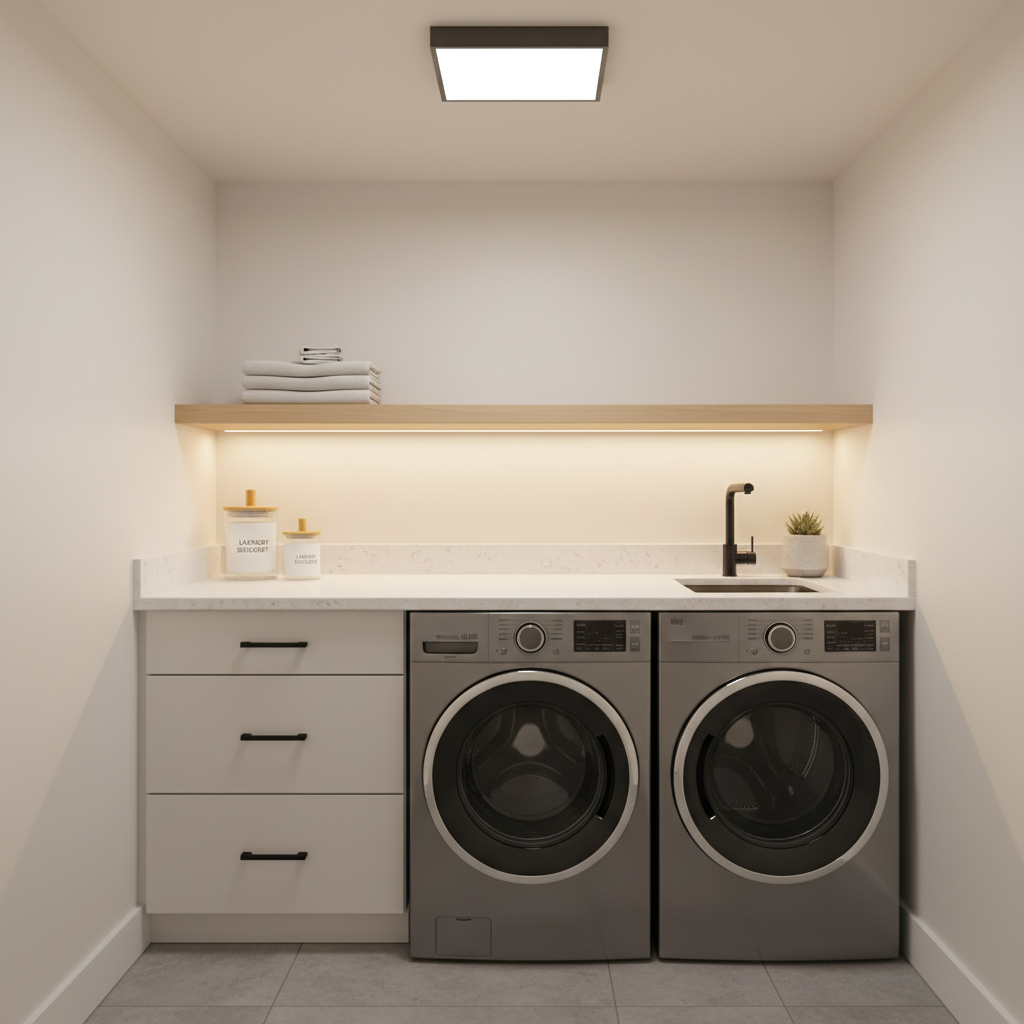
One more “quiet surface” tip that sounds boring but works: use matching containers. Three mismatched bottles on an open shelf can look messier than ten coordinated bins.
Storage that looks like decor (and doesn’t steal the floor)
The most reliable small-room move is getting as much as possible off the floor. Wall storage reads cleaner and gives you back walk space, which is the main thing your brain notices.
Wall and door ideas that tend to pay off
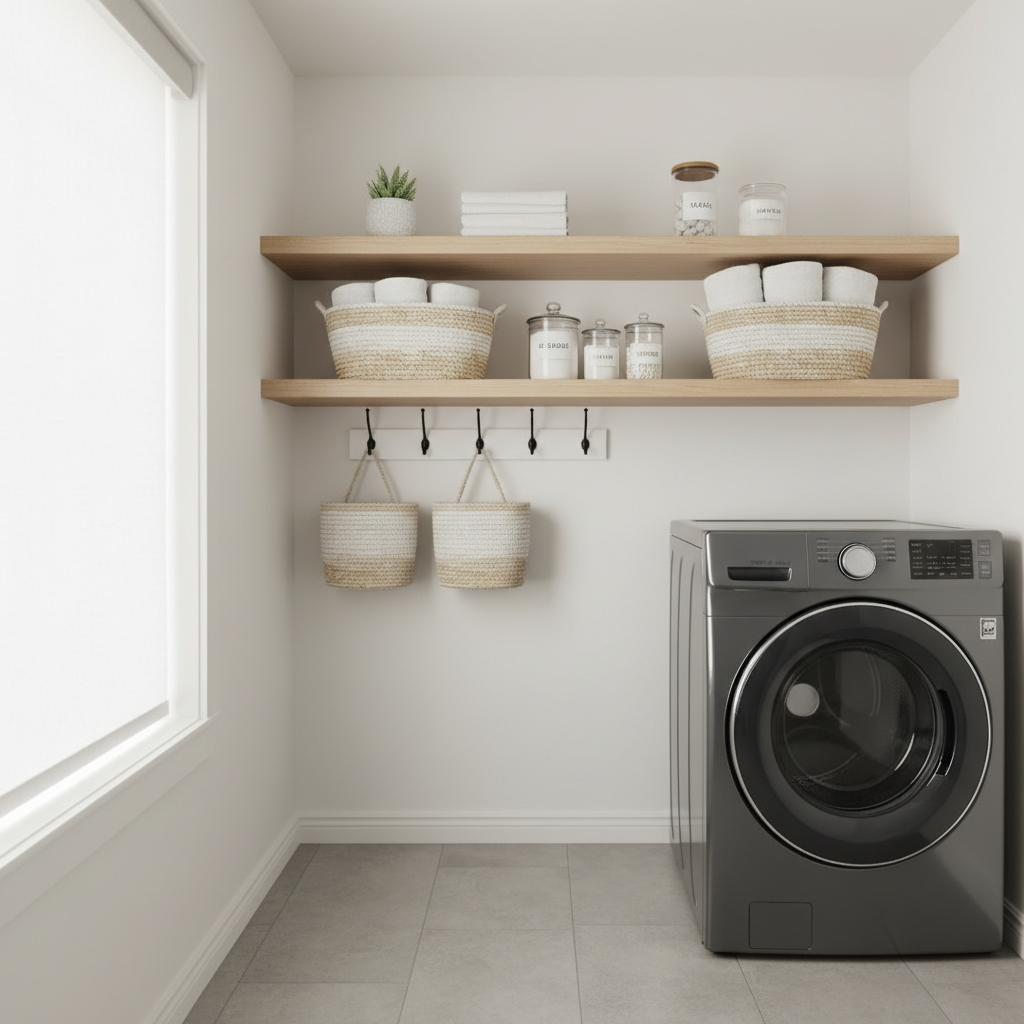
- Floating shelves above machines for baskets, stain spray, and linens you actually use.
- Rail systems with hooks for a hand vac, lint roller, or drying bag.
- Back-of-door organizers for small supplies, especially in closet laundry setups.
- Overhead cabinet if studs allow it, great for “bulk buy” items that otherwise live on the floor.
Decor-friendly containers that stay practical
- Lidded bins for pods, clothespins, and random tools, less visual clutter.
- Wire baskets for towels and rags, breathable and easy to grab.
- Clear canisters for powders or dryer balls if you prefer quick visibility.
If your laundry room shares space with cleaning supplies, consider separating “laundry” and “household” into two labeled zones. It sounds small, but it stops the slow creep of non-laundry items taking over the shelves.
Small laundry room decor swaps: a practical table
These are the swaps that usually make the biggest difference without turning the room into a renovation project.
| Common problem | What it looks like | A better swap |
|---|---|---|
| No folding space | Clothes pile on top of appliances | Wall-mounted drop-leaf table or narrow counter over front-loaders |
| Too many bottles | Messy shelf, visual chaos | Refillable labeled dispensers + one closed bin for backups |
| Floor clutter | Mops, baskets, cords everywhere | Wall hooks + tall slim rolling cart + cord management clips |
| Room feels dark | Shadowy corners, dingy walls | Brighter LED fixture + light wall color + reflective backsplash panel |
| Drying takes over | Drying rack blocks walking path | Retractable clothesline or fold-down wall drying rack |
Step-by-step: decorate without losing functionality
If you want a simple process, use this order. It keeps you from buying cute items that later get in the way.
- Edit first: remove duplicates, half-empty products, and anything that belongs elsewhere.
- Define your zones: washing, drying, folding, and “cleaning tools” if they live here.
- Pick one style direction: modern black hardware, warm farmhouse wood, clean white minimal, whatever fits the rest of the home.
- Choose 2–3 materials: for example white paint, light wood shelves, matte black hooks, and repeat them.
- Add one visual focal point: a small art print, a wallpaper strip, or a patterned runner that’s washable.
For closet laundry rooms, keep decor flat: framed art on the inside of a door, a peel-and-stick backsplash behind the machines, or a shelf with one plant and the rest functional storage. For pass-through laundries, prioritize closed storage so the space looks calm from the hallway.
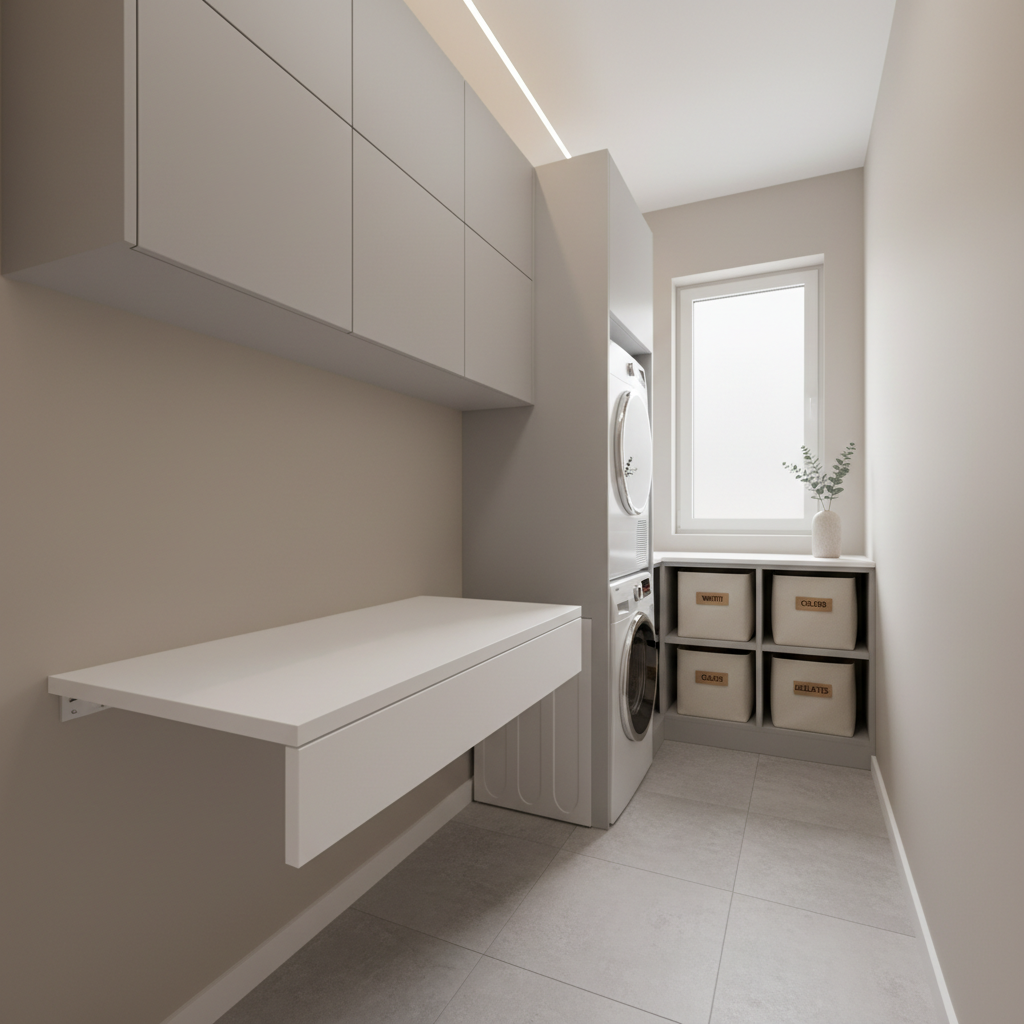
Key takeaway: in a tight room, “decor” works best when it also functions, or when it takes zero space, like paint, hardware, and lighting.
Common mistakes (that look good online but annoy you later)
- Open shelving with no system: it photographs well on day one, then quickly turns into a junk display.
- Too many small items: tiny signs, extra jars, and mini decor pieces create visual static.
- Ignoring moisture and heat: paper art without protection, or storage too close to appliance vents can wear out faster.
- Overloading doors: heavy organizers can strain hinges in older homes, and doors start rubbing.
- Style that fights your habits: if you never decant detergent, don’t force yourself into a “perfect container” setup.
For anything involving electrical changes, venting, or plumbing, it’s usually safer to consult a qualified professional. According to the U.S. Consumer Product Safety Commission, dryers require proper installation and maintenance to reduce fire risk, so don’t treat venting as a decor problem.
Conclusion: a small laundry room can look finished without feeling precious
How to decorate a small laundry room comes down to a few smart calls: reduce floor clutter, improve lighting, choose calm finishes, and let storage do most of the visual work. When the room supports your routine, it naturally feels more “designed,” even with minimal decor.
If you want a simple next step, pick one upgrade you can finish this weekend, usually shelves, a brighter light, or a folding solution, then reassess before buying more accessories.