
How to arrange potted herbs in kitchen window usually comes down to three things: light, space, and how often you actually cook with each herb. If your basil keeps getting leggy, your mint takes over, or everything looks cluttered by day five, it’s not you, it’s the setup.
This matters because windows are microclimates, a few inches can change heat, drafts, and sun intensity. A good layout keeps herbs healthier, makes watering less annoying, and turns that window into a spot you enjoy seeing every day.
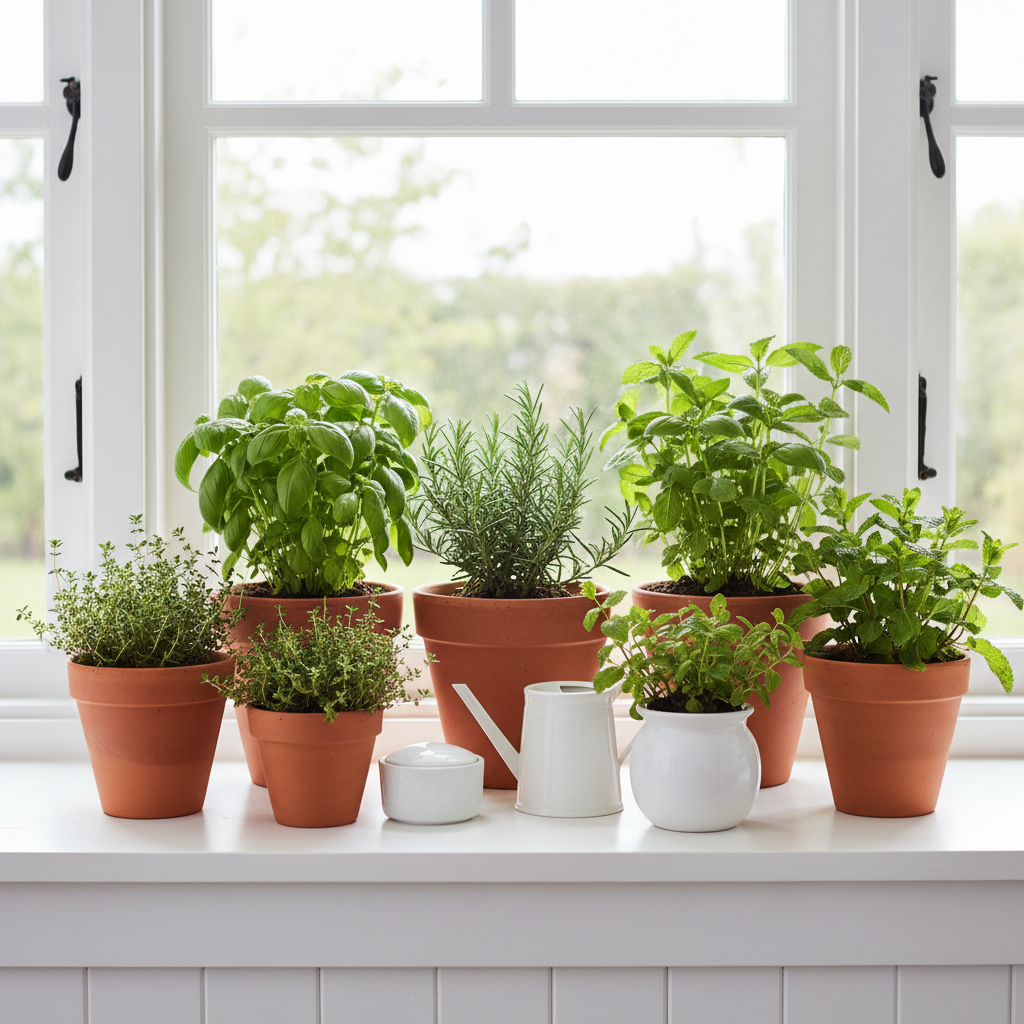
One more truth before we get practical: the “prettiest” arrangement often fails because it ignores airflow and watering access. The goal is a layout that looks good and stays easy, even when life gets busy.
Start with the window: light, heat, and the “weird spots”
Your window determines what herbs will thrive and how to arrange them. A south-facing window can be intense, north-facing often stays gentle, and east or west can swing from perfect to harsh depending on season and nearby buildings.
According to the USDA, most culinary herbs do best with plenty of light, and many prefer several hours of direct sun. In a kitchen, though, “direct sun” can also mean hot glass, cold drafts, and fast-drying pots, so placement needs a bit of finesse.
Quick window check (2 minutes)
- Sun path: notice where the brightest patch lands, and for how long.
- Cold draft test: hold your hand near the sill edges on a windy day, drafts can stunt tender herbs.
- Heat zone: the 1–3 inches closest to glass can run hotter midday, especially in summer.
- Obstructions: screens, overhangs, and trees cut more light than people expect.
Pick herbs that match your window and your cooking habits
If you’re trying to figure out how to arrange potted herbs in kitchen window, start by editing your plant list. The right mix makes arranging simple, the wrong mix forces constant rearranging and disappointment.
Easy pairings (typical, not absolute)
- Bright light: basil, rosemary, thyme, oregano, sage.
- Gentler light: parsley, chives, cilantro (often bolts in heat), mint (tolerates a lot, but spreads).
- “Needs its own pot”: mint and sometimes lemon balm, they tend to dominate.
Also be honest about use. If you cook with basil daily, it should be the most reachable plant, not the one hidden behind a decorative vase.
A simple arrangement rule that works in most kitchens
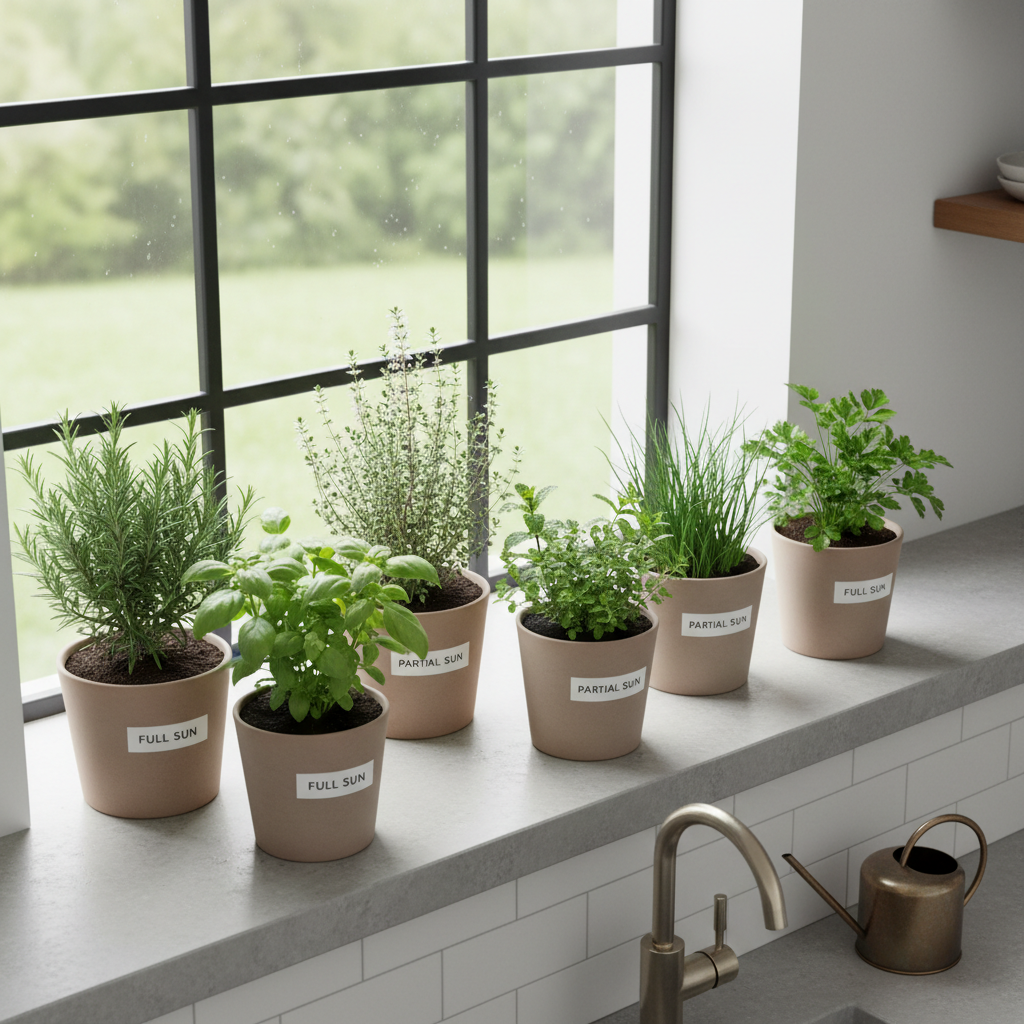
Here’s the layout logic that tends to hold up: tall and woody in back, compact and leafy in front, thirstiest easiest to reach. It’s less about aesthetics and more about preventing shade, making harvesting easy, and keeping watering consistent.
- Back row (taller, more rigid): rosemary, sage, mature oregano.
- Front row (lower, leaf-focused): thyme, chives, parsley.
- Edge positions (fast grab): basil, cilantro, whatever you use most.
- Solo corner pot: mint, to limit takeover and simplify pruning.
Keep a small gap between pots, a crowded sill stays damp and invites fungus gnats, plus it makes it harder to spot a plant that’s drying out.
Use height, trays, and spacing so every plant gets light
People often line up identical pots and wonder why only the front row grows. Light angles matter, so your job is to prevent one herb from casting a permanent shadow on another.
Practical tools that don’t feel fussy
- Risers: a narrow wooden riser or upside-down tray boosts smaller pots.
- Saucers or a long drip tray: catches water, protects the sill, and makes moving pots easier.
- Spacing target: aim for a finger-width gap between pot rims so air can move.
- Rotation habit: turn each pot a quarter-turn every few days to reduce leaning.
If you’re short on sill depth, think “staggered,” not “single-file.” Even a slight diagonal can stop one plant from blocking another’s light.
Pot and soil choices that make the arrangement low-maintenance
Arrangement fails quickly when pots dry at wildly different speeds. Mixing tiny nursery pots with deep ceramic planters looks cute, but it creates a watering schedule you can’t win.
What usually works in a kitchen window
- Similar pot sizes: keeps drying rates closer together.
- Drainage holes: non-negotiable for most herbs, roots dislike sitting in water.
- Material awareness: terra cotta dries faster, glazed ceramic holds moisture longer.
- Light, airy mix: many herbs prefer soil that drains well, not a dense, soggy blend.
If you’re re-potting, it’s fine to ask a local garden center for a “herb potting mix” recommendation, mixes vary by brand and region. If you have mold, persistent pests, or root rot, a professional nursery staff member can help you diagnose what’s happening.
Quick self-check: what’s going wrong with your current setup?
This mini checklist helps you decide whether you need a full rearrange or just a small tweak.
- Leggy, leaning stems: light too weak or pots not rotated.
- Yellowing leaves + wet soil: drainage issue or overwatering.
- Crispy leaf edges: heat from glass, low humidity, or inconsistent watering.
- Moldy soil surface: airflow too low, pots too crowded, or soil staying wet.
- Gnats: soil staying damp, consider letting top layer dry more between watering.
Sample layouts (table): choose one and adjust
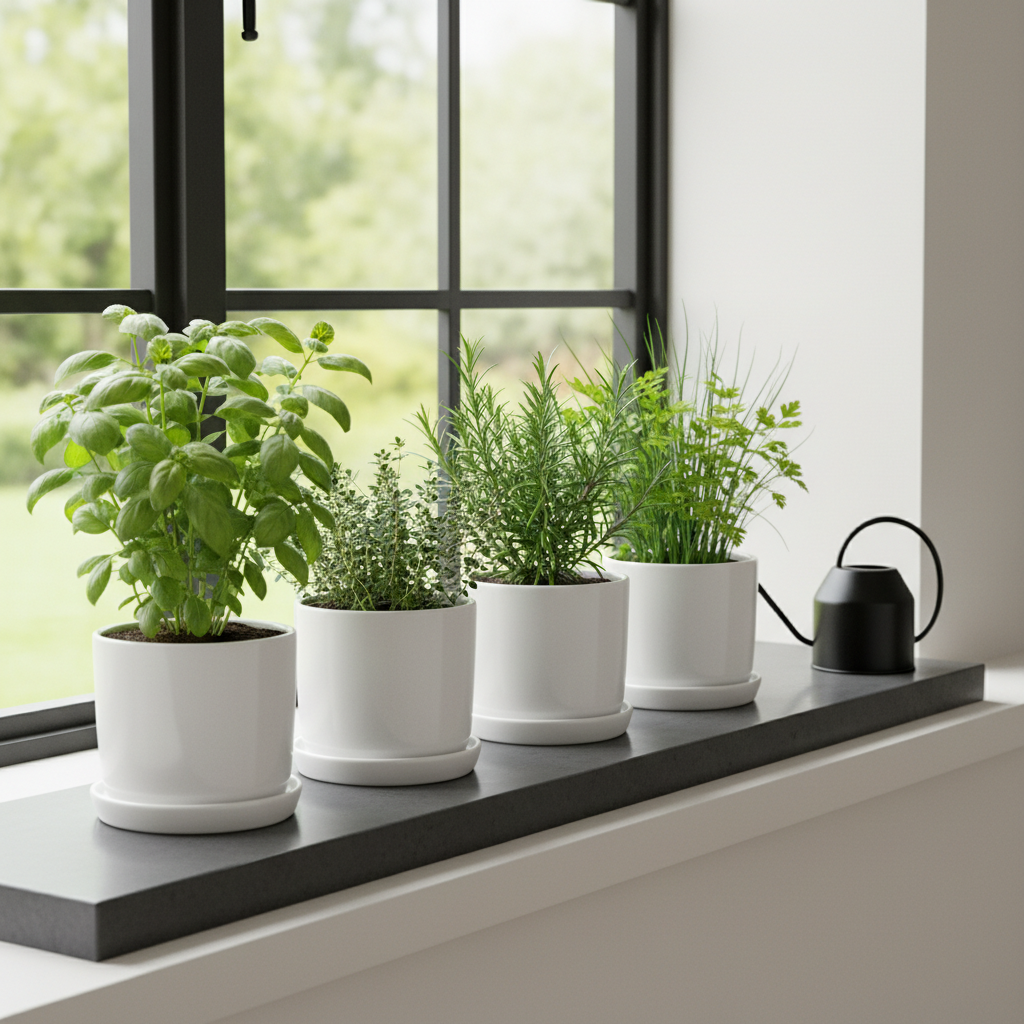
If you want a “done” answer, pick a layout below that matches your window and how many pots you’re juggling.
| Window situation | Best arrangement | Herb examples | Small tweak that helps |
|---|---|---|---|
| Very sunny (south/west) | Two rows, taller in back | Rosemary, thyme, oregano, basil | Pull basil 2–4 inches off hot glass |
| Moderate light (east) | Single row with risers | Parsley, chives, thyme, basil | Rotate pots weekly to prevent leaning |
| Low light (north/obstructed) | Fewer pots, spaced wider | Mint, chives, parsley | Consider a small grow light if growth stalls |
| Short sill depth | Staggered diagonal line | Thyme, basil, cilantro | Use a narrow tray to keep it tidy |
Step-by-step: arrange, then keep it working
Once you know your window and your herb list, the actual setup takes less time than you think.
Set it up in 15–20 minutes
- Clear the sill and wipe it down, herbs hate standing water and grime as much as you do.
- Place a drip tray or saucers first, then set pots on top so you can slide them without scratching.
- Put tallest pots in back, then build forward with shorter herbs and any risers.
- Leave a small gap between pots, check that you can lift each one without bumping neighbors.
- Water lightly, then watch for runoff so nothing sits in pooled water.
Keep it stable week to week
- Water check: touch the top inch of soil, if it’s damp, wait. Many indoor herb problems come from watering on a schedule instead of by feel.
- Prune for shape: harvest often, especially basil, pruning encourages bushier growth.
- Rotate: small turns prevent plants from “reaching” and falling over.
Common mistakes that make herbs struggle (even in a bright window)
- Crowding for looks: it traps moisture and blocks light, and pests love that.
- No drainage holes: roots can suffocate, and you won’t know until the plant declines fast.
- Mixing wildly different water needs: rosemary often likes it drier than parsley, keep them separate if you can.
- Letting mint share a pot: it often wins, then you’re left with a mint monoculture.
- Ignoring heat from glass: a small gap from the window can reduce stress in summer.
And a safety note: if you use pesticides or treatments indoors, follow label directions carefully, and consider asking a local extension office or garden center for guidance if you’re unsure. According to EPA, pesticide labels provide key safety instructions for proper use.
Key takeaways you can use today
- Match herbs to your window, then match placement to how often you cook with each one.
- Use height and spacing so every plant gets light and airflow.
- Standardize pots when you can, it makes watering predictable.
- Mint stays solo, it’s simpler than fighting it later.
If you do one thing after reading, move your most-used herb to the easiest-to-reach spot and give each pot a little breathing room, that single change fixes a surprising number of “my herbs hate me” setups.
FAQ
- How do I arrange herbs on a kitchen windowsill without blocking light?
Put taller, woody herbs toward the back and use a small riser for shorter pots so leaves don’t sit in shadow all day. - How many potted herbs can fit in a kitchen window?
In many kitchens, 3–6 pots works before airflow and watering access become annoying, but it depends on sill depth and pot diameter. - What herbs should not be planted together in one pot?
Mint is the big one to separate, and herbs with very different water preferences can be tricky in the same container. - How close should herb pots be to the window glass?
Close enough to get strong light, but not pressed against the glass, leaving a small gap can reduce heat stress and cold draft issues. - Do I need a grow light for kitchen window herbs?
Not always, but if growth stays weak in a north-facing or shaded window, a small grow light can help, choose one rated for indoor plants and follow safety instructions. - Why do my indoor herbs keep getting fungus gnats?
They often show up when soil stays wet, spacing pots, improving drainage, and letting the top layer dry more between watering can help.
If you’re trying to make the setup look clean as well as functional, a matching tray plus a consistent set of pots can do most of the work, and it makes rearranging less of a project when seasons change.