
Best storage solutions for small apartments usually come down to two moves, stop buying “organizers” that don’t match your layout, and start using the space you already pay for, especially walls, doors, and the air above eye level.
If your place feels cramped, it’s often not because you own “too much” in general, it’s because everyday items have no assigned home, so they live on countertops, chairs, and the floor, and that visual clutter makes a small apartment feel even smaller.
This guide breaks storage down into realistic categories, what works in rentals, what actually reduces daily mess, and what to skip, plus a room-by-room plan you can follow this weekend.
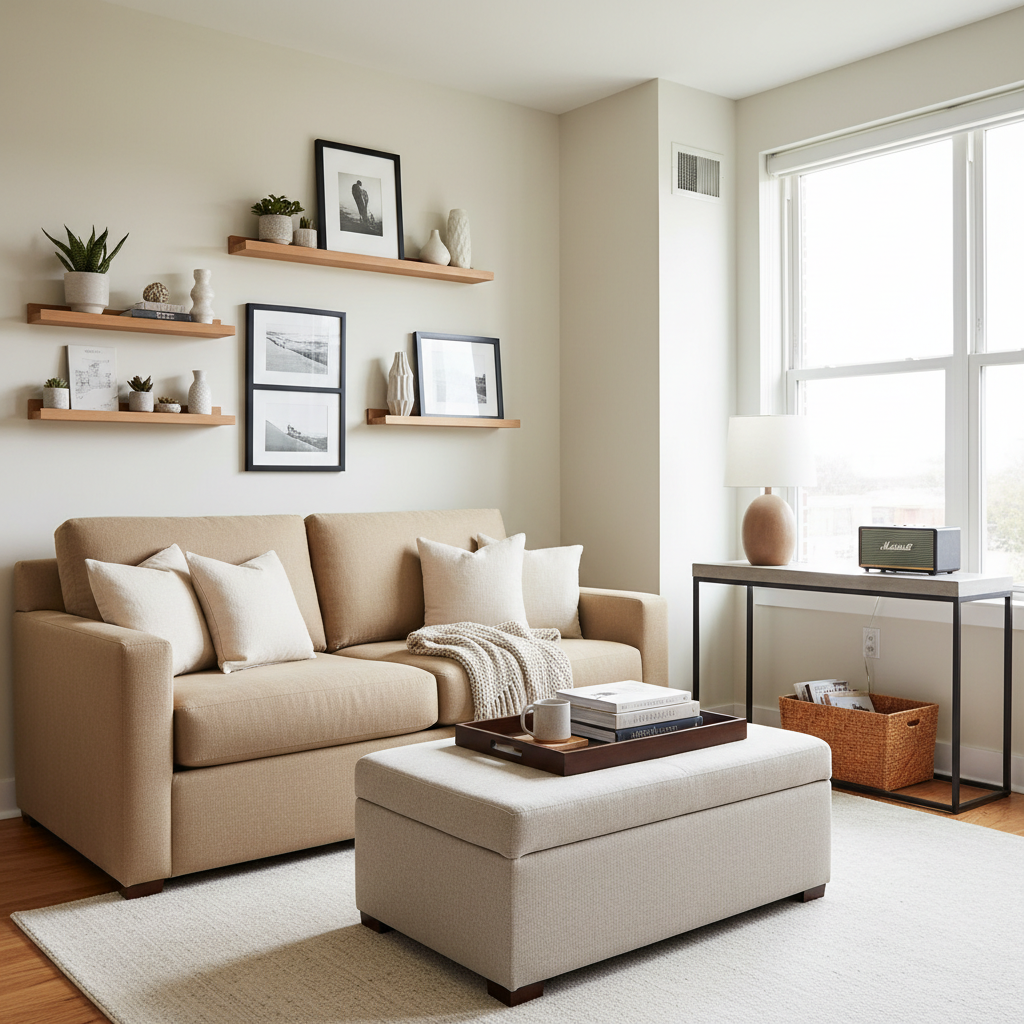
What actually causes storage problems in small apartments
Most people blame square footage, but the real culprit is “friction”, storage that’s annoying to use never gets used, and stuff ends up out in the open.
- No zoning: keys, mail, bags, and shoes don’t have a landing spot, so they spread.
- Dead vertical space: walls stay empty while floors get crowded.
- Hidden storage that’s too hidden: bins under the bed sound great, until you need them daily.
- Wrong-size containers: pretty baskets that waste inches inside cabinets add up fast.
- Rental constraints: you avoid drilling, so you default to bulky furniture instead of lightweight wall solutions.
According to The American Cleaning Institute... keeping a simple system matters because daily upkeep tends to beat occasional deep-cleaning marathons, especially in small spaces where mess shows immediately.
A quick self-check: which storage situation are you in?
Before shopping, figure out whether you need more capacity, better access, or fewer duplicates, the fix changes based on that.
- Capacity issue: closets and cabinets are full, but you already use bins and shelves efficiently.
- Access issue: you have storage, but it’s hard to reach, heavy lids, stacked boxes, or deep shelves you forget about.
- Category overflow: clothes, pantry, or cleaning supplies grow because you buy backups “just in case.”
- Layout mismatch: awkward corners, narrow galley kitchen, tiny bathroom, you need custom-fit strategies.
If you’re mostly dealing with access or category overflow, buying more containers usually backfires, you’ll just fill them and feel even tighter.
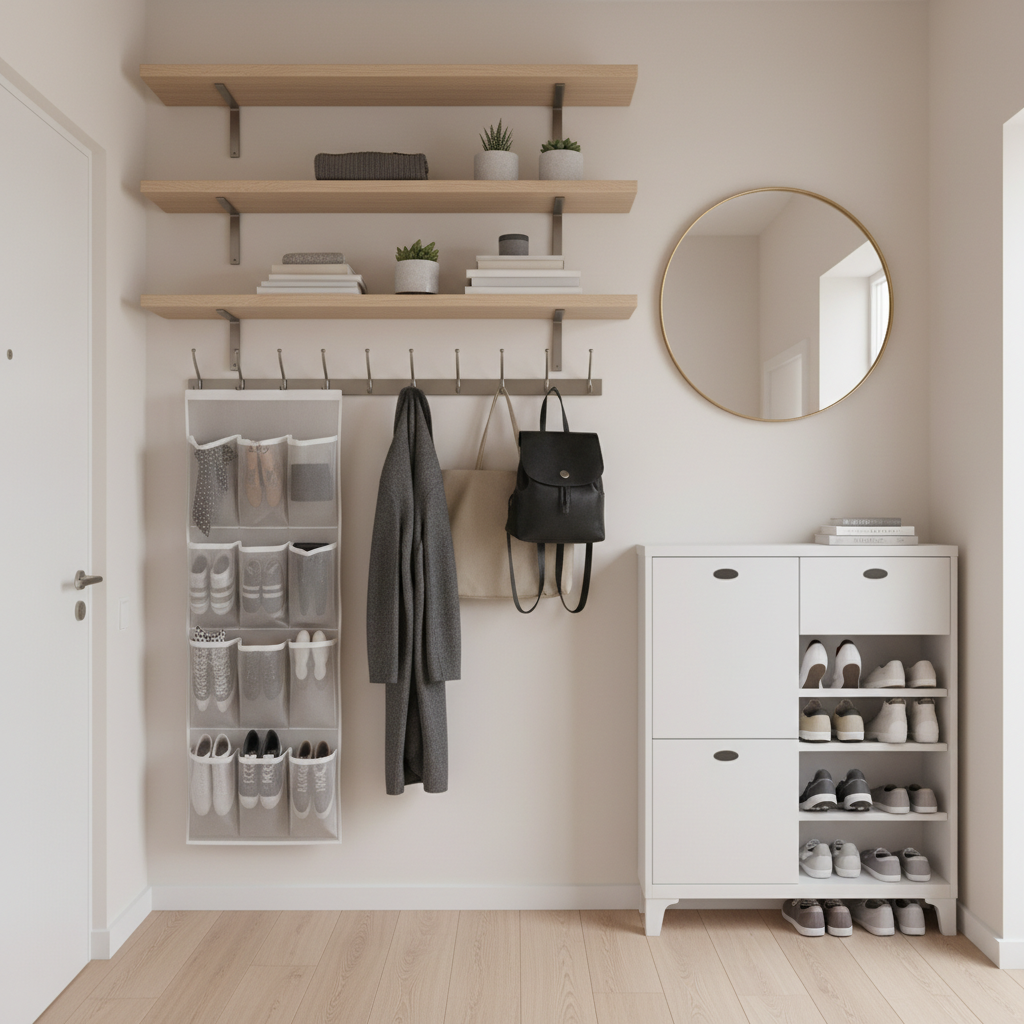
Core principles behind the best storage solutions (so you don’t waste money)
Here’s the mindset that tends to separate “Pinterest storage” from a setup you’ll keep using on a Tuesday night.
1) Store by frequency, not by category alone
Daily items belong between knee and eye level, weekly items can go higher or lower, seasonal items can go truly out of the way, top shelves, under-bed, high cabinets.
2) Go vertical, but keep it light
In rentals, you can still use wall space with removable hooks, tension rods, and leaning ladders, just respect weight limits and test adhesive on a small area first.
3) Prefer “openable” storage over “unstackable” storage
Drawers, slide-out bins, and pull-out shelves beat stacked boxes, because you can access what you need without unpacking your entire life.
4) Reduce visual noise
Small apartments feel calmer when surfaces stay clear, a few closed storage pieces often outperform lots of cute open baskets.
Best storage solutions for small apartments: what to buy (and what to skip)
These are common winners because they save space without requiring a renovation, and they work across studios, one-bedrooms, and older buildings with quirky closets.
- Storage ottoman or lift-top coffee table: hides throw blankets, board games, chargers, and keeps the living room “done.”
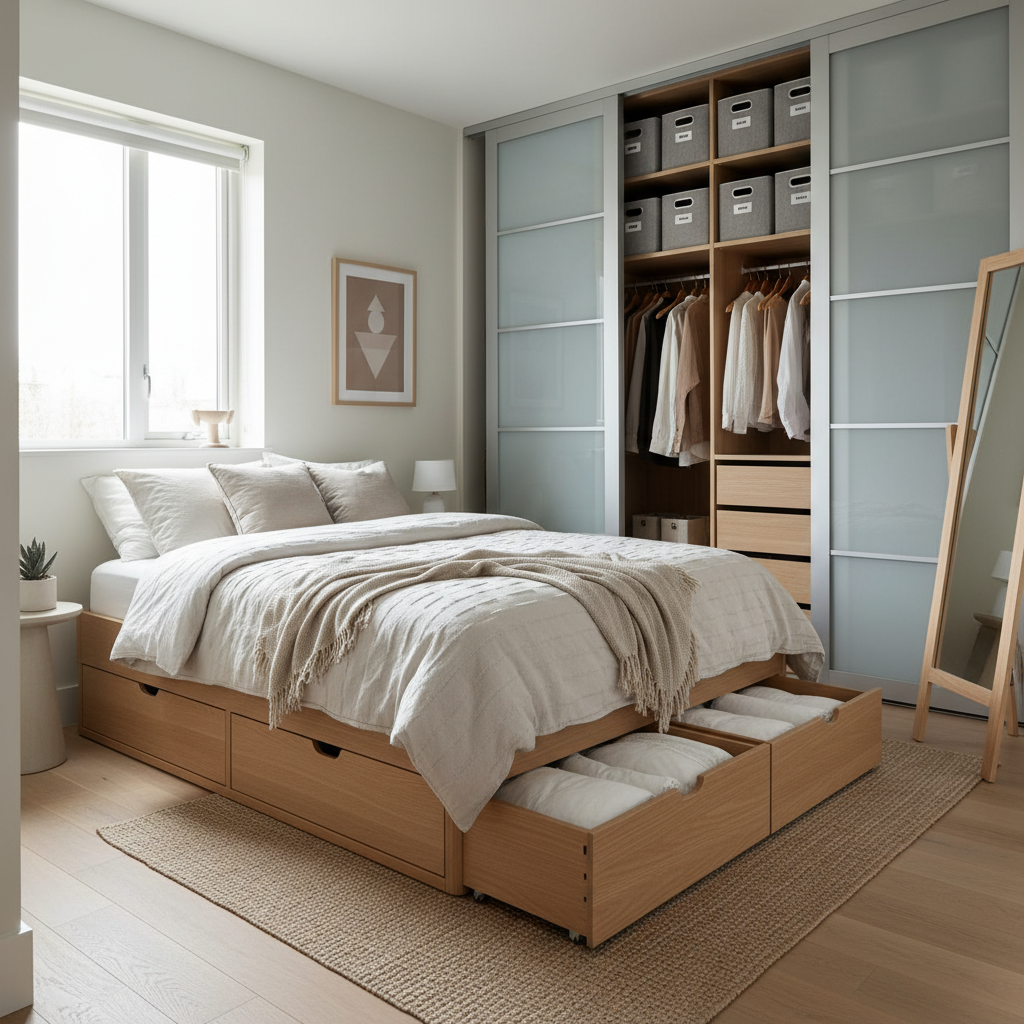
- Bed risers + under-bed drawers: best for seasonal clothes, spare linens, and bulk paper goods.
- Over-the-door organizers: bathroom supplies, cleaning tools, pantry snacks, even hair tools.
- Tension-rod shelf systems: great for closets or between-counter gaps, no drilling required.
- Slim rolling cart: works in the kitchen or bathroom, just measure the gap and pick locking wheels.
- Stackable, clear bins with front access: easier than opaque tubs, you see what you own, so you buy fewer duplicates.
What to skip in many cases: giant “one size fits all” closet kits you can’t adapt, overly deep storage trunks, and weak adhesive hooks for heavy items, those end up on the floor eventually.
Room-by-room playbook (practical, rental-friendly)
This is where most people get unstuck, you don’t need a whole-home makeover, you need a few small wins that remove daily clutter.
Entryway (even if it’s just a corner)
- Wall hooks for bags and jackets, keep them off chairs.
- Shoe strategy: one small rack or slim cabinet, anything else rotates out.
- Drop zone: a tray or small bowl for keys and mail, not the whole countertop.
Living room
- Choose one “closed” piece: storage ottoman, media console with doors, or a sideboard.
- Use wall shelves sparingly: a couple shelves above a desk or sofa beats a full wall that turns into clutter display.
- Hide cables: a simple cable box and a few clips make the room look bigger.
Kitchen
- Go vertical inside cabinets: risers, shelf inserts, and under-shelf baskets.
- Pantry zones: snacks, breakfast, cooking basics, baking, if you can’t label, at least group.
- Counter rules: pick one “allowed” zone for appliances, store the rest.
Bedroom and closet
- One hamper, one catch-all bin: keep “not dirty, not clean” clothes from piling up.
- Double-hang rods if your closet has tall space, shirts above, pants below.
- Seasonal swap box: make it official, label it, date it, put it away.
Bathroom
- Over-toilet shelf or a narrow tower for towels and toiletries.
- Shower caddy that drains: less gunk, easier maintenance.
- Backups limit: keep one spare per item, not five, unless your building’s delivery situation forces it.
Safety note: if you mount anything heavy, follow the manufacturer’s instructions, and if you’re unsure about wall type or load capacity, it’s safer to consult your building maintenance or a professional installer.
A simple shopping guide: compare solutions by space, cost, and effort
If you’re deciding what to prioritize, this table helps you pick storage that matches your pain point, not just what looks good online.
| Solution | Best for | Approx. effort | Common downside |
|---|---|---|---|
| Storage ottoman | Living room clutter, blankets, kids’ stuff | Low | Can turn into a junk drawer if not curated |
| Over-the-door organizer | Bathrooms, cleaning supplies, pantry overflow | Low | May rattle, watch door clearance |
| Under-bed drawers | Seasonal clothes, spare linens | Medium | Harder for daily-use items |
| Closet double-hang | Maximizing hanging space | Medium | Not ideal for long coats and dresses |
| Slim rolling cart | Small gaps in kitchen/bath | Low | Looks messy if categories aren’t contained |
Implementation plan: get results in one weekend
You’ll move faster if you treat this like a project with a finish line, not an endless “organizing journey.”
Step 1: Pick two hotspots only
- Entry + kitchen counters is a common high-impact combo.
- Or closet + bathroom, if mornings feel chaotic.
Step 2: Measure before you buy
- Door width, cabinet depth, under-bed clearance, and the exact gap for any rolling cart.
- Quick rule: if you can’t measure it in 60 seconds, don’t buy it yet.
Step 3: Assign a “home” to daily items
- Give keys, bags, chargers, and mail a fixed spot.
- Put the container where you naturally drop the item, not where it “should” go.
Step 4: Cap duplicates
- Choose a limit for backups, one spare shampoo, one spare toothpaste, one spare detergent, adjust if your shopping pattern requires more.
- If it doesn’t fit in the backup zone, it’s a no.
Step 5: Maintain with a 10-minute reset
According to CDC... keeping living areas clean and reducing clutter can support healthier home routines, especially in shared spaces, you don’t need perfection, but a small daily reset keeps the system working.
Common mistakes to avoid (these kill small-space progress)
- Buying containers first: you end up storing things you don’t even like or use.
- Over-using open shelves: it looks airy in photos, but it demands constant styling.
- Ignoring door swing and clearance: over-the-door racks and rolling carts need real-world testing.
- Storing heavy items up high: looks neat until you need it and it’s unsafe, keep heavier things lower.
- Trying to fix everything at once: small apartments punish half-finished projects because there’s no place to stage the mess.
Key takeaways (quick reminders you can use today)
- Best storage solutions for small apartments rely on access and habit, not just extra bins.
- Vertical space, doors, and under-bed clearance are your biggest “hidden rooms.”
- Closed storage reduces visual clutter faster than a wall of open baskets.
- Measure first, then buy, otherwise you pay for wasted inches.
Conclusion: make space by making decisions, not just stacking stuff
If you want your apartment to feel bigger, focus on the handful of items you touch every day, give them easy homes, then use the higher and lower zones for everything else, that’s where best storage solutions for small apartments really earn their keep.
Your next move can be simple, pick two hotspots, measure, and install one solution that removes daily clutter, then do a 10-minute reset for a week and see what still bothers you, that’s the honest signal for what to improve next.