
Best window treatments for small bedrooms usually come down to three things: they need to save space, control light without making the room feel heavy, and give privacy you actually trust at night.
Small bedrooms punish bulky choices, thick stacks of fabric, and hardware that eats wall space, but they also benefit fast from the right pick, a cleaner window instantly makes the whole room feel calmer and bigger.
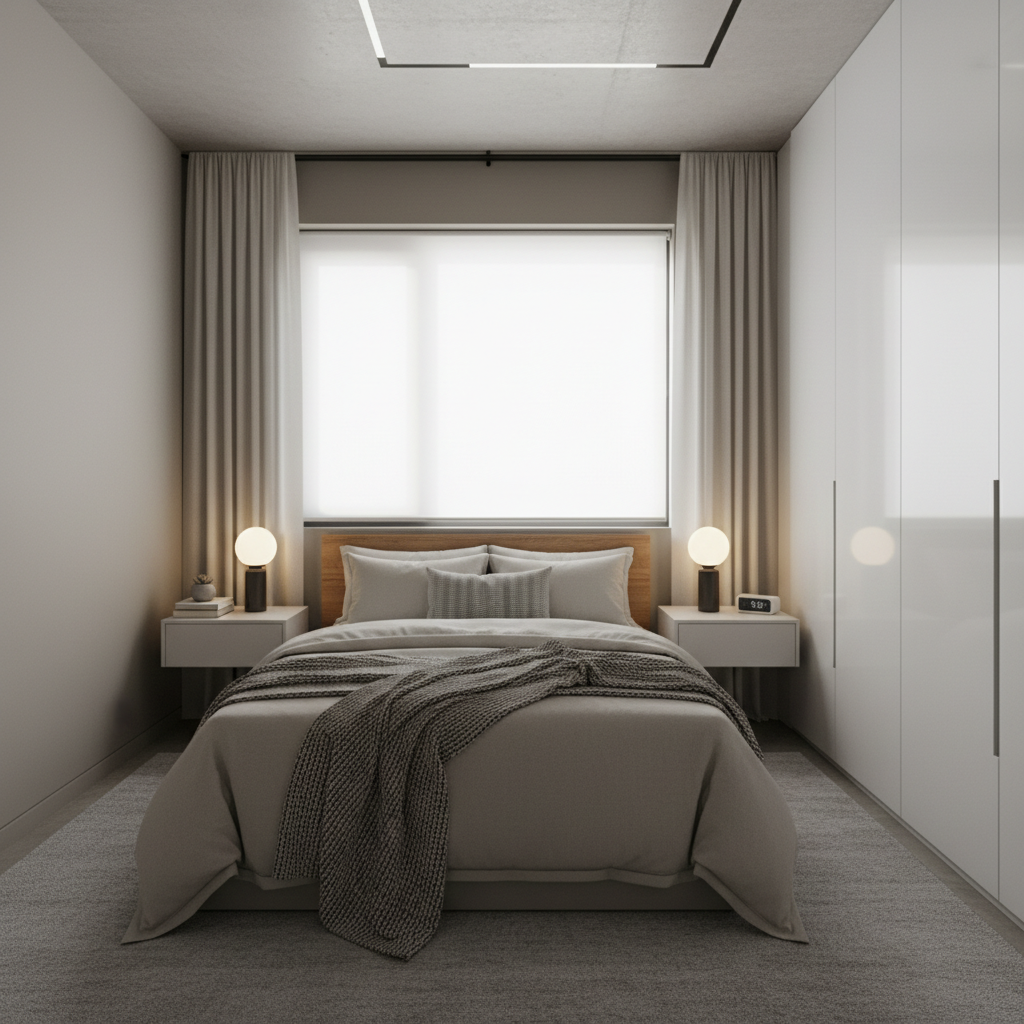
People often assume “small room” means “cheap blinds and call it a day,” but a few smarter decisions like inside-mounting, lighter colors, and the right opacity can change how tall and open the room reads.
What makes window treatments work in a small bedroom
Before brands and styles, it helps to judge the window like a designer would: what problem are you solving, and what can you not afford to lose in a tight space.
- Depth matters: If your sill is shallow, thick cellular shades or layered drapery may stick out and visually crowd the wall.
- Light direction matters: East-facing rooms often need better morning glare control, west-facing rooms often need heat reduction late afternoon.
- Privacy expectations: “Light-filtering” looks private in daylight, but at night with lights on it can feel exposed.
- Cleaning and allergies: Fabric holds dust more than hard shades in many homes, which is worth considering for bedrooms.
According to the U.S. Department of Energy, well-chosen window coverings can reduce unwanted heat gain and heat loss, which is part comfort and part energy cost, even in a small room where temperature swings feel more obvious.
Quick self-check: choose your category in 60 seconds
If you’re stuck, sort yourself into one lane, it narrows the choices fast and keeps you from overbuying.
- I need real darkness: streetlight, morning sun, or shift-work sleep.
- I need daytime privacy without a cave: close neighbors, apartment facing another building.
- I need to make the room look bigger: low ceiling, narrow wall space, window feels visually “small.”
- I need a renter-friendly setup: minimal holes, easy removal, simple hardware.
- I have tricky constraints: radiator under the window, AC unit, window crank, or a bed pushed near the frame.
Once you pick your lane, the best window treatments for small bedrooms become more obvious, because you’re matching function first, not just style.
The top window treatment options (and when they’re actually the best)
Here are the solutions that tend to perform well in small bedrooms, with the trade-offs spelled out.
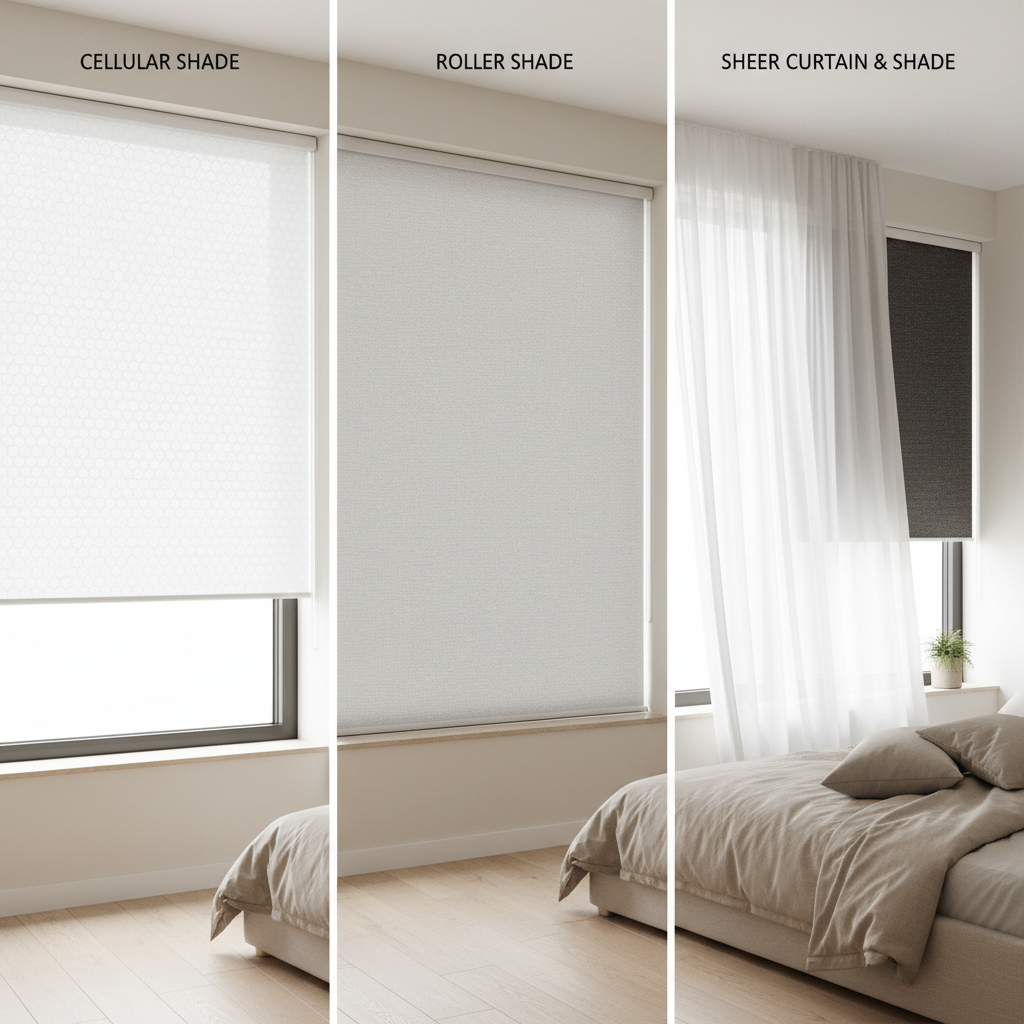
Cellular shades (honeycomb): best all-around for comfort + clean lines
Cellular shades sit close to the window, look tidy, and often help with insulation. In small rooms, that “flat” look is a big win.
- Great for: bedrooms with temperature swings, anyone wanting a minimalist look
- Watch out for: very shallow window depth, cords if you have kids or pets
Roller shades: best for the smallest visual footprint
A simple roller shade is hard to beat when you want the window to disappear. Light-filtering fabrics keep things airy, blackout fabrics help sleep.
- Great for: modern rooms, renters, tight spaces near the window
- Watch out for: side light gaps on blackout versions unless you add a valance or side channels
Roman shades: best “soft” look without full drapes
Romans add texture, but they stack at the top. In a very small bedroom, that top stack can feel heavy if you choose thick fabric or bold patterns.
- Great for: cozy style, adding warmth in an otherwise plain room
- Watch out for: bulky folds in thick linen blends, dust collection
Sheer curtains + a shade: best for flexible light and a taller look
If you want the “hotel” vibe, a shade does the serious work, and sheers soften the window. The trick in small rooms is to keep fabrics light and hardware minimal.
- Great for: privacy plus softness, making windows feel larger
- Watch out for: too much layering can overwhelm a tight wall
Faux wood or aluminum blinds: best when you need precise light control
Blinds let you angle light and keep privacy, but they add visual lines. In small bedrooms they work best when kept simple and matched to trim.
- Great for: street-facing rooms, people who like adjustable light
- Watch out for: “busy” look, dusting time, slat noise
Comparison table: pick the right treatment for your room
Use this as a practical cheat sheet when you’re narrowing down what to buy.
| Option | Space-saving | Privacy at night | Light control | Best use case |
|---|---|---|---|---|
| Cellular shade | High | High (blackout), Medium (filtering) | High | All-purpose small bedrooms |
| Roller shade | Very high | High (blackout), Medium (filtering) | Medium to High | Minimalist look, tight layouts |
| Roman shade | Medium | Medium to High | Medium | Soft, tailored style |
| Sheer + shade combo | Medium | High (with shade) | High | “Bigger window” effect |
| Blinds (faux wood/aluminum) | High | Medium to High | Very high | Streetlight, close neighbors |
Installation choices that make a small bedroom feel bigger
This is where many people accidentally shrink the room, even after buying the “right” product.
Go inside-mount when you can
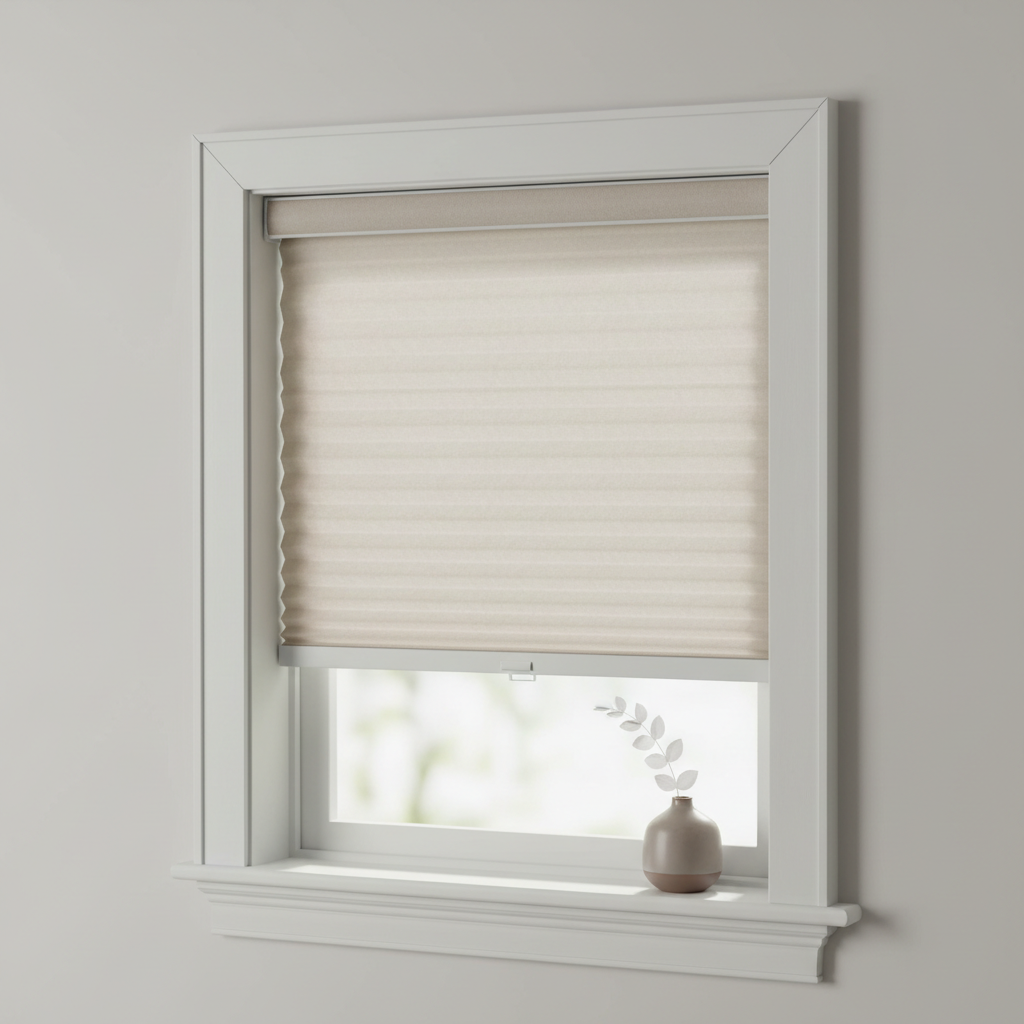
Inside-mount shades sit within the window frame, so the wall stays visually clean. That usually reads as more space, especially if your room has tight corners or a bed near the window.
- Measure top, middle, bottom width, use the smallest number
- Check depth requirements before ordering, some styles need more depth than expected
Mount curtains higher and wider, but keep them light
If you want curtains, hang the rod closer to the ceiling and extend it past the window so panels stack mostly on the wall, not over the glass. It’s a classic trick because it works, but in small bedrooms the fabric weight matters more than people think.
- Panel look: linen-look sheers or light textured weaves feel less bulky
- Rod choice: slim rod, simple finials, avoid oversized brackets
Consider cordless or wand control for a cleaner silhouette
Fewer hanging cords means less visual clutter and often fewer safety worries. According to U.S. Consumer Product Safety Commission guidance, cordless window coverings can reduce strangulation hazards for young children, so in family homes it’s often a sensible default. If you’re unsure what’s safest for your setup, it may be worth asking a local installer.
Room-by-room scenarios: what to buy for your specific pain point
Here’s the practical part, because “small bedroom” can still mean very different problems.
If you need blackout sleep (streetlights, early sun)
- Start with: blackout roller shade or blackout cellular shade
- Then fix gaps: add a simple valance, or consider side channels if the light bleed is driving you crazy
- Optional layer: lightweight drapery panels for softness, not for darkness
Blackout is also where sizing accuracy matters most, so measure carefully and don’t guess. If you’re between sizes, most manufacturers size down a bit for inside mounts.
If you want privacy but still like daylight
- Start with: top-down/bottom-up cellular shades, or light-filtering roller shades
- For apartments: pair with sheer panels so you can leave the shade up while still softening the view
This is often the sweet spot for the best window treatments for small bedrooms, because you get “bright but not exposed” without adding thickness.
If your bed sits right against the window wall
- Start with: inside-mount shade (cellular or roller) to avoid fabric brushing your pillow
- Avoid: long drapes that pool, they collect dust and feel messy fast in tight layouts
If you’re renting and can’t drill much
- Try: tension rods for café curtains, or no-drill shade brackets designed for specific window types
- Reality check: some “no-drill” solutions hold well, others slip over time, read the installation requirements carefully
Common mistakes (and what to do instead)
- Choosing heavy, dark drapes for a tiny room: if you want drama, keep curtains light and let the shade do light control.
- Ignoring nighttime privacy: “light-filtering” may silhouette you at night, if that bothers you, add a liner or switch to room-darkening.
- Mounting the rod right on top of the frame: it can make the window look shorter, raising it a few inches often helps.
- Buying before measuring depth: especially with inside-mount cellular shades, confirm the minimum depth so it sits flush.
- Over-layering: double rods, thick panels, valances, and tiebacks can overwhelm small bedrooms, keep one hero move.
One small but meaningful detail: match the shade color close to the wall or trim. High contrast can look sharp, but it also emphasizes edges, which sometimes makes a small room feel busier.
Practical buying checklist (so you don’t redo it twice)
Before you click “add to cart,” run through this list. It prevents most returns and most “why does this feel off” moments.
- What is the priority: blackout sleep, privacy, heat control, style, or all three
- Mount type: inside or outside, and whether you have enough depth
- Opacity level: sheer, light-filtering, room-darkening, blackout
- Control type: cordless, wand, motorized, corded
- Hardware scale: slim rods and simple brackets for small rooms
- Care needs: wipe-clean vs washable fabric, important for allergies and dust
Key takeaways: In small bedrooms, clean lines and correct mounting usually beat extra layers, and a simple shade in the right opacity solves more problems than people expect.
When it makes sense to call a pro
If your window is out of square, very wide, hard to access, or near a safety concern like a crib location, professional measuring and installation can save money long-term. Motorized shades, especially, benefit from correct mounting and power planning. If you’re unsure about child safety, wiring, or structural issues in older walls, it’s sensible to consult a qualified installer or contractor.
Conclusion: the simplest path to a better small bedroom window
The best window treatments for small bedrooms are usually the ones you barely notice, because they sit close, control light the way you need, and don’t steal visual space from the wall. For most rooms, start with a well-sized cellular or roller shade in the right opacity, then add soft curtains only if you still want warmth or height.
If you want an easy next step, measure your window depth and decide whether you need blackout or light-filtering, those two answers narrow the field faster than scrolling through a hundred “cute” options.
FAQ
- What are the best window treatments for small bedrooms with low ceilings?
Try an inside-mount shade and, if you add curtains, mount the rod closer to the ceiling and extend it wider than the frame so the window reads taller and larger. - Are blackout curtains or blackout shades better in a small bedroom?
Many small rooms do better with blackout shades because they take up less space, then you can add lightweight panels for style without bulk if you want. - How do I get privacy at night without making the room dark?
Top-down/bottom-up cellular shades are a strong option, you can block the lower view line while keeping daylight from the top. - Do sheer curtains provide privacy in an apartment?
In daylight they often help, but at night with lights on they may not feel private, pairing sheers with a shade is usually more reliable. - What window treatments work best behind a bed?
Go with a low-profile shade, roller or cellular, inside-mount if possible, it avoids fabric bunching where your headboard and pillows sit. - Are blinds a bad idea for small bedrooms?
Not necessarily, blinds can be great for angled light control, they just look busier than a shade, so matching them to trim helps. - Should I choose inside mount or outside mount for a small room?
Inside mount tends to look cleaner and save space, but if the window is shallow or you need better light blocking, outside mount can perform better.
If you’re deciding between two options and both seem “fine,” pick the one with the slimmer profile and the opacity you actually need at night, that’s where small-bedroom window choices usually succeed or fail.