
Mid century modern home decor works best when you treat it like a system, not a shopping list: clean lines, honest materials, warm wood, and a few iconic shapes that anchor the room.
If you have ever tried to “add some MCM” and ended up with a space that feels like a themed Airbnb, you are not alone. The style looks effortless, but the balance is picky: too many statement pieces and it turns into clutter, too few and it reads bland.
This guide keeps it practical for 2026 shopping realities, smaller homes, open-plan living, mixed materials, and the fact that not everyone wants a museum-perfect replica. You will get a quick cheat sheet, a room-by-room plan, and a few rules that prevent expensive mistakes.
What Mid-Century Modern Means (and what it doesn’t)
Mid-century modern is less about copying a decade and more about a design logic: function first, simple geometry, and materials that look like themselves. It also tends to favor pieces that “float” visually, like tapered legs and open bases that keep rooms feeling light.
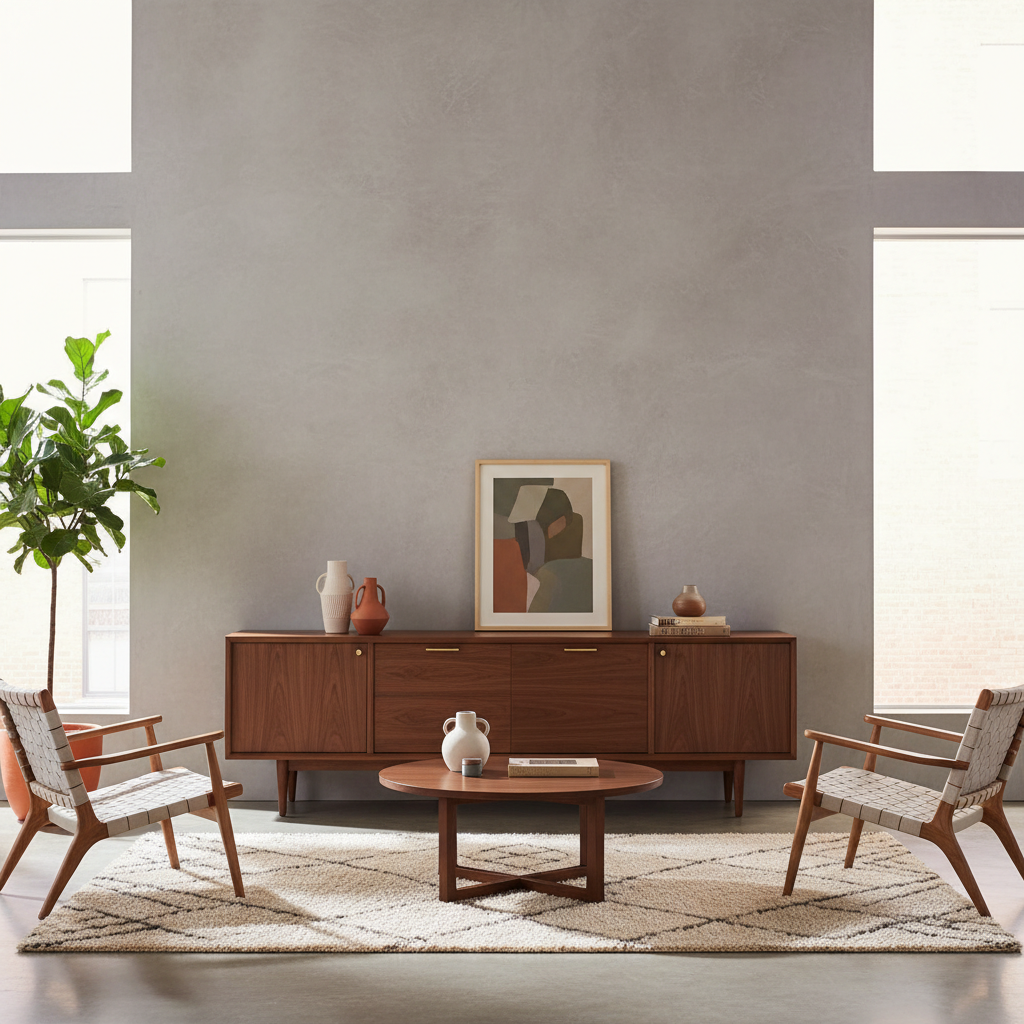
What it is not: a strict “atomic age” theme, a room full of replicas, or an excuse to buy only vintage. Many 2026 homes mix new and old because comfort standards, sectionals, and lighting tech have changed.
Key idea: pick a few unmistakable signals of the style, then let the rest be quiet and supportive.
- Signals: tapered legs, sculptural lighting, warm woods (walnut/teak tones), simple silhouettes
- Support: solid neutrals, breathable textures, storage that looks streamlined
2026 Quick Style Cheat Sheet (Colors, woods, metals, patterns)
When people get stuck, it is usually because they try to “match” everything. Mid-century modern home decor looks more authentic when you build contrast: warm wood against crisp upholstery, soft textures against sharp lines.
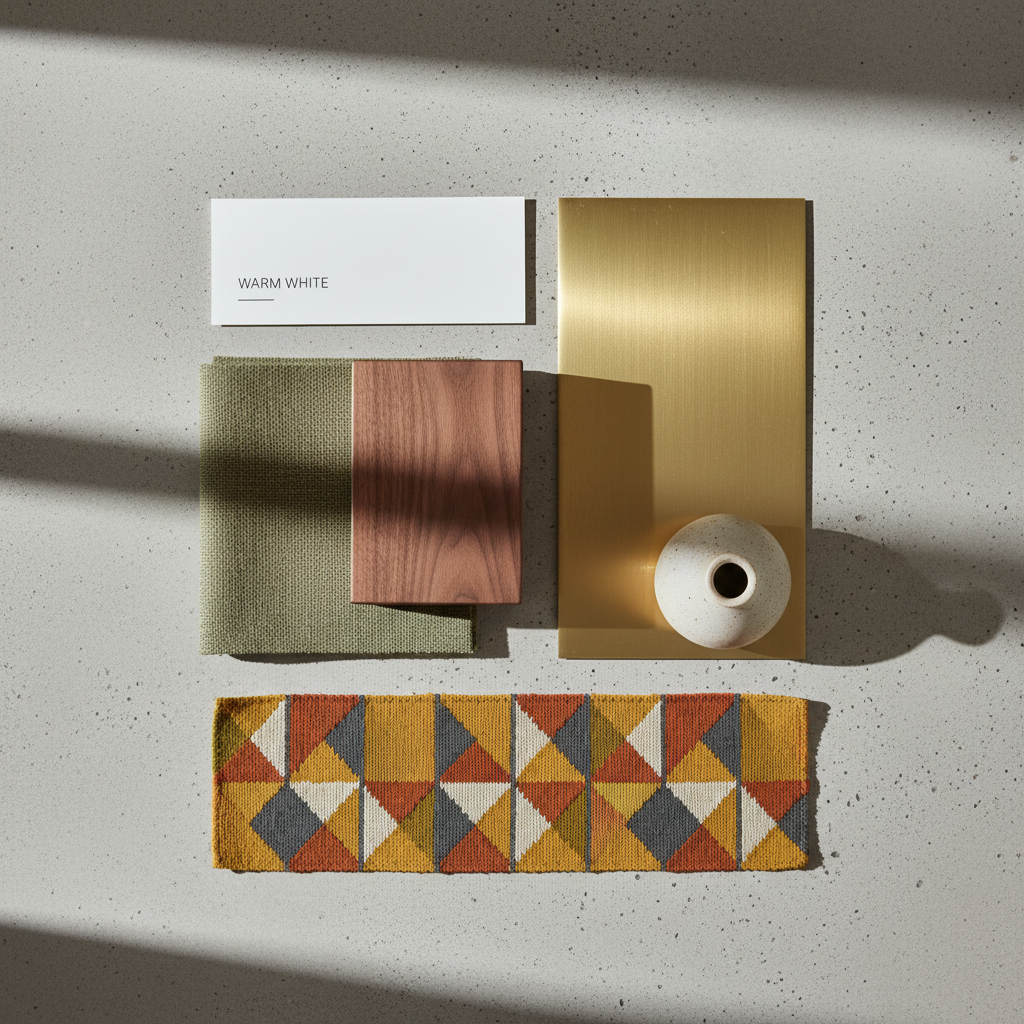
Use this as your baseline palette:
- Neutrals: warm white, oatmeal, greige, tobacco, charcoal (use sparingly)
- Accents: olive, rust, ochre, deep teal, muted mustard (one or two per room)
- Wood tones: walnut or walnut-like stains read most “classic,” but lighter oak can still work if shapes stay MCM
- Metals: brushed brass, matte black, or satin nickel, pick one primary finish per room
- Patterns: geometric, small-scale abstract, subtle stripes; avoid overly busy novelty prints
According to The American Society of Interior Designers (ASID)... homes tend to feel more cohesive when finishes repeat with intention instead of changing in every corner, which is exactly the mistake that makes mid-century spaces feel random.
Start With Anchors: The 5 Pieces That Make the Style Read Immediately
If your budget is limited, do not spread it across twenty “cute” decor items. Put money into a few anchors and let accessories do the rest. This is where mid century modern home decor usually pays off visually.
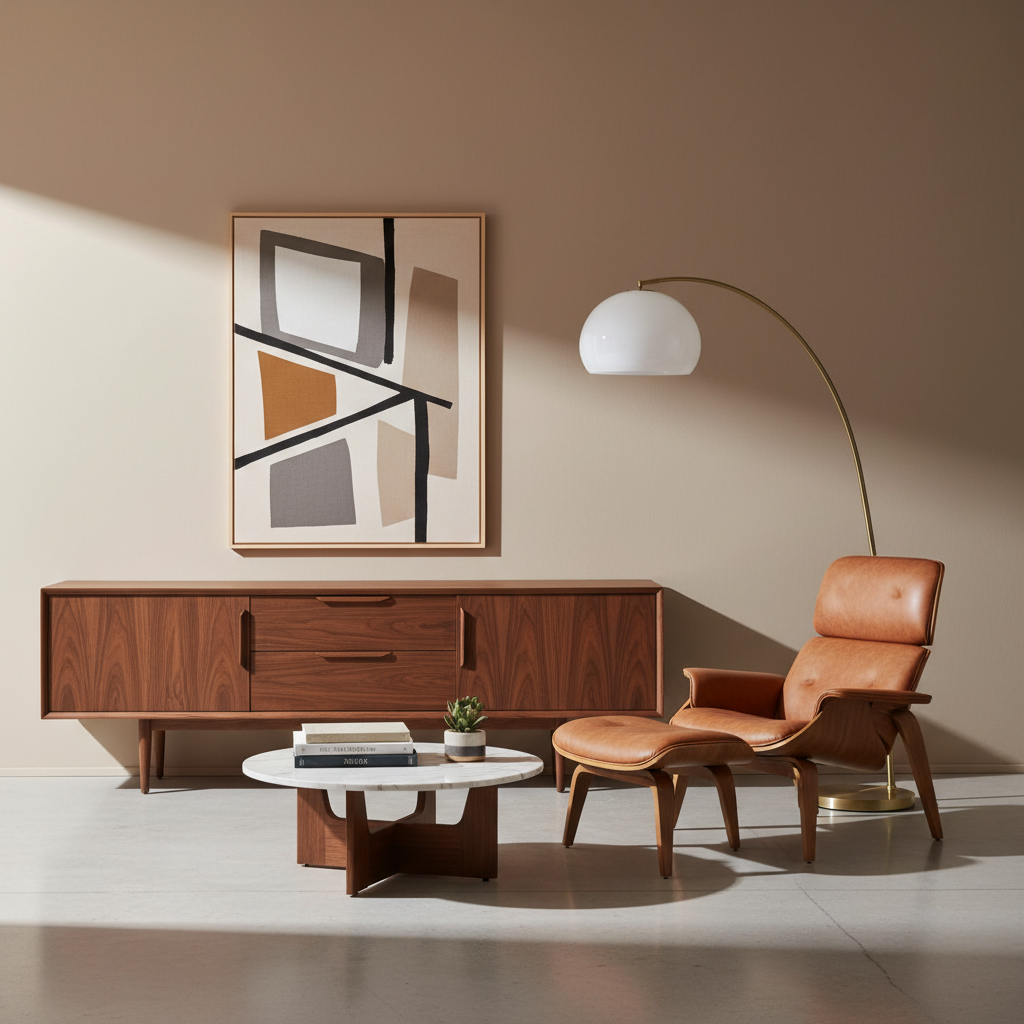
- Credenza or low media console: long, low, clean fronts, tapered legs
- Statement lounge chair: molded shell, bentwood, or a simple upholstered profile with wood arms
- Lighting with presence: globe pendant, sputnik-inspired chandelier, arc floor lamp
- Rug that sets the grid: low pile, geometric or subtle texture, sized large enough for the main seating
- One large art piece: abstract, color-block, or minimalist photography in warm tones
Buying tip: prioritize silhouette over label. A well-proportioned modern reproduction often reads “more MCM” than an awkward vintage piece that does not fit your room.
Room-by-Room Setup (Living, dining, bedroom, entry)
Living room
Keep sightlines open. Mid-century rooms feel airy because furniture sits on legs and the floor shows. If you are using a sectional, choose one with visible legs and a slimmer arm profile so it does not dominate.
- Put the credenza on the longest wall, keep decor minimal: one lamp, one tray, one plant
- Choose a coffee table with a thin top and rounded edges to soften the geometry
- Layer texture with a boucle or wool throw, not more objects
Dining area
A round or oval table is the easiest win for tighter American dining nooks, it improves flow and feels period-correct without being fussy. Pair with simple chairs, then add the “wow” through a pendant.
- One pendant centered over the table, warm bulbs (avoid harsh cool light)
- Sideboard storage if you have wall space, it keeps countertops cleaner
Bedroom
Go calmer here. A wood headboard with simple lines, matching nightstands, and one accent color usually beats a “statement wall” full of small art.
- Choose bedding in solids and add one patterned pillow
- Use plug-in sconces if you lack wiring, but mount them neatly
Entry
If your entry is small, a slim console plus a round mirror gives you the vibe fast. Add one tray for keys and stop there.
A Simple Mixing Formula: Vintage, Reproductions, and Modern Comfort
Most people want the look, but also want a couch you can actually nap on. The fix is a mixing rule that keeps the room coherent.
Try the 60/30/10 approach: about 60% quiet basics, 30% mid-century signals, 10% bold accents. This keeps mid century modern home decor from becoming a costume.
- 60% Basics: sofa, rugs, curtains, paint, storage that blends in
- 30% Signals: credenza, dining set, iconic lighting, lounge chair
- 10% Accents: one saturated color, one pattern, one sculptural object
According to the National Association of Home Builders (NAHB)... durability and maintenance matter in everyday homes, so it makes sense to choose performance fabrics and easy-clean finishes even if they are not historically exact.
Practical Checklist: Does Your Space Read “Mid-Century” Yet?
Use this as a quick self-audit before you buy anything else. If you answer “no” to several items, fix those first, then shop.
- Furniture has legs: at least your main seating and one storage piece
- Wood tone feels consistent: one dominant warm wood, others close enough to not fight
- Lighting is intentional: at least one sculptural fixture, not only recessed lights
- Room has negative space: not every surface is styled
- Art scale is right: fewer, larger pieces rather than many tiny frames
- Accent color is controlled: one hero color, repeated 2–3 times
Common Mistakes (and what to do instead)
These are the problems that make a room feel “off,” even after you spend money.
- Mistake: too many small decor objects. Do instead: upgrade scale, one larger plant or art piece replaces five trinkets.
- Mistake: matching sets everywhere. Do instead: keep one consistent wood tone, mix chair styles within a shared silhouette.
- Mistake: harsh cool lighting. Do instead: warm bulbs and layered light sources, table lamp plus floor lamp plus overhead.
- Mistake: rugs that are too small. Do instead: front legs of seating sit on the rug at minimum.
- Mistake: ignoring safety with vintage wiring. Do instead: have older fixtures inspected and rewired by a qualified electrician if needed, especially in many older U.S. homes.
Budget Planning Table: Where to Spend vs. Save
If you want the style to last past one trend cycle, spend where you touch daily and save where you can swap later.
| Category | Spend When... | Save When... |
|---|---|---|
| Sofa | You need comfort + long wear; choose durable upholstery | It is a short-term place-holder or a secondary room |
| Credenza / storage | You want solid wood/veneer and smooth hardware | You can find a clean-lined replica with good reviews |
| Lighting | You want a true statement fixture or quality shade materials | Table lamps where a simple silhouette works |
| Rug | You have pets/kids and need a larger size that anchors the room | Low-traffic areas where a smaller accent rug works |
| Art + accessories | You found one piece you genuinely love | You are still testing palette and scale |
Closing: A 30-Minute Action Plan for This Week
If you want mid century modern home decor to look intentional, pick one anchor to commit to, then edit the room around it. That is the move most people skip because editing feels boring, but it is what makes the style land.
Do this next: choose your dominant wood tone, pick one accent color, then decide which single piece will be your “signal” item (lighting or credenza is usually easiest). After that, pause shopping and fix layout and lighting.
FAQ
- How do I make mid-century modern feel cozy, not cold?
Use texture and warm light. Think wool rug, linen curtains, and a couple of lamps with warm bulbs, then keep silhouettes clean so it still reads MCM. - Can I mix mid-century modern with Scandinavian style?
Usually yes, because both favor simple lines and function. Keep woods in the same temperature range and avoid doubling up on busy patterns. - What paint colors work best for mid-century modern rooms?
Warm whites and soft neutrals work for most homes, then add one muted accent like olive or rust. In darker rooms, a warm off-white often feels better than bright pure white. - Is walnut required for the mid-century look?
No. Walnut is a strong signal, but shape matters more. If you use oak, keep forms streamlined and add contrast with darker accents or black metal. - How many statement pieces are too many?
If every wall has a “moment,” the room starts to compete with itself. In many living rooms, one big lighting fixture plus one standout chair is already enough. - Where should I shop for mid-century modern home decor in 2026?
Try a mix: vintage stores for one authentic piece, mainstream retailers for basics, and specialty brands for lighting. Check dimensions carefully so pieces fit your layout. - Is vintage mid-century furniture safe to use?
Furniture is usually fine if it is structurally sound, but older lighting and wiring can be risky. If you are unsure, it is smart to consult a qualified electrician or restorer.
If you are trying to pull a room together fast, it often helps to build a small “starter kit” around one anchor piece, then choose lighting, rug size, and art scale with a clear plan instead of impulse buys.