
how to remove rust from metal furniture outdoor usually comes down to two things: matching the method to the rust level, and adding protection so it doesn’t come right back.
If you’ve ever scrubbed a chair until your arms hurt, only to see orange spots reappear after the next rain, you’re not alone, outdoor rust is stubborn because moisture and sun keep breaking down finishes.
This guide walks you through quick diagnosis, safe prep, removal options from “light haze” to “flaky rust,” and practical ways to seal and maintain your furniture so your time pays off.
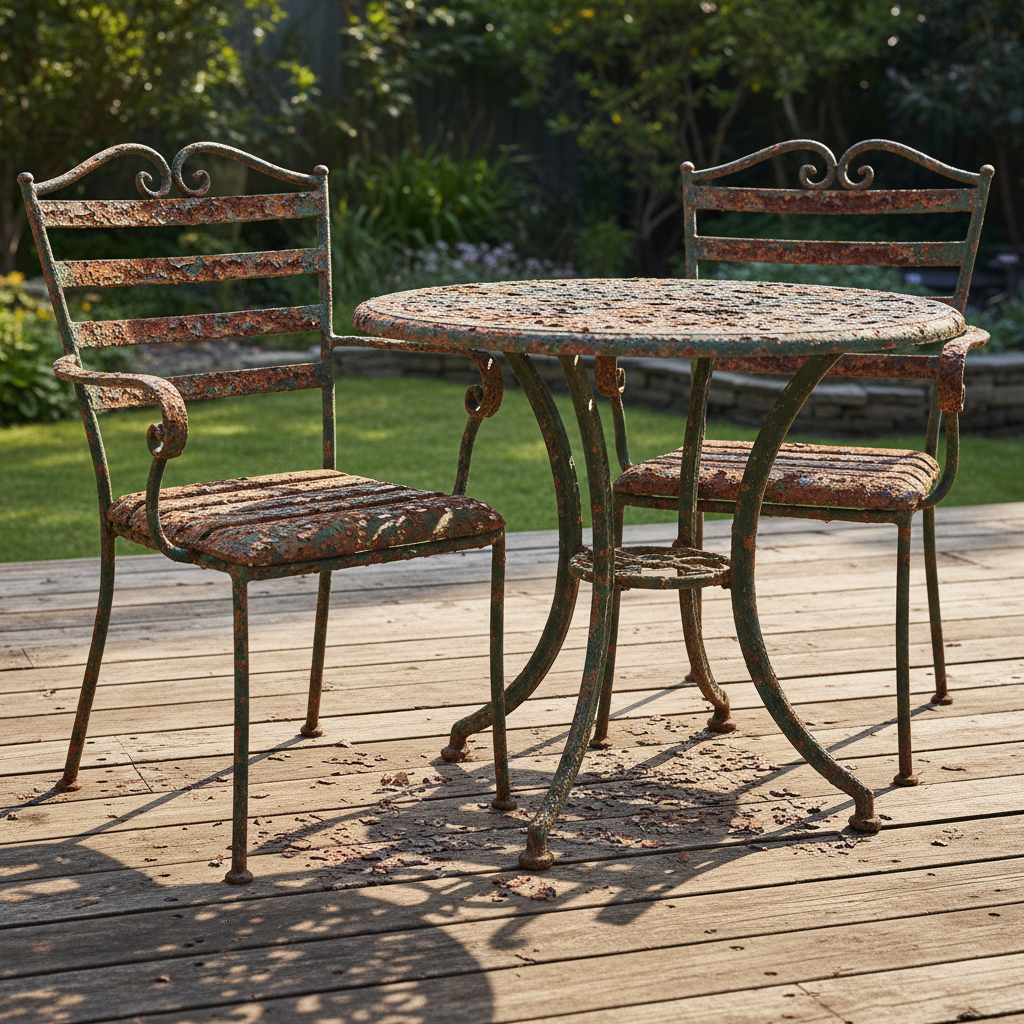
Why outdoor metal furniture rusts (and why it keeps coming back)
Rust is iron oxide, it forms when iron or steel meets oxygen and moisture. Outdoor conditions add extra accelerators, and a few are easy to miss.
- Paint or powder coat damage: tiny chips become water entry points, then rust creeps under the coating.
- Standing water: horizontal bars, screw heads, and welded joints trap moisture longer than you think.
- Salt and chemicals: coastal air, pool splash, and some de-icers speed corrosion.
- Mixed metals: steel fasteners touching aluminum can create galvanic corrosion in wet conditions.
According to NOAA, sea salt aerosols and marine air can increase corrosion risk near coasts, so patio sets in coastal states often need more frequent sealing and touch-ups.
Quick self-check: what kind of rust are you dealing with?
Before you pick a product, spend one minute classifying the rust. It prevents the common mistake of using a mild cleaner on a heavy problem, or going too aggressive and gouging the metal.
Use this 60-second checklist
- Light surface rust: orange haze, metal still smooth, no flaking paint.
- Moderate rust: rough texture, small pits, paint bubbles or edges lifting.
- Heavy rust: thick flakes, crumbling areas, soft spots, loose joints.
- Material check: a magnet sticks to steel/iron, not to aluminum. (Aluminum “corrosion” looks more white and chalky than orange.)
Pick your approach (simple table)
| Rust level | Best starting method | When to escalate | Finish needed |
|---|---|---|---|
| Light | Vinegar/citric gel or light abrasive pad | If orange returns after rinse | Wax or clear coat |
| Moderate | Wire brush + sandpaper, then rust converter | If pitting spreads under paint | Primer + paint (or enamel) |
| Heavy | Mechanical removal (grinding) + converter | If structure is weakened | Primer + paint, consider replacement |
If you’re unsure, start gentler and step up, it’s easier to do a second pass than to undo scratches.
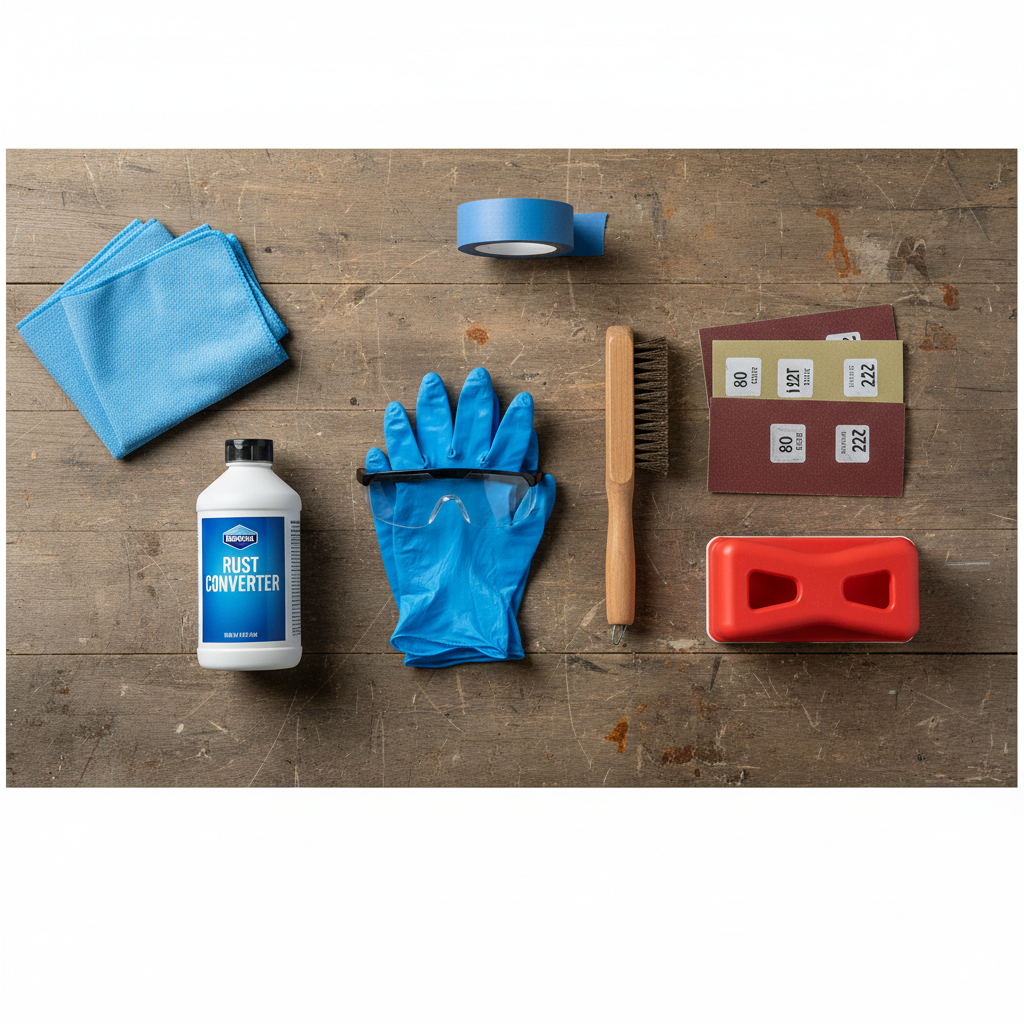
Prep and safety: the step people skip, then regret
Most “rust removal failed” stories trace back to prep. Oils, loose paint, and damp metal block removers and coatings from bonding.
- Work location: outdoors or in a well-ventilated garage, especially if you plan to use converter, primer, or spray paint.
- Protect yourself: gloves and eye protection, rust dust and wire bristles can irritate skin and eyes. A dust mask helps when sanding.
- Degrease first: wash with dish soap and water, rinse, then dry fully. For oily residue, a dedicated degreaser may work better.
- Remove loose coating: scrape peeling paint so you don’t seal rust under a film.
According to OSHA, airborne dust and chemical vapors can pose health risks in enclosed spaces, so ventilation and basic PPE are sensible even for small DIY jobs. If you have asthma or sensitivity, it may be worth asking a professional for help.
Rust removal methods that actually work (choose by scenario)
There isn’t one universal remover. The “right” answer depends on how deep the oxidation goes and whether you plan to repaint.
Option A: Light rust, keep the existing finish
- Acid soak or gel: white vinegar or a citric-acid based gel can loosen surface rust. Apply, wait, then scrub with a non-scratch pad.
- Gentle abrasion: fine steel wool or a synthetic pad, used lightly, can lift rust without stripping good paint in many cases.
- Rinse and dry: water left in seams restarts the problem fast, towel dry, then air dry.
Where this fails: rust at chips and edges. It looks “light,” but it’s often rust tunneling under paint, that needs sanding and spot refinishing.
Option B: Moderate rust, paint is bubbling or lifting
- Wire brush first: remove powdery orange material and anything loose.
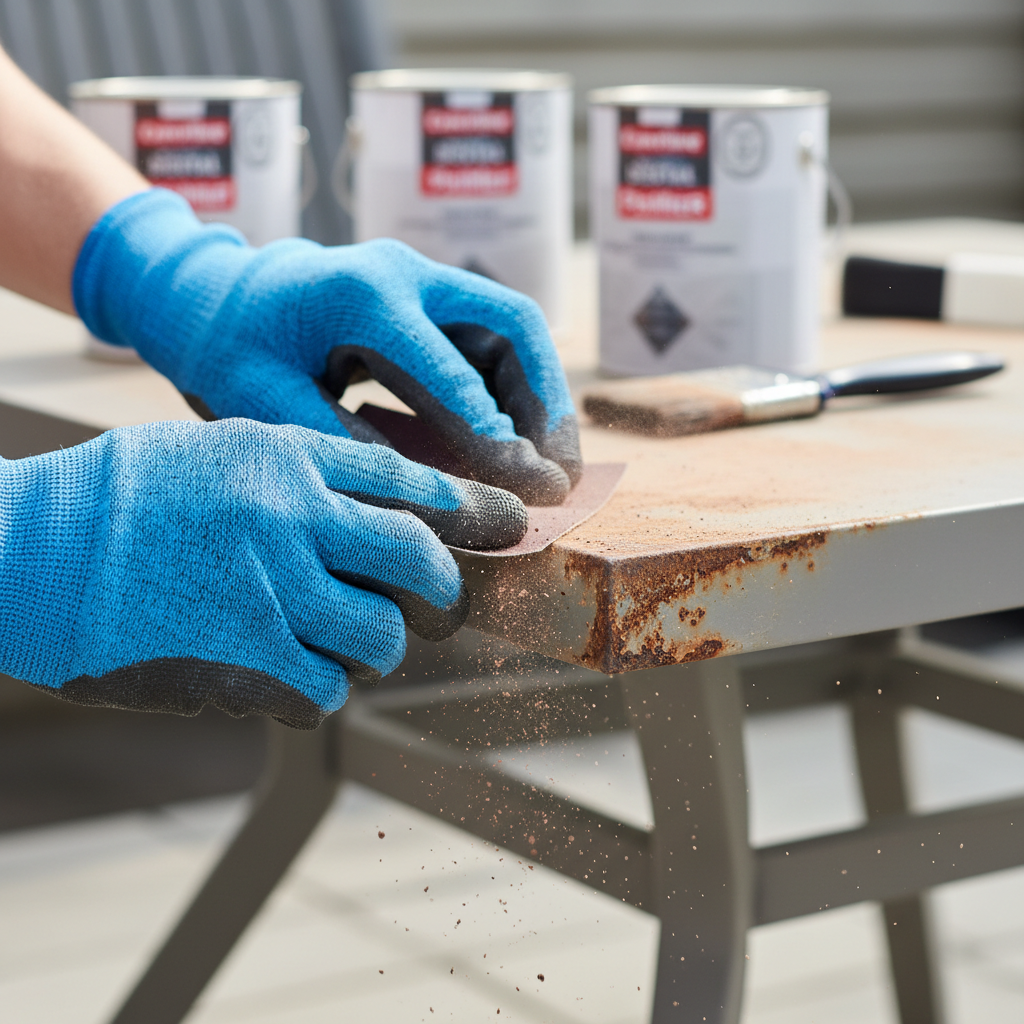
- Sand to sound metal: 80–120 grit for removal, then 180–220 to smooth. You want firm edges, not feathered flakes.
- Rust converter: converts remaining oxidation into a more stable layer. Follow label cure times, rushing this step is a classic reason paint fails.
Many people ask how to remove rust from metal furniture outdoor without repainting, but if paint has lifted, a partial refinish often saves time long term because it stops rust creep.
Option C: Heavy rust, flaking and pitting
- Mechanical removal: a drill with a wire wheel or flap disc speeds up work, but go carefully, it’s easy to overgrind thin tubing.
- Assess strength: if legs feel soft, joints wobble, or metal has deep pits at load points, replacement may be safer than cosmetic repair.
- Converter as backup: after removing what you can, converter helps stabilize what remains in pits and seams.
If your furniture is vintage wrought iron with thick stock, heavy restoration can make sense. For thin, mass-market steel tubing, there’s a point where effort outweighs the result.
How to repaint and seal so rust doesn’t return quickly
Removal is only half the job. Outdoor furniture fails at the “protection” stage, usually because the surface wasn’t dry, or the coating system didn’t match exterior exposure.
A practical coating stack (common and reliable)
- Rust-inhibiting primer: improves adhesion and blocks moisture. Choose an exterior-rated formula.
- Topcoat: enamel spray paint or brush-on exterior metal paint, thin coats beat one thick coat for durability.
- Optional clear coat: helps with UV and water resistance, but only if it’s compatible with the paint system.
Small details that matter outdoors
- Mind the weather window: humidity and temperature affect cure times. If rain hits uncured paint, you can get haze, bubbling, or early peeling.
- Don’t paint over damp seams: towel dry, then give it time. Tubes and joints hold moisture.
- Feather edges: sharp paint edges lift faster because water gets underneath.
If you want to keep the original look (especially black wrought iron), a matte or satin exterior enamel usually looks closer to factory than high-gloss.
Maintenance that keeps outdoor rust from reappearing
Once you’ve figured out how to remove rust from metal furniture outdoor, the bigger win is stretching the time until you have to do it again.
- Seasonal rinse: a quick wash removes salt, pollen, and grime that hold moisture against the metal.
- Touch up chips early: a tiny dab of matching paint beats a full sand-and-repaint later.
- Keep feet off wet surfaces: plastic or rubber caps help reduce moisture wicking from concrete or soil.
- Use breathable covers: fully sealed tarps can trap condensation, which quietly accelerates corrosion.
If you live near the coast or by a pool, you may need shorter touch-up intervals, that’s not you doing it wrong, that’s the environment.
Common mistakes (so you don’t waste a weekend)
- Painting over “stained” rust: orange discoloration often bleeds through unless you sand or convert it.
- Skipping degreasing: sunscreen, grill smoke, and patio grime can cause fish-eyes and peeling.
- Using the wrong brush: carbon steel brushes can leave particles that rust again, stainless brushes can be a better choice for some metals.
- Mixing incompatible coatings: primers and topcoats from different systems sometimes wrinkle or fail. When in doubt, stick to one product line.
- Over-sanding thin tubes: it “looks clean,” but you may weaken the metal where it needs strength.
When it’s time to call a pro (or replace the piece)
DIY is realistic for most cosmetic rust. It’s also fine to decide the job is bigger than a Saturday.
- Structural concerns: cracks at welds, wobbling frames, deep pitting on load-bearing legs.
- Lead paint risk: if furniture is older and you suspect legacy paint, sanding can create hazardous dust. According to the EPA, lead-safe practices are recommended when disturbing lead-based paint, if you’re unsure, get professional guidance.
- Large sets or intricate patterns: ornate wrought iron can be time-intensive, media blasting and professional coating might be more efficient.
If you choose replacement, keep the best hardware and cushions, and consider furniture with aluminum frames or better outdoor-rated coatings in your climate.
Key takeaways (bookmark this part)
- Match method to rust level: mild cleaners for light rust, sanding and converter for moderate to heavy.
- Prep decides the outcome: clean, dry, remove loose paint, then treat rust.
- Protection is the real “fix”: primer plus exterior topcoat, then quick touch-ups.
- Environment sets your schedule: coastal and pool areas need more frequent maintenance.
FAQ
What is the easiest way to remove rust from outdoor metal furniture?
For light surface rust, a vinegar wipe or citric gel plus a non-scratch pad is often the easiest. If paint is bubbling, you usually save time by sanding that area and spot refinishing instead of repeatedly scrubbing.
Can I use WD-40 to remove rust from patio furniture?
It can help loosen light oxidation and protect temporarily, but it’s not a long-term outdoor solution by itself. If you plan to paint, remove oily residue fully or coatings may not adhere.
Do I need a rust converter, or can I just sand and paint?
If you can sand to clean, bright metal everywhere, converter may be optional. In real patio furniture seams and pits, converter often helps because you rarely remove every trace of oxidation.
How do I stop rust from coming back after cleaning?
Dry thoroughly, then add protection, either a proper primer/topcoat system or at least a wax or clear coat for minimal-rust cases. Also fix the cause when possible, like adding caps to feet or avoiding water-trapping covers.
Is it safe to sand rusty metal furniture at home?
Usually yes with basic precautions, but dust and old coatings can be irritating. Wear eye protection and a dust mask, ventilate well, and if you suspect older paint that could contain lead, it’s smarter to consult a professional.
What grit sandpaper should I use for rust removal on metal furniture?
Many people start around 80–120 grit to remove rust and loose paint, then finish with 180–220 to smooth before primer. If the metal is thin, start less aggressive and check often to avoid over-thinning.
Does vinegar damage metal or paint?
It can dull some finishes and may etch certain metals if left too long. Spot test in a hidden area, keep dwell times reasonable, then rinse and dry.
Wrap-up: a simple plan you can follow today
If you want the result to last, treat rust removal like a two-part job: remove what’s loose and active, then seal the surface so water can’t keep feeding it. Pick the lightest method that matches your rust level, and if paint has started lifting, commit to a small refinish instead of endless scrubbing.
If you’d rather not juggle products, grit choices, and compatibility questions, a ready-to-go rust converter plus an exterior primer and topcoat set can be a more straightforward path, especially when you’re restoring multiple chairs and want consistent results.