
Small space laundry storage with wall cabinets works because it pulls the mess off the floor, clears folding space, and turns that awkward wall above your washer and dryer into usable, everyday storage. If your “laundry room” is really a closet, a hallway nook, or one corner of the garage, wall cabinets can be the difference between feeling boxed in and feeling organized.
This topic matters more than people expect because laundry areas collect a weird mix of items: chemicals, linens, tools, and “I’ll put this away later” clutter. In a small footprint, one bulky basket or a couple oversized detergent jugs can make the whole setup feel chaotic.
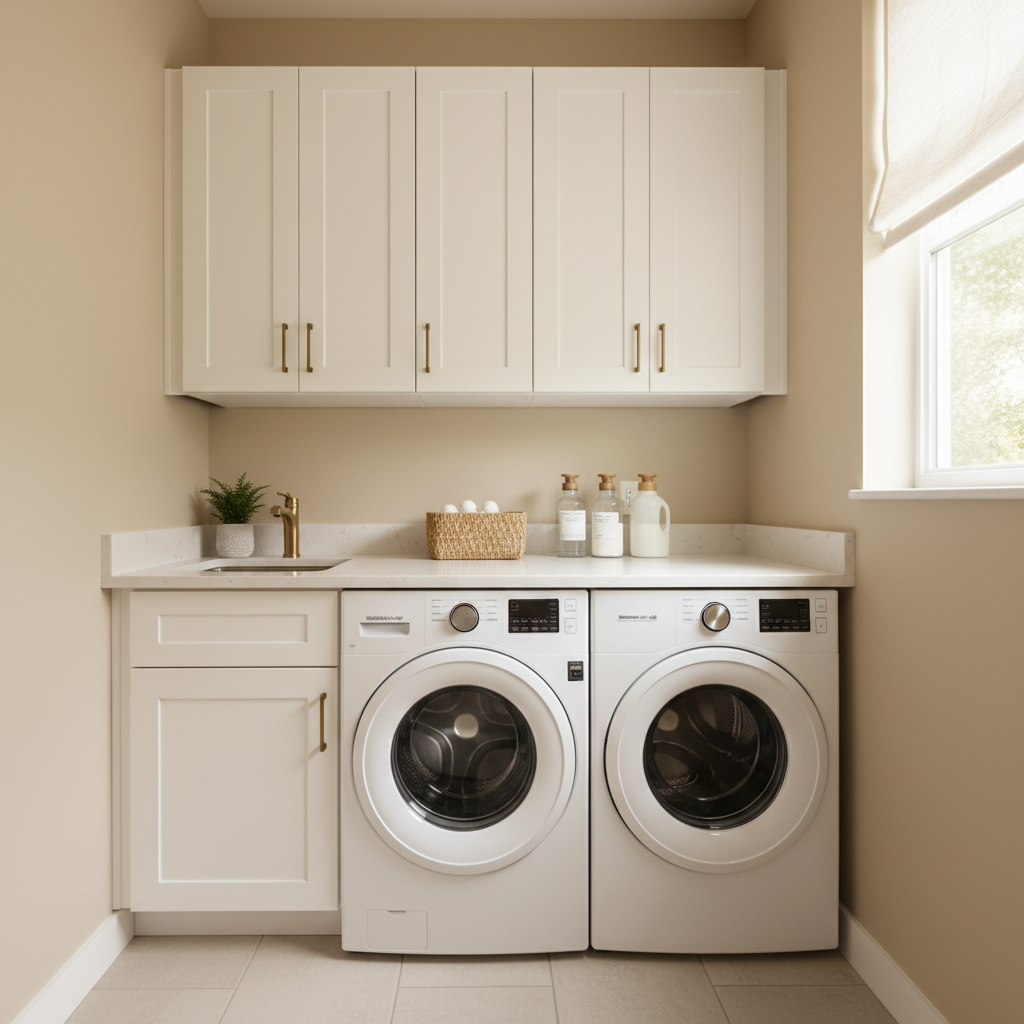
What trips most homeowners up is not choosing “a cabinet,” but choosing the right depth, height, and door style so you can still open machine lids, reach shelves comfortably, and avoid bumping your head during the daily routine. This guide walks through how to plan, how to decide if cabinets are even the right call, and how to set them up in a way that stays practical.
Why wall cabinets solve small-laundry pain points
In tight laundry zones, the biggest problem is usually horizontal space, not vertical space. Cabinets let you store supplies where they’re easy to grab without taking over your folding area.
- They reduce visual clutter: closing the doors matters in a small room, especially if the laundry area faces a kitchen, mudroom, or hallway.
- They protect items: powders, stain removers, and paper goods stay cleaner and less likely to get knocked over.
- They create a “home” for categories: detergents on one shelf, cleaning rags on another, lightbulbs and dryer vent tools in a bin up top.
- They can improve safety: storing chemicals up high can help keep them out of reach of kids and pets, though child-safety choices still depend on your home and habits.
According to the U.S. Consumer Product Safety Commission (CPSC), household cleaning products are a common source of accidental poisonings, so secure, out-of-reach storage is worth treating as a design requirement, not a bonus.
Quick self-check: is your space a good candidate?
Before you buy anything, take five minutes and answer these. If you can check most boxes, wall cabinets tend to be a clean win. If not, you may need open shelving, a tall pantry cabinet, or a different layout.
- You have at least one uninterrupted wall area above or beside the machines.
- You can keep cabinet bottoms roughly 16–20 inches above the top of your washer/dryer or counter, so doors and lids clear comfortably (many setups land here, but measure your exact machines).
- You can locate studs or plan appropriate anchors for your wall type.
- You won’t block dryer venting, shutoff valves, or electrical access panels.
- You can reach the main storage shelf without climbing, or you’re comfortable using a stable step stool.
If you rent, still do the check, but assume you’ll need landlord approval or a non-permanent alternative like a freestanding over-the-washer rack.
Planning the layout: clearance, cabinet size, and the “reach zone”
For small space laundry storage with wall cabinets, layout planning is where you avoid the classic mistakes: doors colliding with each other, cabinets too deep over your head, or a shelf so high you stop using it.
Key measurements to take
- Width: wall-to-wall width over the machines, plus any trim that reduces usable space.
- Height: from the floor to the ceiling, and from the top of machines to any obstacles.
- Depth tolerance: how far cabinets can project without feeling oppressive; in narrow laundry closets, shallower can feel dramatically better.
- Door swing clearance: confirm cabinet doors won’t hit side walls, light fixtures, or each other.
A practical rule: store everyday items between shoulder and eye level, and treat the highest shelf as “backstock” for refills, spare towels, and seasonal items.
Cabinet style choices that actually matter in tight laundry rooms
In a roomy kitchen you can “make it work.” In a tight laundry area, a few details decide whether cabinets feel effortless or annoying.
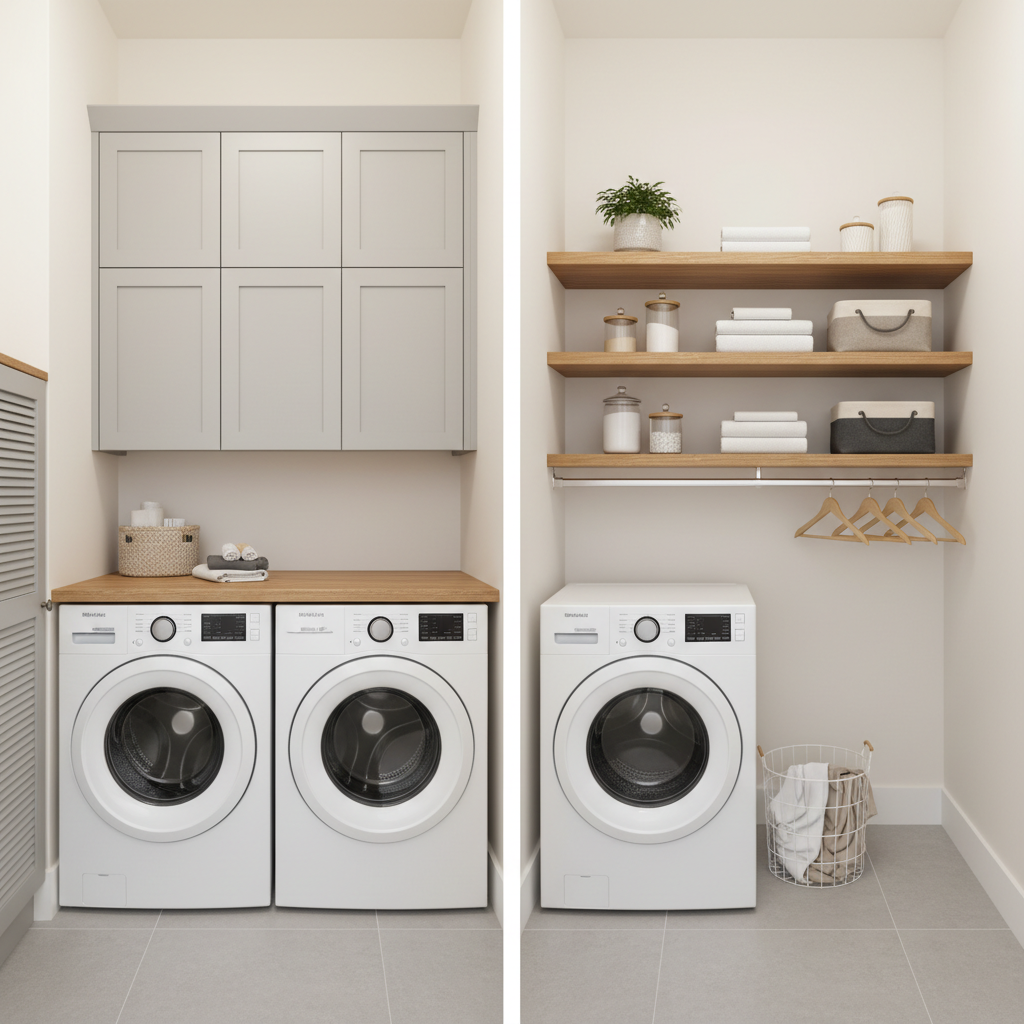
Depth and door type
- Shallow cabinets (often around 12 inches deep) can feel much better than full-depth boxes in a narrow room, because you’re not leaning under a bulky overhang.
- Lift-up or bi-fold doors reduce “door in your face” moments when you’re sorting or folding.
- Soft-close hinges are not just luxury; they reduce slamming in a small echo-y nook.
Material and finish
- Painted MDF or plywood is common; pick quality edges and a finish that wipes clean.
- Thermofoil can be easy-care, but watch for heat exposure if your dryer runs hot and ventilation is poor.
- Simple hardware (pulls you can grab with one hand) matters when you’re holding a basket.
If your laundry area is humid, aim for materials and finishes that tolerate moisture, and address ventilation first so cabinets don’t become the “fix” that hides a bigger issue.
What to store where: a simple cabinet zoning system
This is the part people skip, then wonder why the new cabinets still feel messy. You want zones that match how you move through laundry.
- Lower shelf (daily use): detergent, pods (in a locked container if needed), stain treatment, dryer sheets, measuring cup.
- Middle shelf (weekly use): delicates bags, lint roller refills, color catchers, handheld steamer.
- Top shelf (backstock): bulk refills, paper towels, spare hangers, seasonal items.
Use bins with labels, especially if more than one person does laundry. Clear bins look tidy but can turn into “visual noise” fast; opaque bins hide chaos better.
Step-by-step: installing wall cabinets safely (and when to pause)
You can hire this out or DIY it, but either way, a safe install is non-negotiable. Wall cabinets get heavy quickly, and laundry areas often have vibration from appliances.
Basic install flow
- Locate studs and plan cabinet placement so fasteners hit solid framing where possible.
- Mark a level line for the cabinet bottoms, then dry-fit your layout on the wall.
- Use a temporary ledger (a straight board screwed into studs) to hold cabinets while you fasten them.
- Fasten cabinets per manufacturer guidance, using appropriate screws and washers.
- Secure adjoining cabinets to each other, then adjust doors for even gaps.
According to OSHA, ladder safety and stable footing are essential during overhead work, so use a solid step ladder, keep tools organized, and avoid balancing on machines or hampers.
If you have plaster walls, metal studs, brick, or uncertain wiring and plumbing behind the wall, it’s smart to consult a qualified contractor. This is also where permits may come into play in some remodels, depending on what you change.
Common mistakes (and the fix) in small laundry cabinet projects
Most problems show up in week two, when the novelty fades and you’re rushing through a load before work.
- Cabinets mounted too low: doors hit machine lids, or you feel cramped. Fix means remounting higher, or switching to shallower boxes.
- Overstuffing shelves: you lose items and buy duplicates. Fix with bins and a “backstock only” rule for the top shelf.
- Ignoring lighting: you can’t see stain remover labels, you knock things over. Fix with an under-cabinet LED strip or brighter overhead bulb.
- No plan for baskets: clean laundry lands on the floor anyway. Fix with a slim rolling cart, fold-down counter, or hooks for hanging bags.
A quick comparison table: cabinets vs shelves vs tall storage
If you’re still deciding, this matrix usually makes the trade-offs obvious.
| Option | Best for | Pros | Watch-outs |
|---|---|---|---|
| Wall cabinets | Hiding clutter in a small visible area | Clean look, safer chemical storage, dust control | Install effort, can feel bulky if too deep |
| Open shelves | Fast access, lighter visual weight | Budget-friendly, easy to adjust | Looks messy quickly, items fall or collect dust |
| Tall pantry cabinet | One-wall storage beside machines | Big capacity, fewer wall fasteners | Needs floor space, can block access in narrow rooms |
Practical “finish touches” that make the setup feel bigger
Once cabinets are up, a few small choices can make the room feel less like a utility closet and more like a functional mini-workspace.
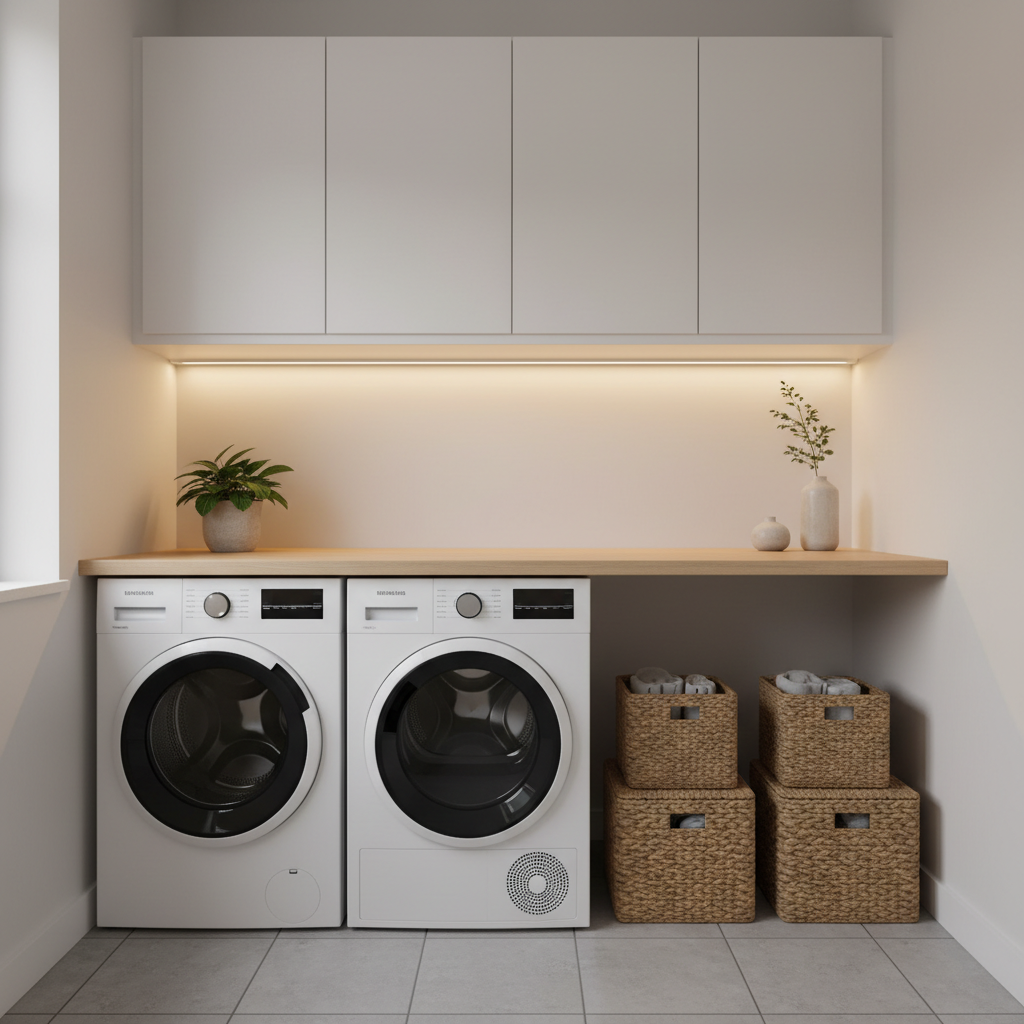
- Add a narrow folding surface: even a 12–18 inch deep counter over front-load machines helps.
- Go vertical with hooks: hang a drying rack, delicates bag, or lint brush on the side wall.
- Use consistent containers: matching bins reduce the “random stuff” feeling.
- Upgrade lighting: under-cabinet lighting makes cabinets feel intentional, not stuck-on.
Conclusion: make the cabinets earn their space
Small space laundry storage with wall cabinets pays off when you treat it like a workflow project, not a decoration project. Measure for real clearance, choose a depth that suits your room, and set up shelf zones that match how you actually do laundry on a busy day.
If you want a clean next step, do two things today: measure the wall area above your machines, then list the top 10 items you need within arm’s reach. Those two inputs usually make the cabinet size and layout decisions much easier.
Key takeaways
- Shallower cabinets often feel better in tight laundry closets.
- Plan storage by frequency of use, not by “what fits.”
- Prioritize safe mounting and clear access to vents, valves, and outlets.
- Lighting and bins are small upgrades that keep cabinets useful long-term.
FAQ
How high should wall cabinets be above a washer and dryer?
Many homeowners aim for enough clearance that machine lids and cabinet doors never collide, and that you can work without feeling boxed in. Measure your exact machines and mock the door swing, because a few inches can change the daily feel.
Are wall cabinets safe above a vibrating washer?
They can be, as long as cabinets are mounted correctly into studs or with wall-appropriate anchors, and the washer is leveled to reduce excessive shaking. If vibration is severe, it’s worth addressing the appliance setup before adding overhead weight.
Should I choose cabinets or open shelves for a laundry closet?
If the laundry area is visible from another room, cabinets usually look calmer. If you need quick access and don’t mind seeing baskets and bottles, shelves can work, but they demand more tidying to stay attractive.
What cabinet depth works best in a narrow laundry room?
Shallower depths are often more comfortable in tight spaces because you won’t bump your head or feel like the wall is closing in. The right number depends on your aisle width and what you store, so test with painter’s tape to visualize the projection.
Can I install wall cabinets in a rental?
Sometimes, but you should get written approval first. Many renters choose freestanding storage, over-the-washer shelving units, or removable wall systems to avoid patching and repainting.
What should I not store in laundry wall cabinets?
Avoid overloading shelves with very heavy items unless the cabinet and mounting are designed for it. Also be cautious with open containers of chemicals or anything that could leak; sealed bins help, and if you have safety concerns, consider advice from a qualified professional.
Do I need a contractor to install laundry wall cabinets?
Not always, but you may want help if you can’t reliably locate studs, your wall material is tricky, or the cabinet run is long and needs precise leveling. If there’s any doubt about wiring, plumbing, or structural support, consulting a pro is the safer move.
If you’re planning a small laundry upgrade and want it to feel finished without overthinking every bracket and bin, a pre-planned cabinet layout and a short storage plan can save time, reduce trial-and-error, and help you choose pieces that fit your real routine.