
Bathroom vanity organization ideas work best when they solve two daily problems at once: the counter stays clear, and you can still reach what you use most without digging through a pile of bottles. If your vanity feels “too small,” it’s often less about square footage and more about category overload, duplicate products, and storage that doesn’t match your routines.
This matters more than people think, because bathrooms collect a weird mix of items: skincare, makeup, razors, hair tools, meds, first aid, cleaning supplies, plus the occasional hotel sample you swear you’ll use. Without a plan, the vanity becomes the default landing zone.
In this guide, you’ll get practical ways to organize a vanity you already have, not a fantasy remodel. I’ll also call out a few common “Pinterest-perfect” setups that look great but tend to fail in real bathrooms, especially shared ones.
Start with the real reason vanities get messy
Most vanities don’t get messy because you’re “bad at organizing.” They get messy because storage gets used as a junk drawer, and daily-use items compete with occasional-use backups. Once those categories mix, everything feels harder.
- No zones: toothbrushes, serums, and hair ties share the same surface, so the counter becomes a catch-all.
- Too many duplicates: backups, travel sizes, and half-used products pile up, and nothing gets finished.
- Containers that don’t fit: deep drawers without inserts turn into a shuffle box where small items disappear.
- One-person systems in a shared bathroom: if two people share one drawer, it becomes nobody’s drawer.
One more thing, vanity clutter often spikes during life changes: a new skincare routine, a kid moving into the bathroom, or switching to electric tools. Your system has to evolve with your habits.
A quick self-check: what kind of vanity mess do you have?
Before you buy bins, figure out which pattern you’re dealing with. You’ll save time and avoid “organizing twice.”
- Countertop takeover: items live on the counter because there’s no easy spot to put them away.
- Drawer black hole: you own organizers, but you still can’t find tweezers or nail clippers.
- Under-sink chaos: tall bottles tip over, and cleaning supplies mix with toiletries.
- Too much inventory: you could “shop your bathroom” for months, but you still buy more.
If you’re nodding at more than one, that’s normal. Start with the spot that causes the most daily friction, usually the counter or top drawer.
Build your vanity around “zones,” not products
The easiest way to make bathroom vanity organization ideas actually stick is to organize by action. Think: what do you do at the sink, and what do you do away from it?
Simple zones that work in most U.S. bathrooms
- Sink zone: soap, toothbrush, toothpaste, floss, daily face wash.
- Daily routine zone: the few skincare or makeup items you use most days.
- Grooming zone: razor, shave cream, deodorant, hair brush, styling products.
- Tools zone: hair dryer, straightener, attachments, heat protectant.
- Backstock zone: unopened extras, refills, travel kits.
When zones are clear, you stop “re-deciding” where something goes each time. That’s the secret sauce, less thinking, more putting away.
Practical setup ideas that don’t require a remodel
Here are vanity setups that usually hold up in real life, including small bathrooms and shared spaces.
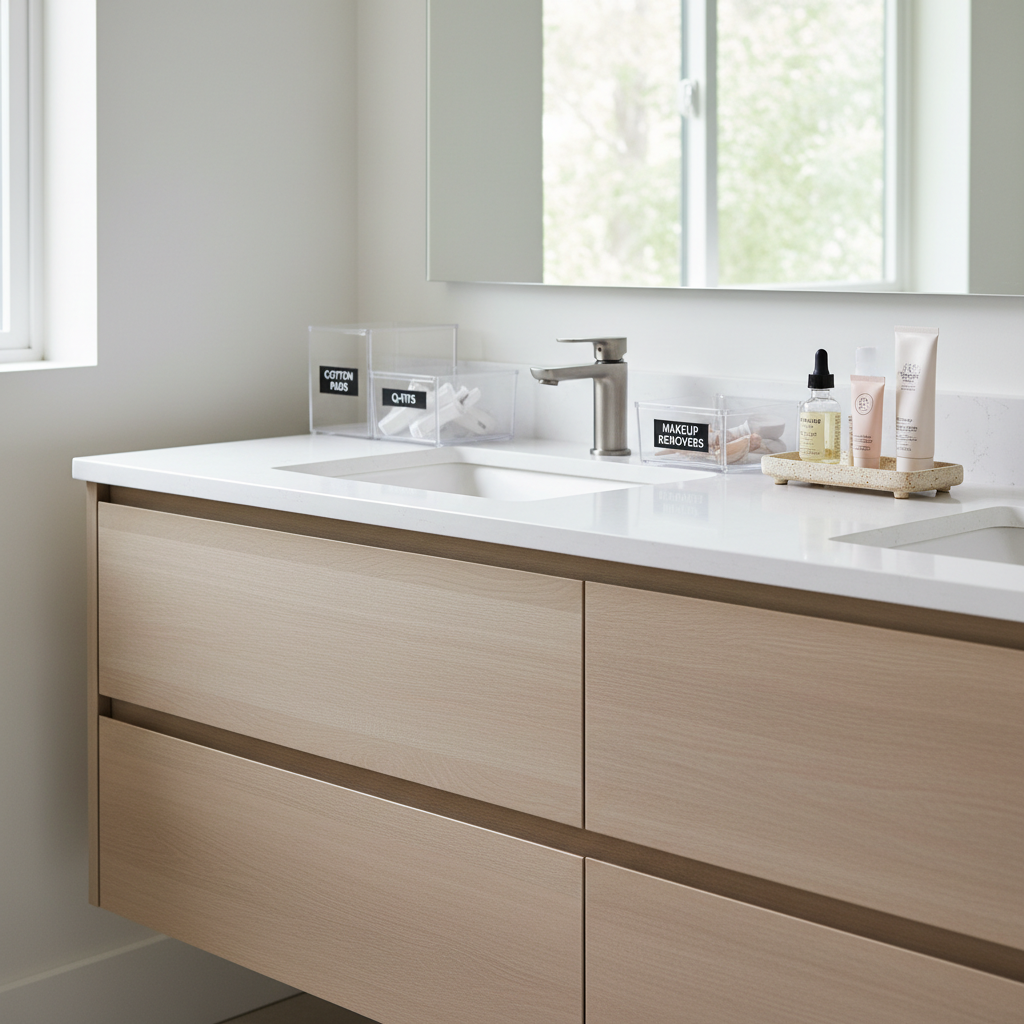
1) The “clear counter” kit
- Use a small tray for 5–8 daily items (not 20).
- Keep only one “tall” container on the counter, like a toothbrush cup.
- Everything else earns a drawer spot, even if you use it daily.
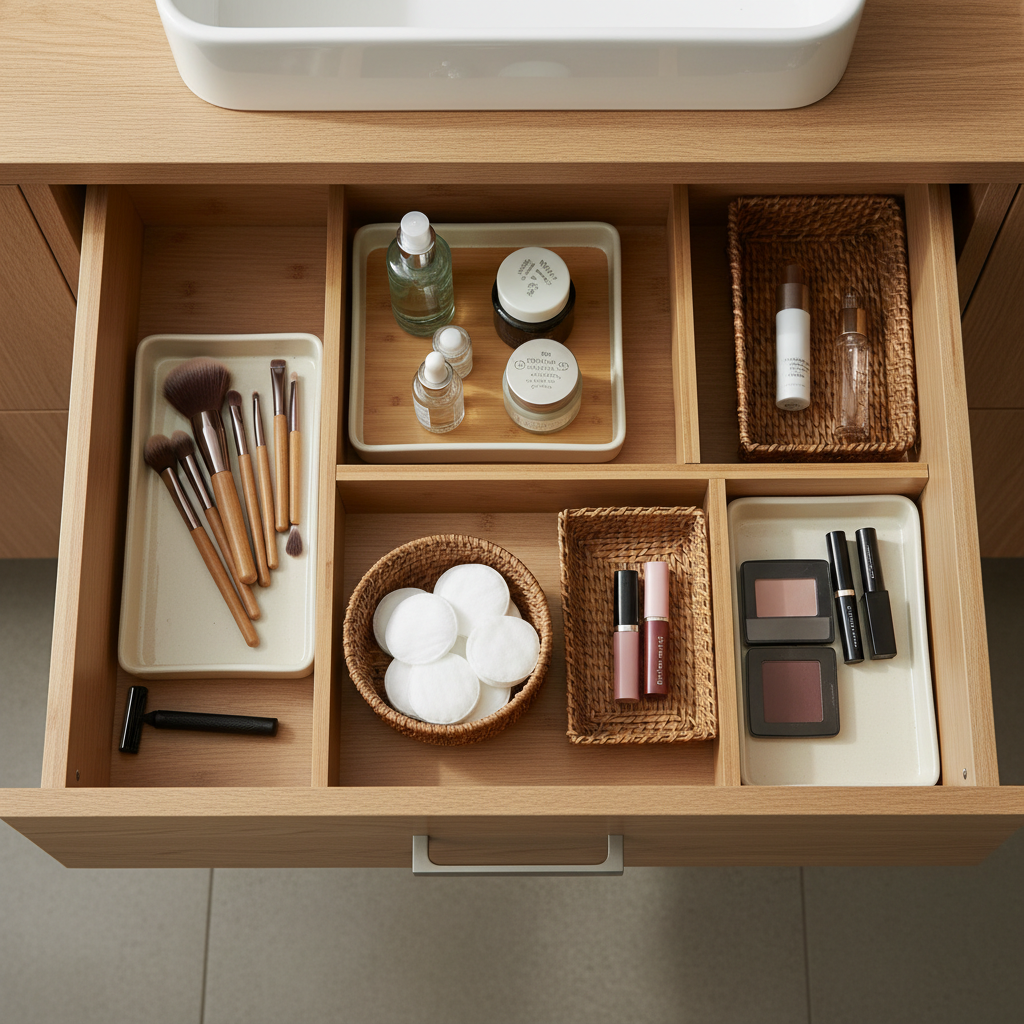
2) Top drawer = high-frequency items
- Add shallow drawer organizers so items don’t stack.
- Group by routine: AM skincare in one section, PM in another.
- Leave a small “misc” slot for the weird items you still need, like blister pads.
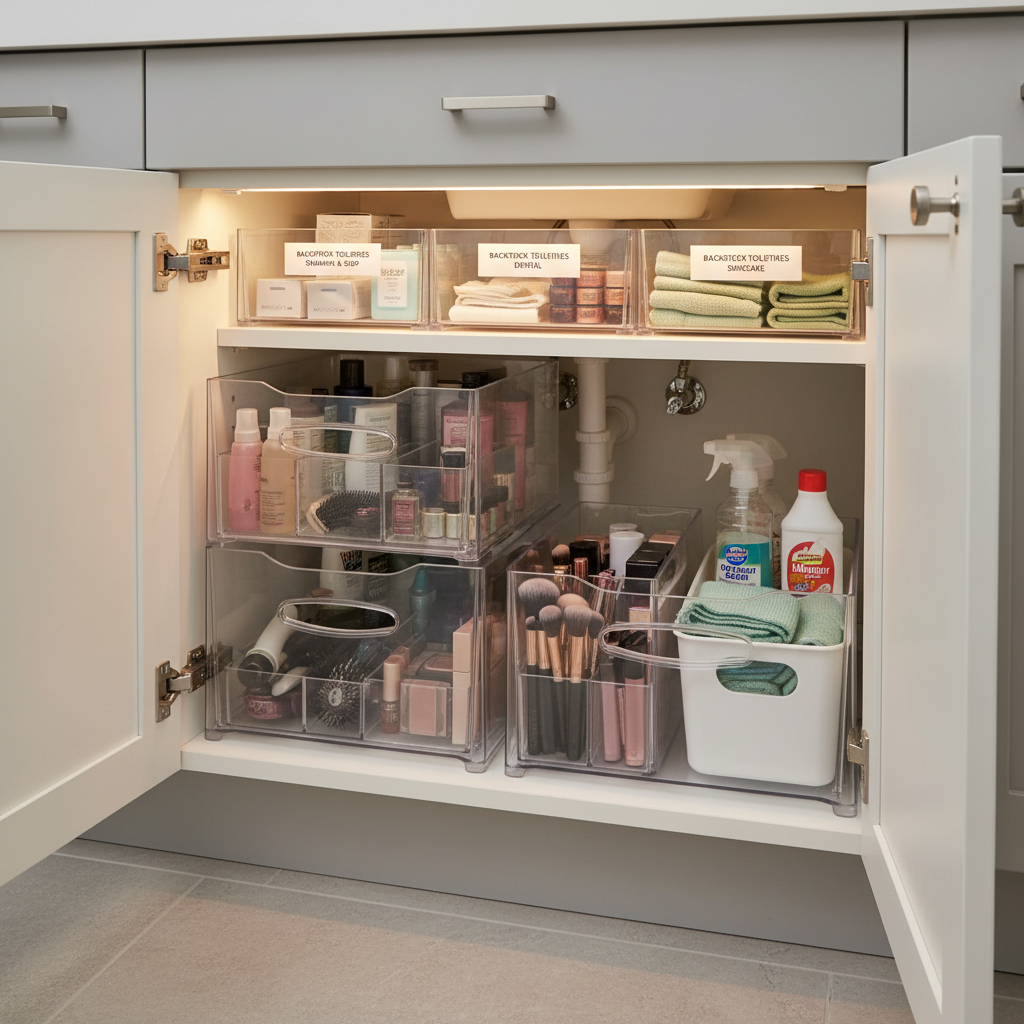
3) Under-sink = tall, heavy, and backstock
- Use two bins: “open” and “unopened.” This alone cuts clutter.
- Add a turntable for bottles if plumbing allows the space.
- Keep cleaning supplies in a separate bin so they don’t migrate.
According to The American Cleaning Institute, following product label directions and storing household cleaning products properly helps reduce safety risks, which is a good reminder to keep cleaners separate from personal care items, especially in homes with kids.
What to use where: a quick comparison table
Not every container works in every part of the vanity. This cheat sheet keeps the choices simple.
| Vanity area | Best organizers | Works well for | Watch out for |
|---|---|---|---|
| Countertop | Small tray, toothbrush cup | Daily essentials you want visible | Too many “pretty” containers become clutter |
| Top drawer | Shallow trays, adjustable dividers | Makeup, skincare, grooming tools | Deep bins waste vertical space and hide items |
| Second drawer | Deeper bins, pouches | Hair accessories, nail care, travel items | Mixing “daily” and “rarely” items slows you down |
| Under sink | Handled bins, turntable, shelf riser | Refills, tall bottles, cleaning supplies | Leaks and humidity, choose washable materials |
A step-by-step reset you can finish in one afternoon
If you want a reset that actually sticks, keep it quick and a little strict. Perfection is not the goal, consistency is.
- Step 1: Empty one zone at a time, start with the counter or top drawer so you get a fast win.
- Step 2: Sort into 5 piles: daily, weekly, occasional, backstock, toss.
- Step 3: Cap your daily set: if it doesn’t fit on one tray or one drawer section, something rotates out.
- Step 4: Add organizers last: measure drawer depth and width first, then buy inserts that fit.
- Step 5: Label under-sink bins: “hair,” “skin,” “first aid,” “cleaning,” “refills.” It prevents drift.
One helpful rule: duplicates belong in backstock, not in prime real estate. That alone makes many bathroom vanity organization ideas feel “magically” effective.
Mistakes that look tidy but usually backfire
Some organizing trends photograph well, but they add friction when you’re tired, in a rush, or sharing space.
- Decanting everything: it can work, but many products have usage instructions on the packaging, and some items need lot numbers for reference. Keep labels when it matters.
- Too many mini-bins: tiny categories create “where does this go?” moments, then things land on the counter again.
- Storing heat tools while hot: even with heat mats, give tools time to cool and follow manufacturer guidance to reduce risk.
- Open storage under the sink: it’s tempting, but spills happen. Washable bins beat fabric baskets down there.
Also, if you live in a humid area or your bathroom runs steamy, products can degrade faster. If you notice changes in smell, texture, or color, it’s safer to stop using the item and, if needed, ask a professional for advice.
When it’s worth getting extra help or upgrading the setup
Sometimes clutter is a symptom of a layout problem, not your effort. Consider a small upgrade or professional help if any of these keep happening:
- You have no usable drawers and everything must sit on the counter.
- Cabinet doors don’t close because plumbing blocks storage, and you need a custom shelf.
- You’re organizing for accessibility needs, like limited bending or grip strength.
- You’re dealing with recurring moisture or mold; it’s better to consult a qualified professional to address ventilation or water issues.
Even a basic add-on like a pull-out shelf or a drawer insert can change how the vanity functions, without turning it into a full renovation project.
Key takeaways to keep it organized long-term
- Zones beat categories: organize by what you do, not by brand or bottle shape.
- Protect the counter: one tray, one cup, and strict limits keep the surface usable.
- Separate backups: unopened items go under the sink, not in daily space.
- Make it easy to put away: if it takes two hands and a deep breath, the system won’t last.
If you want the quickest win this week, pick one drawer and make it your “daily routine” drawer, then move everything else out. Most bathrooms feel calmer immediately.
FAQ
What are the best bathroom vanity organization ideas for small bathrooms?
Focus on a clear counter and one “daily” drawer. Small trays, shallow dividers, and an under-sink backstock bin usually beat adding more countertop containers.
How do I organize a shared bathroom vanity without fighting?
Give each person a dedicated drawer section or bin, even if it’s small. Shared “community” zones work best for soap, toothpaste, and cleaning items, not personal routines.
Should I keep skincare on the counter or in a drawer?
If you use it daily and it fits on one tray, counter storage can work. If your counter gets crowded fast, a top drawer zone tends to stay cleaner and protects products from steam.
What’s the easiest way to organize under the bathroom sink?
Use handled bins by category and separate cleaning supplies from toiletries. A simple “open vs unopened” split prevents the classic pile of half-used bottles.
Do acrylic organizers get gross in bathrooms?
They can, especially around powder products and humidity. If you choose acrylic, look for pieces that wipe clean easily and plan a quick rinse-and-dry every so often.
How often should I declutter my vanity?
Many people do best with a quick monthly reset and a deeper seasonal review. The key is checking duplicates and removing items you stopped using, not reorganizing everything.
Is it safe to store medications in the bathroom vanity?
It depends on heat and humidity, which can be higher in bathrooms. According to FDA, medications should be stored as directed on the label; if your bathroom gets steamy, a cooler, drier spot may be a better choice, and for specific questions it’s smart to ask a pharmacist.
If you’re trying a few bathroom vanity organization ideas and the mess keeps coming back, you may just need a simpler layout and organizers sized to your actual drawers, not a bigger vanity. If you want a more hands-off approach, taking a few measurements and planning your zones before buying containers saves money and reduces trial-and-error.