
Best indoor planters for houseplants usually come down to three things you can’t fake: the right size, the right drainage setup, and a material that fits your habits (overwaterer, underwaterer, or somewhere in between). If your plants keep yellowing, dropping leaves, or you’re constantly wiping water rings off furniture, your planter choice is probably part of the story.
Planters look like decor, but they behave like equipment. A pot that’s “cute” but traps water can quietly rot roots, while a pot that dries too fast can punish you for skipping one watering. The good news: you don’t need a huge collection of pots, you need a small set that matches your plants and your routine.
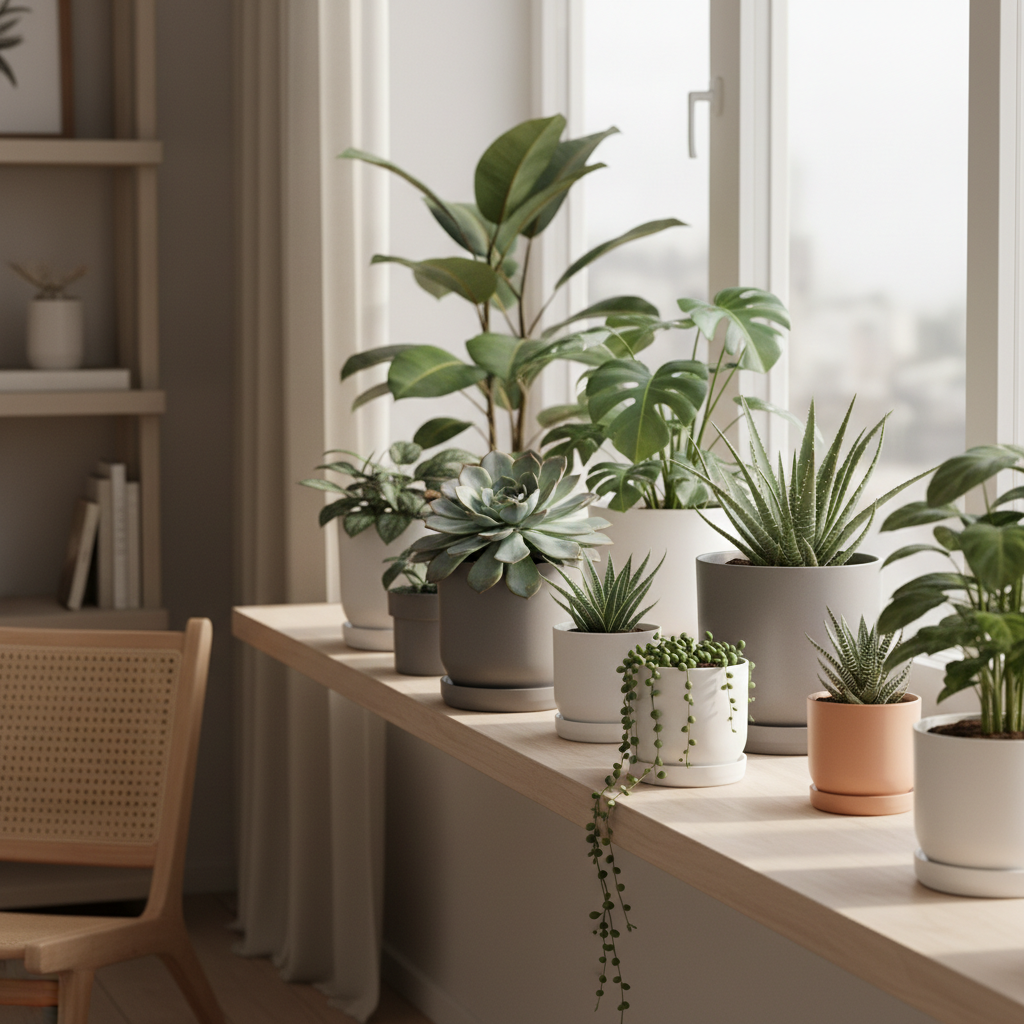
Below is a practical way to choose indoor planters for houseplants and succulents without overthinking it, plus a quick comparison table, a checklist for picking sizes, and a few mistakes that waste money.
What makes a planter “good” indoors (beyond looks)
If you only remember one thing: indoor planters either help you manage water or they fight you. Most plant problems indoors aren’t from a “bad plant,” they’re from a potting setup that stays wet too long or dries out too quickly.
- Drainage that matches your space: A real drainage hole plus a saucer is the simplest. If you must use a no-hole cachepot, you need a strict watering routine.
- Stable weight: Top-heavy plants (snake plant, rubber tree, fiddle leaf fig) tip easily in lightweight pots.
- Root room, not root swimming: Too big is often worse than slightly snug because extra soil holds extra water.
- Surface protection: If it sits on wood, you want a saucer, a sealed base, or a tray that won’t sweat.
According to the Royal Horticultural Society (RHS), good drainage is a core part of preventing waterlogged compost and root problems, which is exactly what indoor growers run into when pots lack drainage or saucers.
Quick comparison: best planter materials for houseplants vs succulents
Material matters because it controls how fast water leaves the pot and how forgiving the setup feels. Here’s a fast, realistic comparison you can use while shopping.
| Material | Best for | Why it works | Watch-outs |
|---|---|---|---|
| Terracotta (unglazed) | Succulents, cacti, overwater-prone homes | Breathes and dries faster | Can dry too fast for tropicals; salts may show |
| Ceramic (glazed) | Most houseplants, decorative rooms | Holds moisture more evenly; lots of styles | Heavier; chips; check for real drainage hole |
| Plastic | Beginners, hanging plants, budget setups | Lightweight, cheap, retains moisture | Can stay wet too long; less stable for tall plants |
| Fiberglass/resin | Large floor planters, modern interiors | Big look without the weight | Quality varies; drainage may be “punch-out” style |
| Concrete/cement | Big statement plants, high stability | Very stable; modern aesthetic | Heavy; can scratch floors; may wick moisture |
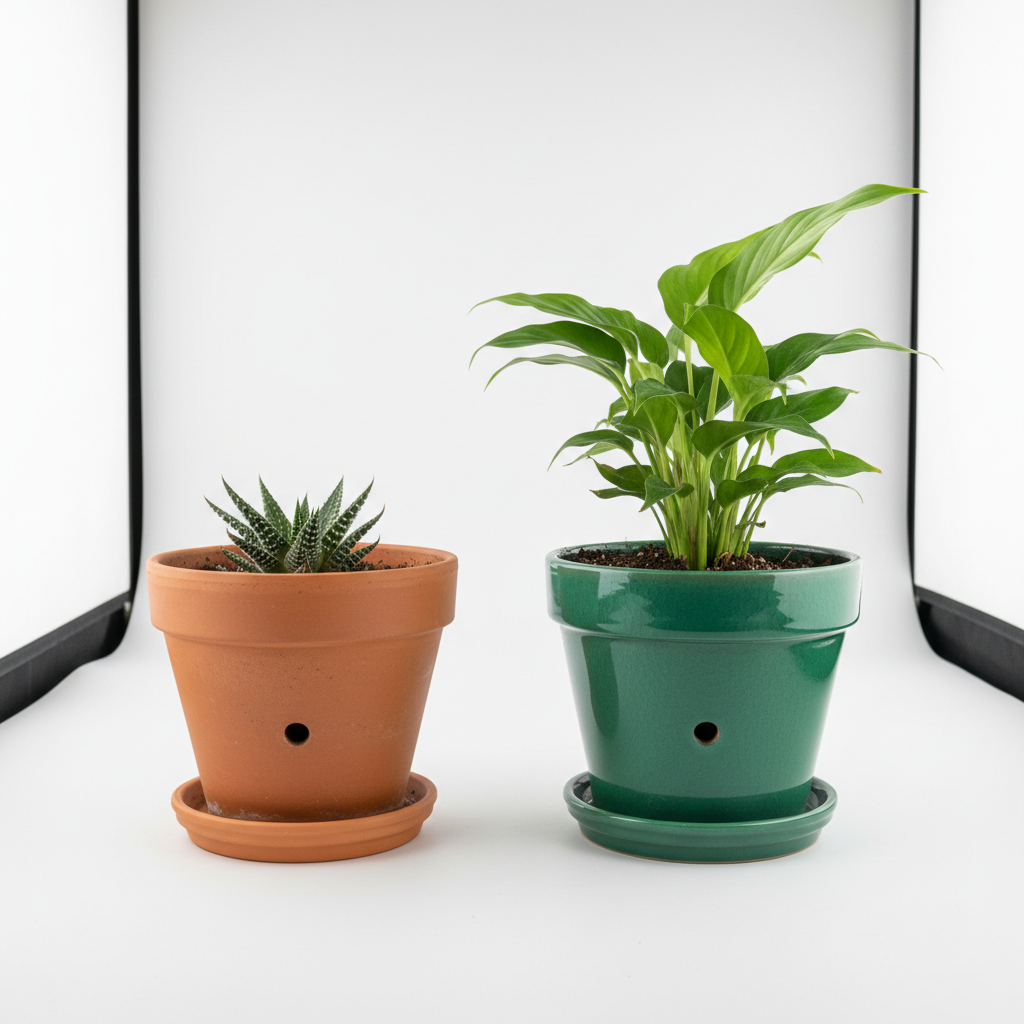
If you’re shopping specifically for the best indoor planters for houseplants that like consistent moisture (pothos, philodendron, calathea), glazed ceramic or plastic with drainage tends to be more forgiving than terracotta. For succulents, terracotta often makes life easier because it “nudges” the soil to dry.
Drainage options: choose the setup you can actually live with
People argue about drainage holes because they’re thinking about different homes. A plant on a patio can drip. A plant on a walnut credenza cannot.
Option A: Drainage hole + saucer (recommended for most)
- Easiest to water thoroughly and let excess escape.
- Works well with the “water until it runs out” approach.
- Choose a saucer that’s wide enough to catch runoff, not just “matching.”
Option B: Nursery pot inside a decorative cachepot
- Great if you care about style but want drainage control.
- Lift the nursery pot out to water in the sink, then return once it stops dripping.
- Add a thin cork pad or plastic riser at the bottom to keep roots from sitting in leftover water.
Option C: No drainage hole (only if you’re disciplined)
- Works best for drought-tolerant plants and small pots.
- Measure water, don’t “glug.” A small watering can helps.
- If you’re frequently dealing with fungus gnats or sour soil smell, consider switching setups.
According to University of Florida IFAS Extension, overwatering is a common cause of indoor plant decline, and poor drainage often makes overwatering more likely. That’s why a no-hole pot can be fine in theory, but tricky in day-to-day life.
Pick the right size: a simple rule that prevents most issues
Oversizing is one of the most common shopping mistakes, especially when people buy a “forever pot.” In many indoor conditions, extra soil holds moisture longer than roots can use it.
- For most houseplants: go 1–2 inches wider than the current pot when repotting.
- For succulents: stay closer to snug, often 0.5–1 inch wider is enough.
- For tall plants: prioritize a heavier base or a wider footprint to reduce tipping.
If you’re not repotting and just adding a decorative outer pot, match the cachepot to the nursery pot with a little breathing room so you can lift it out without scraping.
Self-check: which planter type fits your plants and habits?
Before you buy anything, answer these quickly. Your “best” indoor planter is the one that covers your weak spots.
- You tend to overwater (soil stays wet 7+ days): lean toward terracotta, smaller sizing, and always use a drainage hole.
- You forget watering (soil turns bone dry often): glazed ceramic or plastic can buy time, plus a slightly larger saucered setup helps.
- Your home has low light: pots dry slower, so avoid oversized planters and be cautious with plastic cachepots that trap moisture.
- You have pets or kids: heavier, stable floor planters reduce tipping; avoid sharp-edged ceramic in high-traffic zones.
- Your plants are succulents mostly: prioritize fast drying, gritty mix, and planters that won’t trap water.
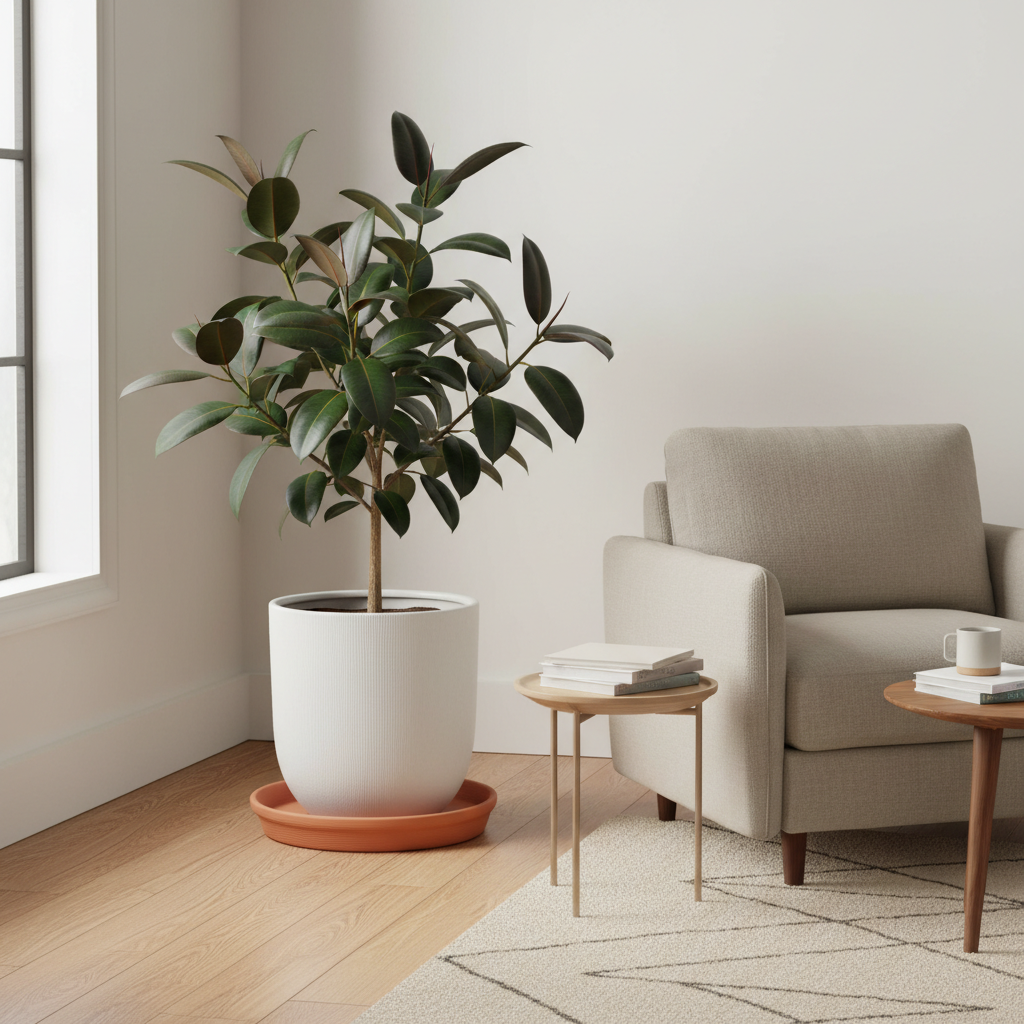
This is also why “best indoor planters for houseplants” isn’t one product. It’s a shortlist of setups that match how you water and where the plant lives.
Recommended planter picks by scenario (what to buy, not just what to know)
Rather than naming one “winner,” here are the categories that tend to work in typical U.S. homes, plus what to look for on the label.
For everyday leafy houseplants (pothos, monstera, philodendron)
- Glazed ceramic planter with a real drainage hole and a saucer.
- Look for a wide base if the plant climbs or leans.
- Choose a finish that wipes clean if you fertilize often.
For succulents and cacti
- Unglazed terracotta with a drainage hole.
- Shallower shapes work well for many succulents with smaller root systems.
- Avoid deep, narrow pots unless the plant has a taproot type habit.
For large floor plants (rubber tree, fiddle leaf fig, bird of paradise)
- Concrete-look resin or fiberglass if you need a big size without back pain.
- Add a heavy inner nursery pot or a hidden weight at the bottom if tipping is a risk.
- Use a floor-safe tray; felt pads help protect hardwood.
For hanging plants (string of hearts, pothos)
- Plastic nursery pot inside a lightweight hanger, then place that into a decorative outer pot if you want style.
- Plan a watering routine that avoids ceiling/floor drips, sink watering is usually cleaner.
Practical setup tips: make any planter work better
You can upgrade results without buying new planters, especially if your current pots are “almost right.”
- Use a mesh screen over drainage holes to reduce soil washout, not gravel layers. Gravel at the bottom often doesn’t fix drainage the way people hope.
- Match soil to the pot: terracotta + chunky mix can dry extremely fast, while plastic + dense mix can stay wet too long.
- Empty saucers after watering if the plant dislikes wet feet. Many tropicals tolerate brief runoff, fewer tolerate sitting in it.
- Don’t repot just because you bought a pretty pot: if roots aren’t circling and the plant is stable, a cachepot may be the smarter move.
Key takeaways: choose a planter you can water confidently, size up modestly, and treat drainage as part of the system, not a “nice to have.”
Common mistakes (and what to do instead)
- Buying oversized planters for “future growth”: use a cachepot for looks, and only upsize when roots actually need room.
- Assuming all ceramic pots have drainage: many decorative pieces don’t, flip it over and check before you commit.
- Mixing succulents into moisture-holding pots: if you love a glazed pot, compensate with a fast-draining succulent mix and careful watering.
- Skipping floor protection: use trays, saucers, or risers, especially on wood. Water damage tends to show up late, then it’s annoying.
When it’s worth getting extra help
If a plant keeps declining even after you fix drainage and watering, the issue might involve pests, root disease, or a light/temperature mismatch. Bringing photos and details (pot size, soil type, watering frequency, window direction) to a local nursery can save time. If you suspect mold exposure concerns or allergies in the home, it’s reasonable to be cautious and consult a qualified professional.
Conclusion: a small “smart set” beats a closet of random pots
The best indoor planters for houseplants are the ones that make your routine easier: drainage you can manage, sizing that won’t stay soggy, and materials that match how fast your space dries. If you do one thing this week, check which pots lack drainage and decide whether they should become cachepots instead. If you do a second thing, stop upsizing so aggressively, your plants (and your floors) will usually thank you.
FAQ
What are the best indoor planters for houseplants if I overwater?
Look for planters with a drainage hole and a saucer, and consider terracotta for plants that tolerate faster drying. Keeping the pot only slightly larger than the root ball also helps soil dry at a reasonable pace.
Are indoor planters without drainage holes ever okay?
They can work, especially as decorative cachepots with a nursery pot inside. If you plant directly into a no-hole container, you’ll need measured watering and a plant that doesn’t mind drying out between waterings.
What size planter should I choose when repotting a houseplant?
In many cases, going 1–2 inches wider than the current pot is enough. Bigger jumps can leave too much damp soil around the roots, particularly in lower light homes.
Do succulents need different pots than tropical houseplants?
Usually, yes. Succulents prefer fast drying, so terracotta and smaller, snugger pots tend to be easier. Tropical plants often prefer steadier moisture, so glazed ceramic or plastic with drainage can be more forgiving.
Is it bad to put rocks at the bottom of a planter for drainage?
It’s a common tip, but it often doesn’t solve the real issue, which is water leaving the container. A drainage hole plus a proper soil mix typically does more than adding a rock layer.
How do I stop water from ruining my hardwood floors?
Use a saucer or waterproof tray that’s wider than the pot, and consider a plant stand or riser to improve airflow. If you water in place, check the tray after 10–15 minutes and empty excess water.
Should I use a cachepot or plant directly in a decorative planter?
If you like flexibility and cleaner watering, cachepot setups are hard to beat. Planting directly can look sleek, but you’re committing to that pot’s drainage and sizing, which isn’t always ideal.
If you’re trying to narrow down the best indoor planters for houseplants for your specific mix of pothos, monsteras, and succulents, it can help to build a small “core kit” (a few sizes, a few materials, reliable saucers) rather than buying random pots one at a time, it’s typically cheaper and your care routine stays consistent.