
Best led strip lights for bedroom setups usually come down to three things: color quality (so whites look clean), control options (so you actually use the scenes), and an install that won’t peel off after two weeks.
A lot of people buy strips based on “how many colors” or a big discount, then get stuck with flicker on camera, uneven brightness, or an app that drops connection every night. Bedroom lighting is more personal than living-room lighting, you notice the little annoyances fast.
This guide helps you pick the right type of strip for your room and habits, compare the key specs that matter in 2026, and avoid the most common installation mistakes. You’ll also get practical placement ideas for a softer, more ambient look.
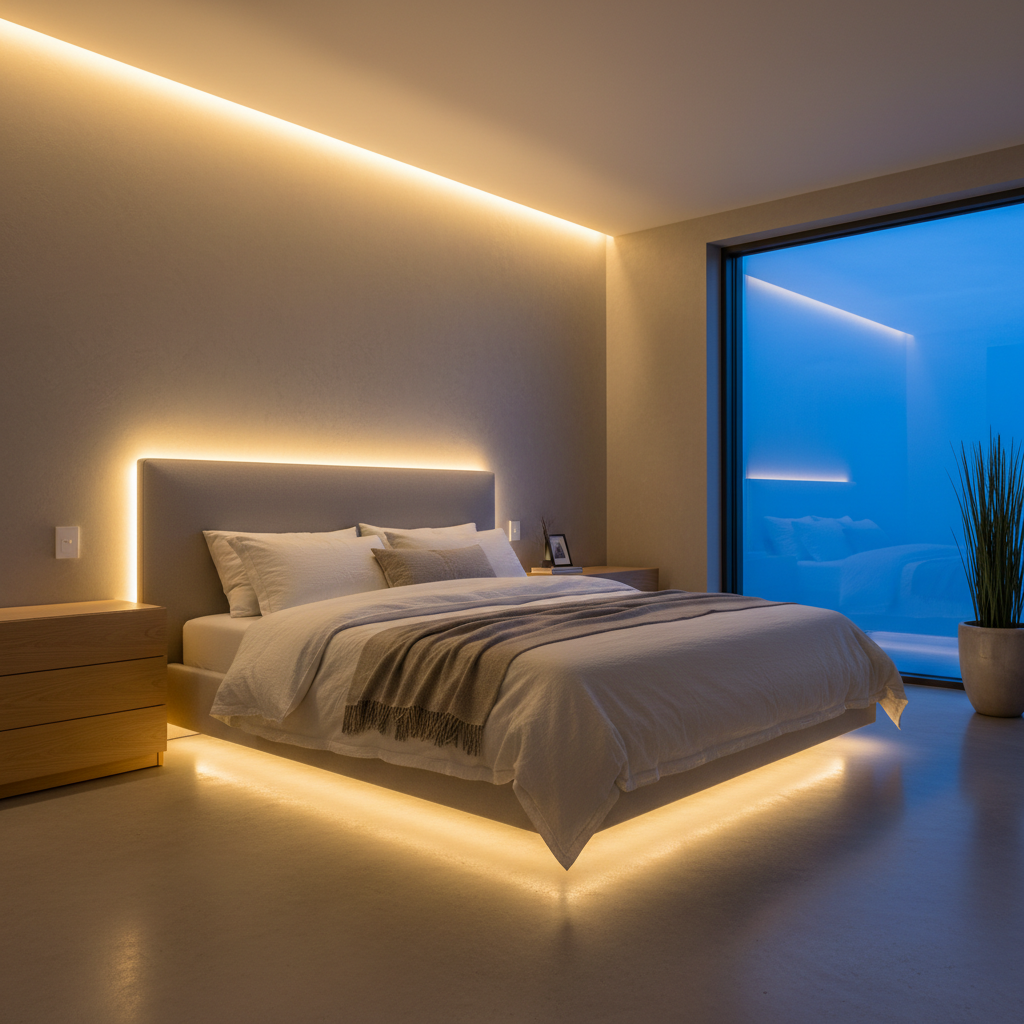
What actually makes LED strip lights “best” for a bedroom
Bedrooms punish bad lighting choices. You want the vibe, but you also want your eyes to relax, and you don’t want to fight the controls when you’re half-asleep.
- Color accuracy and “good whites”: Many strips look fun in RGB colors, then the “white” looks bluish or greenish. If you read, fold laundry, or do makeup in the bedroom, that matters.
- Low-glare diffusion: Bare LEDs can look dotty and harsh. A diffuser channel (or at least bouncing light off a wall) makes the room feel calmer.
- Stable dimming at low brightness: The best ambiance often sits at 5–20% brightness. Cheap controllers can jump, flicker, or lose smoothness at low levels.
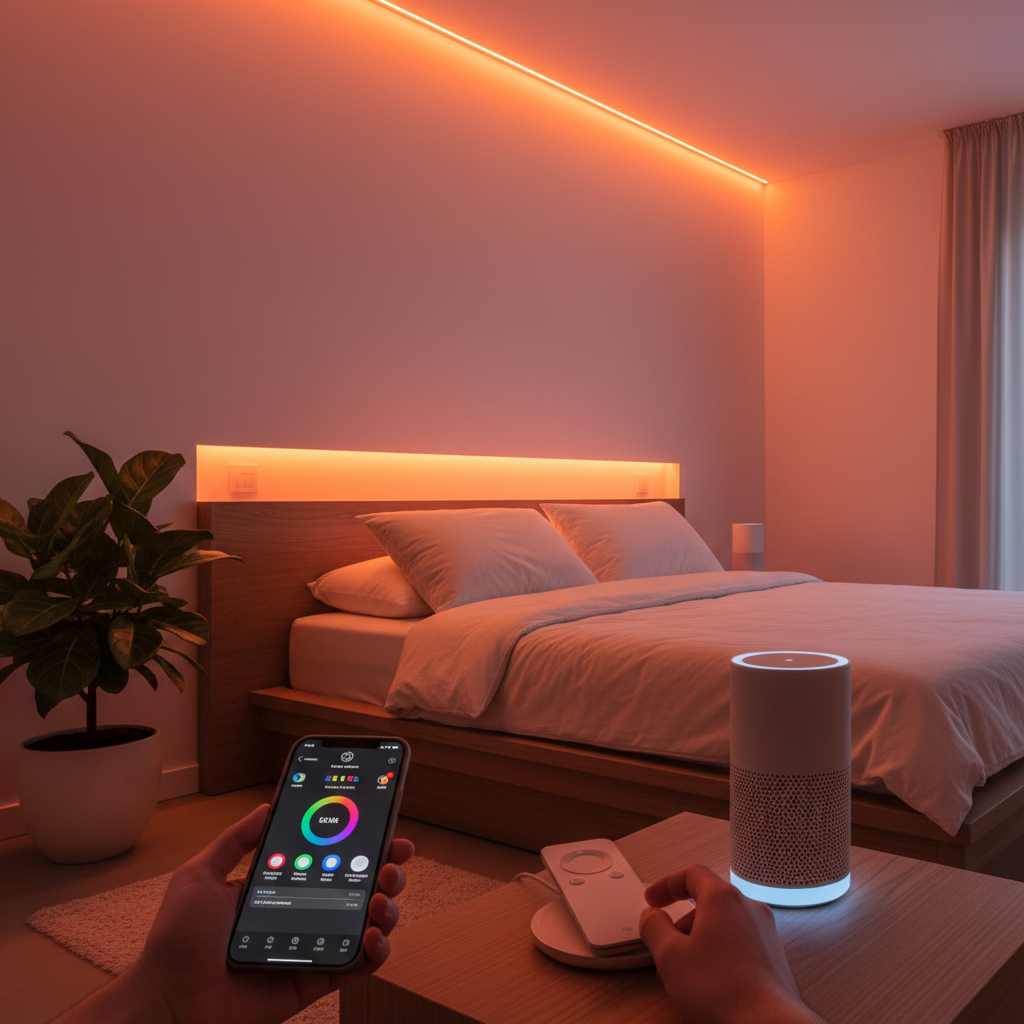
- Control that matches your life: App, remote, wall switch, voice assistants, schedules, or motion. If it’s annoying, you stop using it.
- Safe power and tidy routing: Bedrooms often have fabric, rugs, and tight spaces. You want a power supply that runs cool and cables that don’t become trip hazards.
According to U.S. Consumer Product Safety Commission (CPSC), electrical products can pose shock or fire hazards when misused or defective, so it’s worth treating power supplies and placement as part of the “best” decision, not an afterthought.
Quick comparison table: which type should you buy?
When people search for the best led strip lights for bedroom use, they’re usually choosing between three common strip “families.” Here’s a practical way to decide without getting lost in marketing terms.
| Type | Best for | Pros | Trade-offs |
|---|---|---|---|
| RGB | Fun color accents (gaming, mood) | Affordable, easy to find | White often looks “off”; less useful for everyday lighting |
| RGBW / RGBWW | Color + better true white options | More comfortable whites, more versatile scenes | Costs more; you still need decent control hardware |
| Tunable White (CCT) | Relaxing ambiance + functional lighting | Warm-to-cool range, great for routines | No saturated colors; less “party” vibe |
If you want a calm “hotel room” feel, tunable white or RGBWW tends to deliver it with less fuss. If you mainly want color effects behind a monitor or headboard, RGB can still be fine.
Feature checklist: the specs that matter (and what to ignore)
Product pages can be noisy. Focus on what changes the experience in a bedroom.
Look for these (usually worth paying for)
- Dedicated warm white channel (RGBW or RGBWW) if you care about cozy nighttime lighting.
- High density LEDs if you plan to use a diffuser channel, you’ll see fewer “dots.”
- Segment control if you want gradients or a softer dynamic look, not just one color everywhere.
- Good scheduling and scene recall so “Wind Down” actually comes on reliably every night.
- UL-listed or ETL-listed power adapter when possible, especially for strips that run for hours.
Be skeptical of these (often overhyped)
- “16 million colors”: almost every RGB product says this, it doesn’t tell you about white quality.
- Extreme brightness claims: bedrooms don’t need stadium output, but they do need smooth dimming.
- Music sync as a primary reason to buy: fun once, ignored later, unless you host a lot.
Self-check: which bedroom setup are you actually building?
Before you buy, answer these quickly. Your answers point to the right class of strip and the right accessories.
- Do you want “cozy warm light” most nights? If yes, prioritize RGBWW or tunable white over basic RGB.
- Will you record video calls or content in the bedroom? Choose a reputable controller and test for flicker, cheap PWM dimming can show up on camera.
- Do you rent? Plan for removable mounting methods and cable routing that won’t damage walls.
- Do you need a no-phone option? Add a remote, wall button, or voice control, otherwise you’ll stop using it.
- Is your bed on a frame with visible underside? Under-bed glow is one of the easiest “ambiance wins,” but it needs clean diffusion to avoid hotspots.
This is where many “best led strip lights for bedroom” lists miss the point: the strip matters, but placement and control matter just as much.
Placement ideas that look expensive (without being complicated)
Good ambiance usually comes from indirect light. You’re aiming for glow, not visible diode points.
1) Behind the headboard
Classic for a reason. Put the strip on the back edge facing the wall, not outward. If the headboard sits tight to the wall, a shallow diffuser channel can help spread the light.
2) Under-bed wash
Mount the strip on the inner lip of the frame so you don’t see the LEDs when you stand in the doorway. Keep it dim, warm, and even, that’s the “floating bed” look.
3) Ceiling perimeter (cove effect)
If you have crown molding or a ledge, bounce the light upward. Without a ledge, you can still do it with a slim channel near the ceiling line, but cable routing becomes the real project.
4) Closet or vanity assist
Here, color accuracy matters more than rainbow effects. Tunable white helps: warm for evenings, cooler for getting ready. If you’re wiring inside a closet, consider talking to an electrician for anything beyond plug-in setups.
How to install cleanly (and avoid peeling, sagging, or dead sections)
Most install failures aren’t “bad strips,” they’re bad surfaces or tight bends.
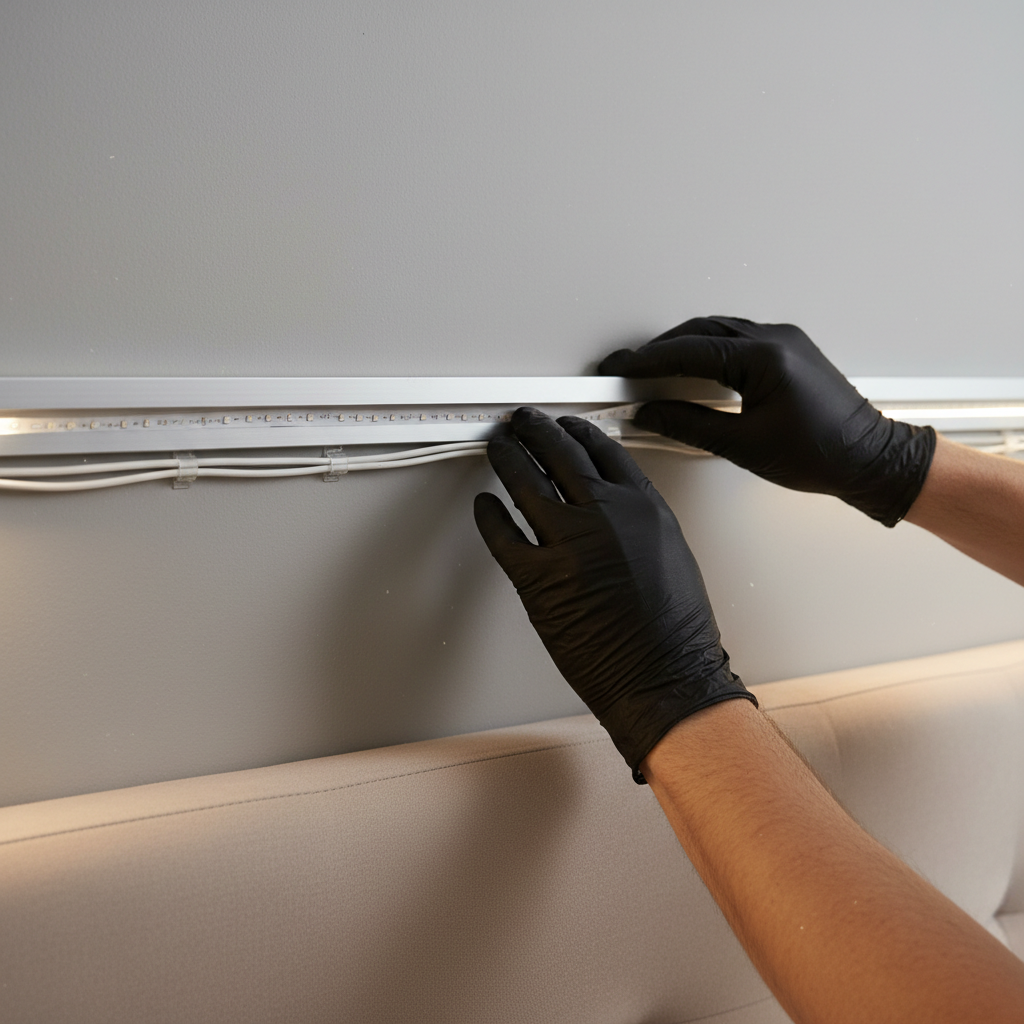
- Prep the surface: clean with isopropyl alcohol and let it dry fully. Dusty paint and textured walls are common adhesion killers.
- Don’t rely on stock adhesive forever: in warm rooms, it can creep. Many people upgrade to mounting clips or a diffuser channel with screws.
- Avoid sharp bends: corners can crack traces. Use corner connectors or run a gentle loop if the strip allows it.
- Plan power and length: long runs can dim at the far end (voltage drop). If you’re going long, consider power injection or splitting into zones.
- Place the power brick where it can breathe: don’t bury it under bedding or inside a tight pile of clothes, heat buildup can become a safety issue.
According to National Fire Protection Association (NFPA), many home electrical fires involve distribution or lighting equipment, so it’s smart to keep adapters ventilated and avoid pinching cords under furniture.
Recommended “best” picks by scenario (instead of brand hype)
I’m not going to pretend one model fits every room. Here are the setups that tend to work in real bedrooms, then you can match them to the product line you trust and your ecosystem.
Pick A: Cozy wind-down + reliable white light
- Type: RGBWW or tunable white
- Where: behind headboard + under-bed
- Controls: schedule + quick-access scene button
- Why it works: you’ll use it nightly because warm dim light feels good and doesn’t scream “LED.”
Pick B: Gaming/desk accent in a bedroom
- Type: RGB or addressable/segment strip
- Where: behind monitor, shelf edge, bed wall outline (kept subtle)
- Controls: app + optional remote for quick changes
- Watch out: very saturated blues late at night can feel harsh for some people.
Pick C: Minimalist “hotel” lighting
- Type: tunable white with diffuser channel
- Where: ceiling perimeter or wall-wash behind curtains
- Controls: wall control or voice, simple scenes
- Why it works: clean lines, soft indirect light, fewer gimmicks.
If you’re comparing products and both claim to be the best led strip lights for bedroom use, use the scenario above as your filter: white quality, control reliability, and mounting approach should decide it.
Common mistakes that ruin bedroom ambiance
- Placing strips where you see the LEDs directly: that dot pattern reads cheap and feels stimulating at night.
- Overusing bright blue or pure white at night: it can feel clinical. Warm white is usually the “safe default.”
- Skipping diffusion: a $15 channel can make a mid-range strip look premium.
- Ignoring Wi‑Fi/Bluetooth reality: bedrooms at the edge of a router’s range can cause “unreliable smart lights,” even if the strip is fine.
- Cutting the strip in the wrong spot: only cut on marked cut lines, otherwise sections may fail.
When it’s worth getting professional help
Plug-in LED strips are typically DIY-friendly. Still, if you’re hardwiring, running power through walls, or tying into switched circuits, an electrician can help you stay compliant with local code and reduce risk.
If you notice persistent overheating, a hot plastic smell, buzzing from the adapter, or repeated controller failures, stop using the setup and consider replacing the power supply or checking the load. When in doubt, consulting a qualified professional is the safer move.
Key takeaways + a practical conclusion
If you want a bedroom that feels calm, don’t shop by “crazy effects” first. Shop by comfortable white light, smooth dimming, and indirect placement, then layer color only if you’ll use it.
- Best overall vibe: RGBWW or tunable white, mounted for wall-bounce glow
- Best visual upgrade per dollar: add a diffuser channel and clean cable routing
- Best daily usability: scenes + schedules + a non-phone control option
Tonight’s action plan: pick one placement spot (headboard or under-bed), measure the run, decide whether you need true warm white, then buy the strip and mounting method as a set so you don’t improvise mid-install.
FAQ
What are the best led strip lights for bedroom sleep-friendly ambiance?
Most people prefer warm, dim light at night, so strips with a dedicated warm white channel (RGBWW) or tunable white tend to feel more relaxing than basic RGB strips.
Are LED strip lights safe to leave on overnight in a bedroom?
Many setups can be fine, but safety depends on power supply quality, ventilation, and proper installation. Avoid covering adapters with bedding, and consider listed power supplies when available. If anything overheats, stop using it.
Why do my LED strip lights look spotty on the wall?
That usually comes from low LED density or placing the strip too close to the surface you’re lighting. A diffuser channel or bouncing the light off a wall at a wider angle often fixes the “dotted” look.
How do I stop LED strips from falling off painted walls?
Clean the surface with isopropyl alcohol, let it dry, and use mounting clips or a diffuser channel instead of relying only on the included adhesive. Textured paint and dusty surfaces make adhesion unreliable.
Do I need RGBW, or is RGB enough for a bedroom?
If you mainly want colored accents, RGB can work. If you want a cozy “lamp-like” white you’ll use every night, RGBW or RGBWW is usually the better choice.
What length LED strip should I buy for behind a headboard?
Measure the back perimeter you plan to cover, then add a little extra for routing to the power source. Many people cover the top and sides, not the bottom, to keep the glow even without wasting length.
Will LED strip lights flicker on camera?
Some do, especially with cheaper controllers using certain dimming methods. If you film or take lots of video calls, look for products known for stable dimming and test at low brightness.
If you’re trying to get a calmer room without turning your bedroom into a “RGB showroom,” a simple plan works best: pick a warm-white-capable strip, mount it where you can’t see the LEDs directly, and set one wind-down scene you’ll actually use every night.