
How to decorate with plants in small apartments comes down to two things, choosing plants that match your light and using placement that adds height and texture without eating your floor.
If you live in a studio or a tight one-bedroom, you already know the trade-off, every “cute” décor idea can turn into clutter fast, plants are supposed to make a home feel calm, not like you’re navigating a jungle to reach the couch.
This guide stays practical, how to read your light, where plants actually work in small layouts, and which styling moves look intentional even if you’re not a “plant person.” I’ll also call out the common mistakes that quietly kill plants, because aesthetics only matter if the plant survives.
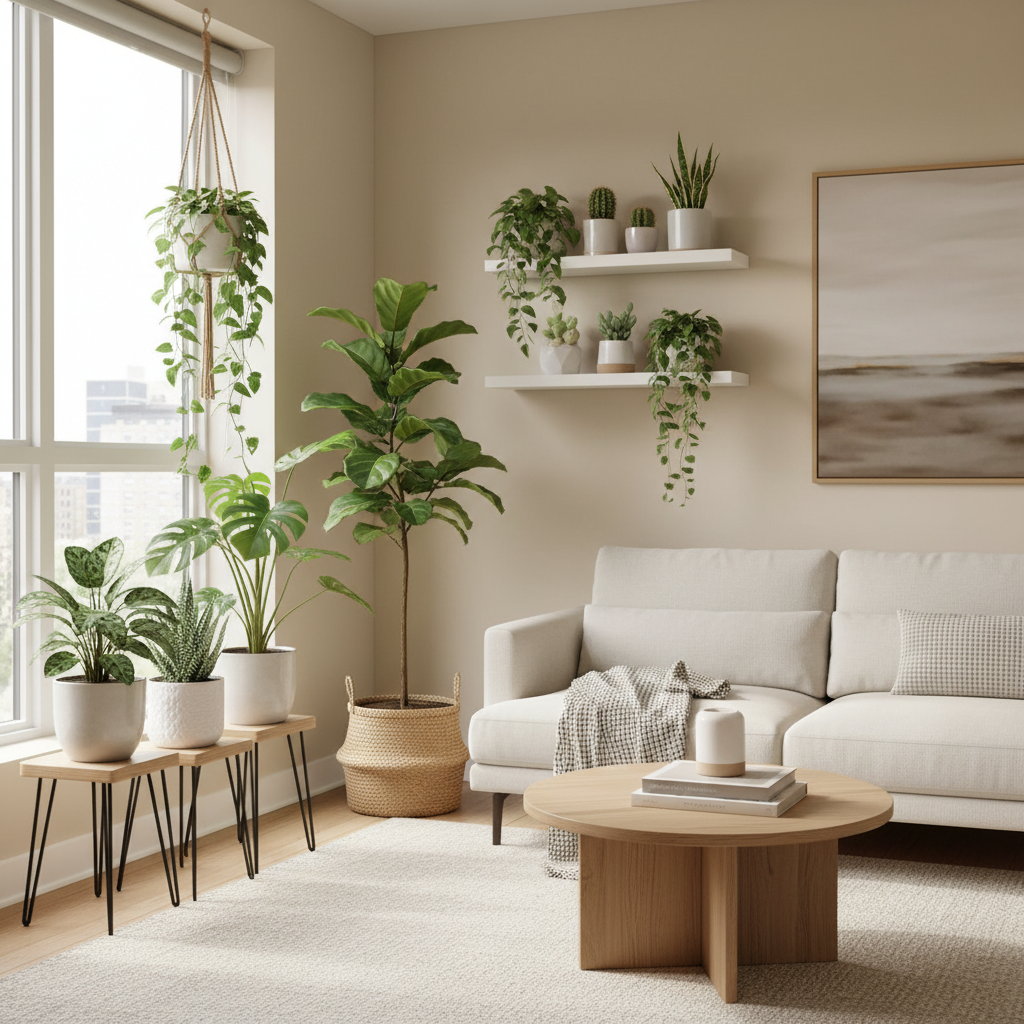
Start with your light, not your wishlist
Most plant problems in apartments are really light problems, people buy what looks good on Instagram, then wonder why it drops leaves two weeks later. Before you plan any “green corner,” do a quick light check.
Quick light check (no special tools)
- Bright direct light: sun beams hit the floor or wall for hours (often south- or west-facing). Great for succulents and many cacti.
- Bright indirect light: the room feels bright, but sun doesn’t blast the leaves (often near an east window or a few feet back). This is the “sweet spot” for many houseplants.
- Low light: you can read comfortably, but it’s never truly bright. Some plants tolerate it, many only “survive” and grow slowly.
According to the National Gardening Association... light levels and plant placement are major factors in indoor plant success, especially near windows where intensity changes quickly across a few feet. Translation, moving a plant 3 feet can change everything.
If your apartment has only one decent window, that’s not a dealbreaker, it just means you’ll lean harder on vertical placement and fewer, larger statements instead of many small pots.
Pick plants that look good and behave well in small spaces
When people ask how to decorate with plants in small apartments, they usually mean, “Which plants won’t explode into chaos?” In tight rooms, the best plants have predictable shapes, manageable size, and forgiving care needs.
Apartment-friendly plant types (with why they work)
- Snake plant (Sansevieria/Dracaena trifasciata): upright, narrow footprint, handles missed waterings.
- ZZ plant: glossy leaves, tolerates lower light better than most, stays tidy.
- Pothos: trails nicely from shelves, easy to propagate, good for adding “green” without floor space.
- Heartleaf philodendron: similar to pothos but often looks a bit more refined, great for bookcases.
- Hoyas: slow growers with a neat look, good if you want less frequent pruning.
- Rubber plant (smaller varieties): a strong sculptural statement if you have brighter light.
A quick safety note, some popular houseplants can be toxic to pets if chewed. According to the ASPCA... many common houseplants may cause issues for cats and dogs, so if you have pets that nibble, check a plant’s safety and consider placing it out of reach, or ask your veterinarian what’s sensible for your situation.
Use placement strategies that don’t steal your floor
The “secret” to small-space styling is making plants live where clutter normally does: up, tucked in corners, or integrated into existing furniture zones. This is where your layout starts to feel designed.
High-impact, low-footprint placements
- Window ledge clusters: group 3–5 small pots on a tray so it reads as one visual unit.
- Floating shelves: mix plants with books and small objects, leave breathing room so it doesn’t look busy.
- Hanging planters: great near windows, but keep them above head height and away from doors that swing.
- Corner plant stand: go vertical with a tiered stand rather than scattering pots across the room.
- On top of existing furniture: a pothos on a bookcase, a ZZ on a media console, a small fern on a bar cart.
One move that often looks expensive without much effort, keep the floor mostly clear and let one plant take the “main character” role, then support it with smaller greens at eye level.
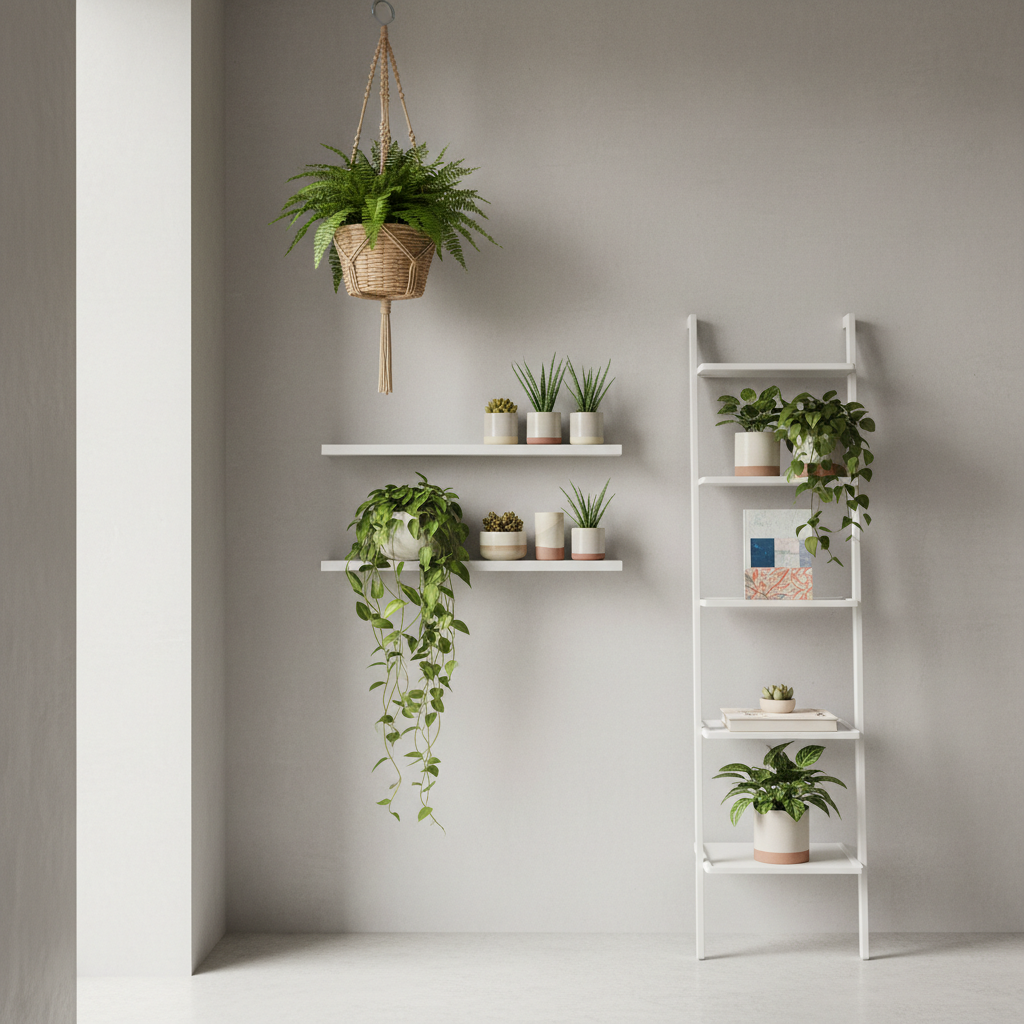
Make it look intentional: scale, repetition, and containers
Plants can either read as décor or as “I bought a bunch of pots,” and the difference is usually styling, not budget. In small apartments, consistency matters more because everything sits closer together.
Styling rules that work in tight rooms
- Go bigger than you think (within reason): one medium-to-large plant can look cleaner than eight tiny ones.
- Repeat materials: choose 2–3 pot finishes (matte white, terracotta, black, rattan) and stick with them.
- Match plant form to the spot: tall and narrow for corners, trailing for shelves, rounded for coffee tables.
- Use trays: they corral small plants and protect surfaces from water rings.
If you want a quick reset, hide mismatched nursery pots inside simple cachepots, it instantly reduces visual noise.
Care basics that keep your décor alive (and your lease safe)
You don’t need a complicated routine, but you do need a couple habits that prevent the classic apartment issues: fungus gnats, water damage, and plants that slowly decline.
A simple weekly rhythm
- Check soil before watering: many houseplants prefer drying slightly between waterings, soggy soil is where trouble starts.
- Rotate plants: a quarter turn each week keeps growth even and less “leaning toward the window.”
- Wipe leaves occasionally: dust blocks light, especially on big-leaf plants.
- Use saucers and liners: protect floors and furniture, especially in rentals.
Humidity can matter, but it’s not always the villain people assume. In many U.S. apartments, the bigger issue is heat or AC blasting a plant all day, if leaves crisp near vents, move the plant first, then decide if you need a humidifier.
Quick self-check: what kind of small-apartment plant decorator are you?
This helps you avoid buying the “wrong” plant for your lifestyle, which is usually what makes people quit.
- I travel or forget watering: start with snake plant, ZZ, or hoya, keep the collection small.
- I want fast growth and drama: pothos or philodendron near bright indirect light, plan for pruning.
- I have a bright window and love structure: succulents or a rubber plant, but commit to good drainage.
- I want décor, not a hobby: pick 1 statement floor plant + 2 shelf plants, stop there for a month.
If your answer changes seasonally, that’s normal. Light shifts a lot in winter, so your “easy spot” in July may struggle in January.
A practical setup plan (with a simple table)
Here’s a realistic way to build a plant layout without buying 12 things at once. You can do this in one afternoon, then adjust after two weeks of living with it.
Step-by-step
- Choose one anchor location (near your best light), decide if it’s a floor plant or a shelf cluster.
- Add one vertical element (hanging planter, tall stand, or floating shelf) to pull the eye up.
- Fill one “dead zone” (awkward corner, empty bookcase section) with a small plant that fits the form.
- Standardize pots so the group reads as a set, not a random collection.
| Apartment spot | What looks best | Plant ideas | Small-space tip |
|---|---|---|---|
| Near a bright window | One statement plant | Rubber plant, dracaena, fiddle-leaf fig (if you’re committed) | Use a slim stand to lift it and reduce visual heaviness |
| Bookcase or media console | Trailing + one upright | Pothos, heartleaf philodendron, ZZ | Keep cables hidden, plants amplify “mess” if the area is busy |
| Kitchen counter | Small, functional greens | Herbs (if you get sun), compact pothos | Put pots on a tray so cleanup stays easy |
| Bathroom (with window) | Lush texture | Ferns, pothos | Watch for moldy soil, airflow matters |
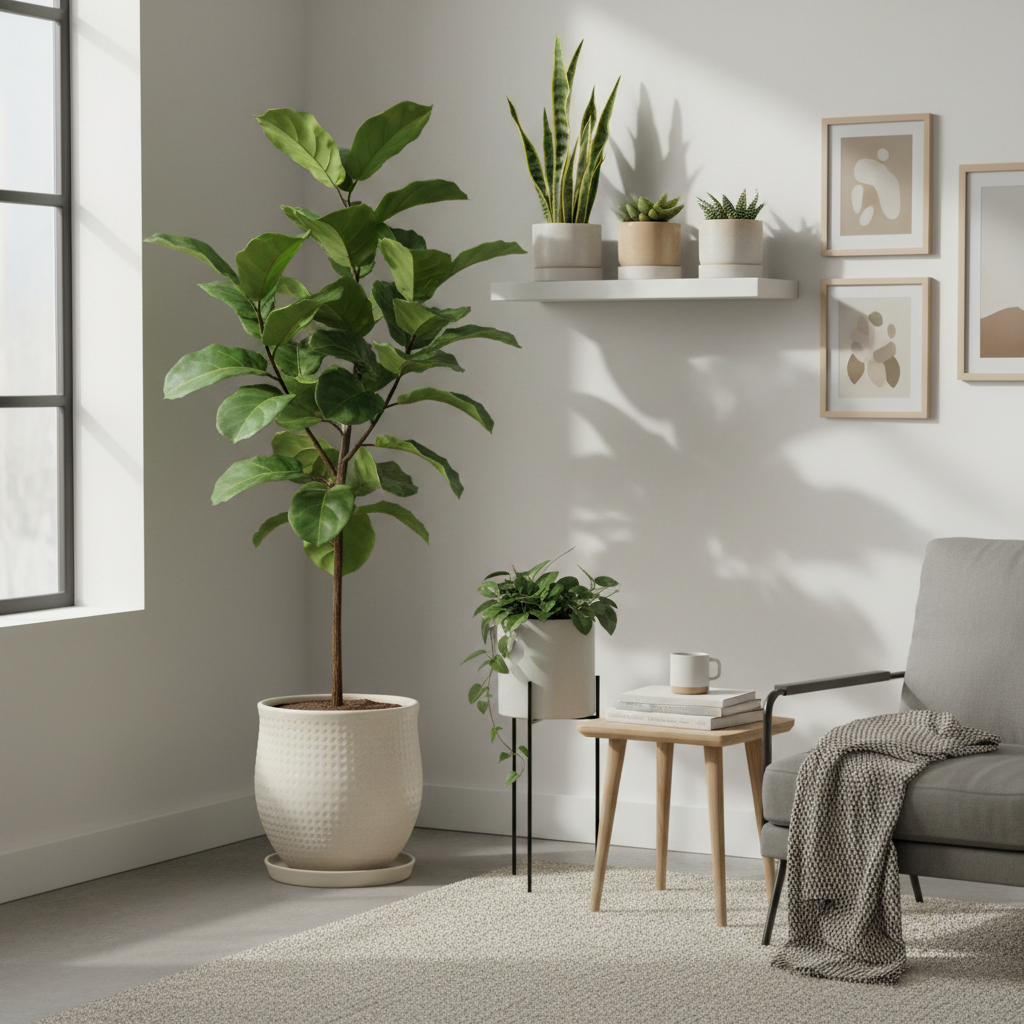
Common mistakes that make small apartments feel cluttered (or kill plants)
A few patterns show up all the time, and they’re fixable without buying more stuff.
- Too many tiny pots everywhere: visually noisy, harder to water consistently, consolidate into groups.
- No drainage: decorative pots without drainage can work, but only if you treat them like sleeves and don’t let water pool.
- Pushing “low-light” plants into real darkness: low light is not no light, consider a brighter spot or a grow light if you want that corner green.
- Ignoring airflow and vents: leaves burn and soil dries oddly, move plants away from direct blasts.
- Overcorrecting with water: droopy leaves can mean thirst or rot, check soil before reacting.
If you’re dealing with recurring pests, strange leaf spotting, or moldy smells, it may be worth taking a plant to a local nursery for a look. Many will give quick guidance, and in stubborn cases a professional plant service can help you pick a setup that matches your light and routine.
Key takeaways
- Light decides the plant, not the other way around, measure it with your eyes and adjust by feet, not inches.
- Vertical styling is your friend in small rooms, shelves, hangers, and slim stands beat scattered floor pots.
- One statement plant + a few supporting plants usually looks cleaner than a big collection.
- Consistency in pots makes the whole apartment feel more designed, even with simple plants.
Conclusion: make it feel like home, not a greenhouse
How to decorate with plants in small apartments is really a game of restraint and placement, pick a couple plants that match your light, style them as a set, then let the space breathe. If you want an easy next step, choose one anchor plant this week, place it where your light is best, and wait a few days before adding anything else, you’ll make better choices once you see how it changes the room.