
How to clean oven racks without scrubbing usually comes down to one idea: loosen baked-on grease long enough that it wipes off, instead of fighting it with elbow grease.
If you have ever pulled out racks that look “clean-ish” until the light hits them, you already know the problem is not dirt, it is polymerized grease, basically oil that has baked into a stubborn film. The right method is less about strength and more about time, chemistry, and a little containment so you do not make a bigger mess.
This guide walks through a few proven no-scrub approaches, when to choose each, what to avoid if you have kids or pets around, and how to keep racks from getting that bad again.
Pick the right no-scrub method (it depends on the mess)
Not every rack needs the same treatment. Light brown haze responds to simple soaking, while thick black patches often need a stronger degreaser or longer dwell time.
Here is a quick comparison so you can choose without overthinking.
| Method | Best for | Wait time | Smell/Fumes | Notes |
|---|---|---|---|---|
| Hot water + dish soap soak | Moderate grease, routine cleaning | 2–6 hours | Low | Gentle on finishes, may need repeat soak |
| Baking soda paste + covered rest | Sticky film, brown residue | 6–12 hours | Low | Good “apartment-friendly” option |
| Ammonia vapor bag method | Heavy baked-on grime | 8–12 hours | High | Very effective, but handle carefully |
| Enzyme or kitchen degreaser soak | Grease buildup, faster turnaround | 30 min–2 hours | Varies | Follow label closely, test small area |
Before you start: a quick safety and setup checklist
Most “no scrubbing” methods still involve chemicals, hot water, or both. A little prep keeps this simple and avoids damaging the rack coating.
- Check your rack type: most racks are chrome-plated steel, some are stainless, some have special nonstick coatings. If yours has a coating, avoid harsh abrasives and strong alkaline cleaners unless the manufacturer allows it.
- Ventilation matters: if you use ammonia or a strong degreaser, open windows and keep pets out of the area.
- Protect surfaces: use an old towel under racks in a tub, or a plastic bin you do not mind dedicating to cleaning.
- Gloves are not optional: grease + cleaner can irritate skin, even with “natural” products.
According to CDC, ammonia should never be mixed with bleach because it can create toxic gases. If you are unsure what residue might be present, stick to dish soap or baking soda.
Method 1: Hot water + dish soap soak (the low-drama option)
If you want the friendliest way to clean oven racks without scrubbing, start here. It is slower than chemical shortcuts, but it is the easiest to live with in a busy home.
Steps
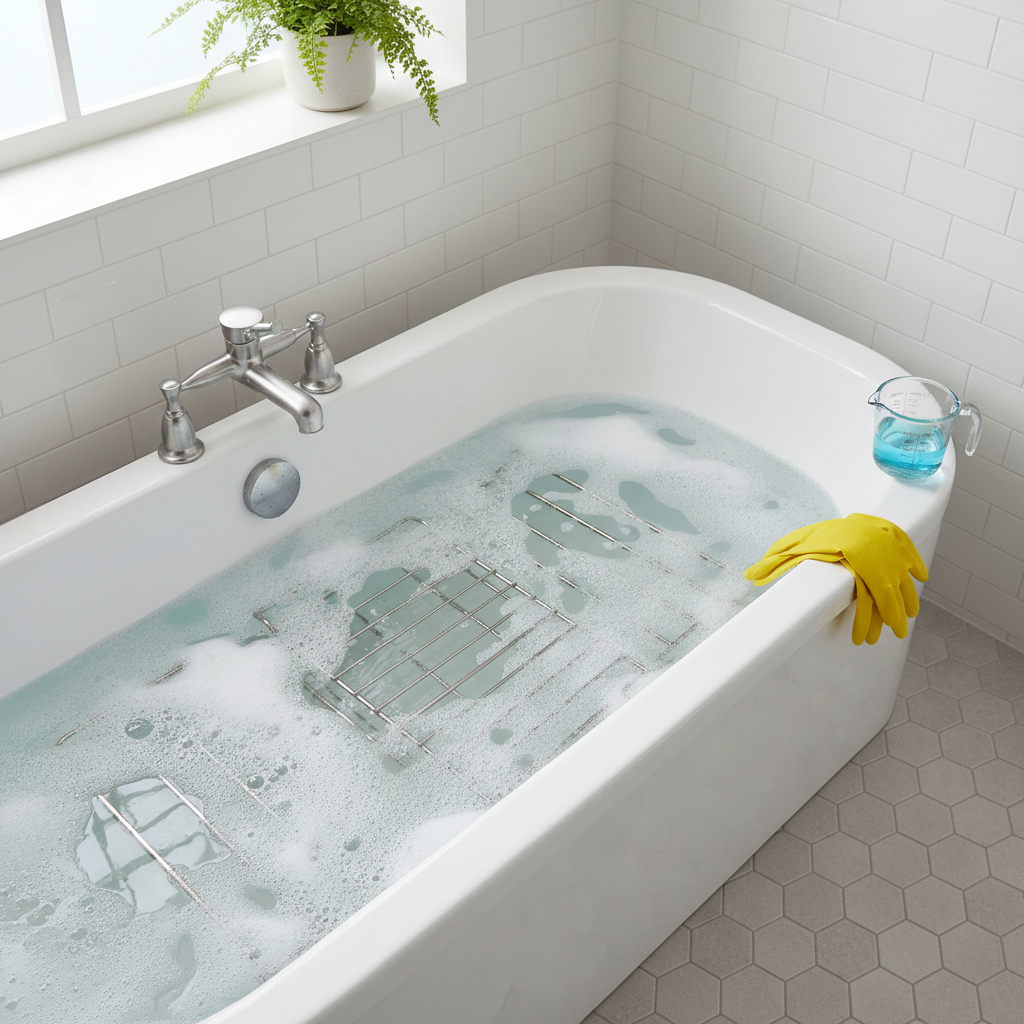
- Place racks in a bathtub, large sink, or storage tote. Lay an old towel underneath to prevent scratches.
- Fill with the hottest water your faucet can provide, then add a generous squirt of grease-cutting dish soap.
- Let it sit 2–6 hours. For heavy buildup, overnight is fine if the water stays warm enough to soften grease.
- Drain, then wipe with a microfiber cloth or non-abrasive sponge. If anything remains, repeat the soak rather than switching to steel wool.
- Rinse well and dry fully to prevent rust at joints or weld points.
Realistic expectation: this method often removes 70–90% in one round, then a second shorter soak finishes the job.
Method 2: Baking soda “set it and forget it” paste
Baking soda works because it is mildly alkaline and helps break down greasy residue over time. The key is keeping it damp long enough, a dry paste does not do much.
Steps
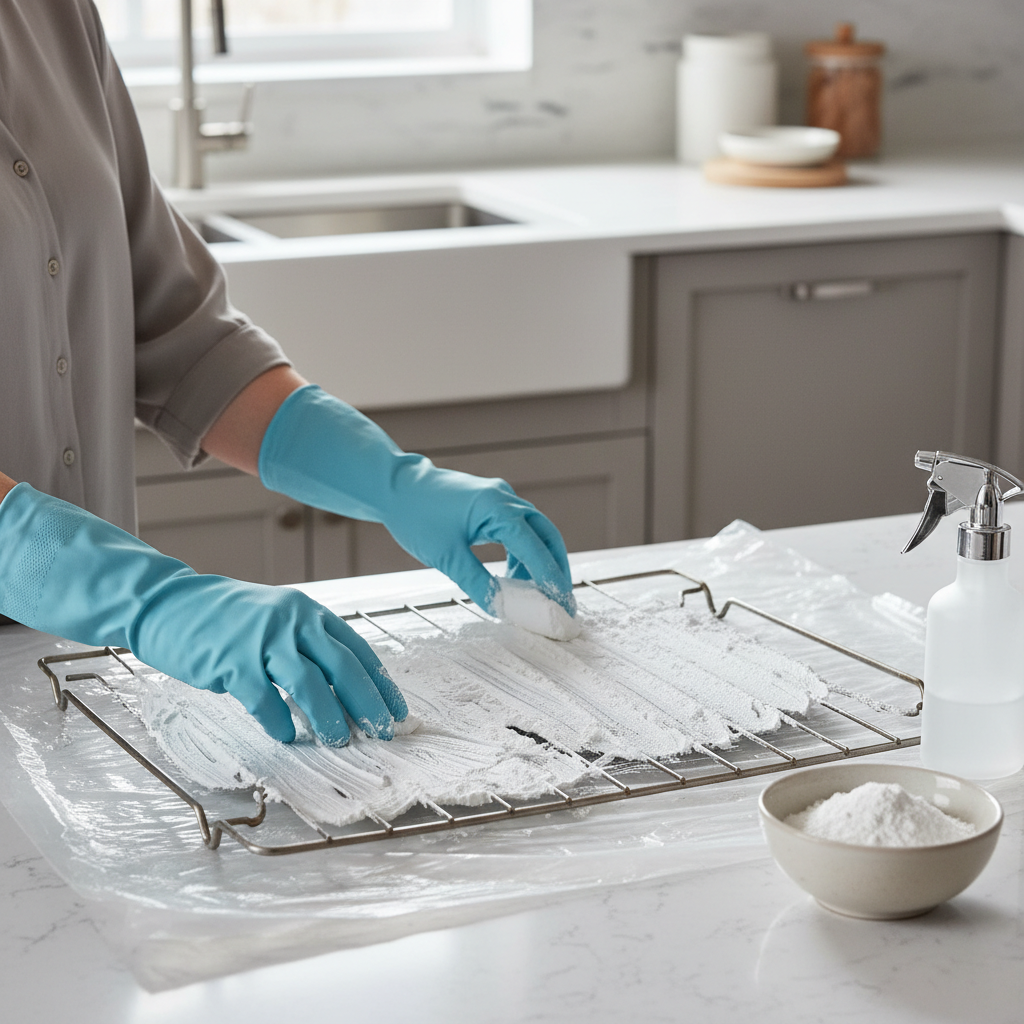
- Mix baking soda with warm water until it forms a spreadable paste, closer to frosting than soup.
- Spread a thick layer over both sides of the racks. Focus on corners and the front edge where drips bake on.
- Lay racks on a plastic sheet or in a tub, then lightly mist with water to keep the paste moist.
- Wait 6–12 hours.
- Wipe off paste with paper towels, then rinse. If needed, repeat one more time rather than adding a harsh chemical mid-way.
This is a solid choice when you want to clean oven racks without scrubbing and also avoid strong odors, especially in smaller spaces.
Method 3: Ammonia vapor bag method (powerful, but be careful)
This method is popular for a reason, ammonia fumes can dissolve heavy grime with almost no effort. But it is also the one that deserves the most respect, because fumes can irritate eyes and lungs.
Steps
- Work outdoors or in a very well-ventilated area like a garage with the door open.
- Place one rack in a heavy-duty trash bag. Add a small bowl or cup with 1/4–1/2 cup household ammonia, keeping it upright.
- Seal the bag and leave it 8–12 hours. You are relying on vapor, not liquid contact.
- Open the bag away from your face, let fumes dissipate, then remove the rack and rinse thoroughly.
Important: never combine ammonia with bleach or products that may contain bleach. If you have asthma, chemical sensitivities, or limited ventilation, this approach may not be worth it.
Method 4: Degreaser or enzyme cleaner soak (fast turnaround)
If you need racks clean the same day and your buildup is mostly grease, a kitchen degreaser or enzyme-based cleaner can be practical. The tradeoff is you must follow label directions closely, especially dilution and contact time.
Steps
- Choose a cleaner labeled for ovens or kitchen degreasing, then spot-test on a small section if you are unsure about finish compatibility.
- Soak in a bin or tub for the recommended time, often 30 minutes to 2 hours.
- Wipe with a cloth, rinse very well, then dry.
When people say they tried to clean oven racks without scrubbing and it “didn’t work,” it is often because they rinsed too early or used too little product for the soil level.
How to tell which method you need (quick self-check)
Use this as a fast decision tool before you start filling a tub.
- Racks look dull but not sticky: start with hot water + dish soap.
- Brown film that feels tacky: baking soda paste tends to lift it with patience.
- Black, crusty patches that feel hard: consider ammonia vapor or a stronger oven-safe degreaser.
- You smell smoke when preheating: focus on front edges and supports, that is where drips burn first.
- You rent or share space: avoid high-fume methods unless you have outdoor ventilation.
Mistakes that quietly make this harder
A few common moves turn “no scrubbing” into an all-day project.
- Using steel wool on chrome racks: it can scratch, then grease grabs faster next time.
- Letting baking soda paste dry out: mist it once or twice during the wait, moisture is part of the process.
- Mixing cleaners: even if a combo seems logical, chemical reactions and fumes are not worth the risk.
- Skipping the rinse: residue can smoke or smell when the oven heats, especially with degreasers.
- Cleaning racks in a self-clean cycle: many manufacturers warn that racks can discolor or warp, and they may slide poorly afterward, check your oven manual.
Keeping racks cleaner longer (so you rarely need deep cleaning)
The easiest way to clean oven racks without scrubbing is not letting them reach the “black crust” stage. Small habits help more than most people expect.
- Place a sheet pan on the rack below bubbling casseroles or pies to catch overflow.
- Wipe front edges and rack rails after big spills once the oven cools, that area bakes on fastest.
- Do a quick warm-water wipe monthly, a light film is much easier than a yearly overhaul.
- Let racks dry completely before reinstalling to reduce corrosion at joints.
When to consider professional help or replacement
If racks are flaking, rusting deeply, or have a damaged coating, heavy chemicals may worsen the finish, and replacement can be safer and less frustrating. Also, if you suspect fumes trigger respiratory issues in your household, it may be worth asking an appliance service company for guidance on rack type and compatible cleaners.
For older ovens, you can usually order OEM racks by model number, and the fit matters more than it sounds, too tight and they scrape, too loose and they wobble.
Key takeaways
- Time beats force: soaking and dwell time do most of the work.
- Match the method to the mess: dish soap for routine, baking soda for film, ammonia or degreaser for heavy buildup.
- Ventilation and “no mixing” rules matter: especially around ammonia and bleach products.
- Rinse well: leftover cleaner can smoke the next time you bake.
Conclusion: a cleaner rack with less effort
If your goal is truly zero scrubbing, choose a method that fits your residue level and give it enough waiting time, that is the difference between wiping grime off and fighting it. Start with the gentlest option that seems plausible, then step up only if the buildup laughs at you.
Pick one method today, set a timer for the soak, and while it works, do something else. That is the whole point.