
Small space laundry room ideas work best when you treat the area like a “mini work zone,” not a leftover corner with a washer shoved in. The goal is simple: create a clean workflow (sort → wash → dry → fold → put away) with less clutter and fewer awkward reaches.
In 2026, the difference usually comes down to two things: choosing the right footprint (stacked, all-in-one, or compact side-by-side) and using vertical space like you mean it. The good news is you don’t need a full remodel to get a space that feels calmer and more functional.
One misconception: people jump straight to buying “space-saving” gadgets, then discover the real problem was traffic flow, venting limitations, or nowhere to fold. Let’s fix the fundamentals first, then add the upgrades that actually earn their keep.
Start with the layout: pick the footprint that fits your life
Before shelves, bins, or pretty tile, decide what the room needs to do. A small laundry setup fails when you can’t open doors, access filters, or move baskets without a shuffle.
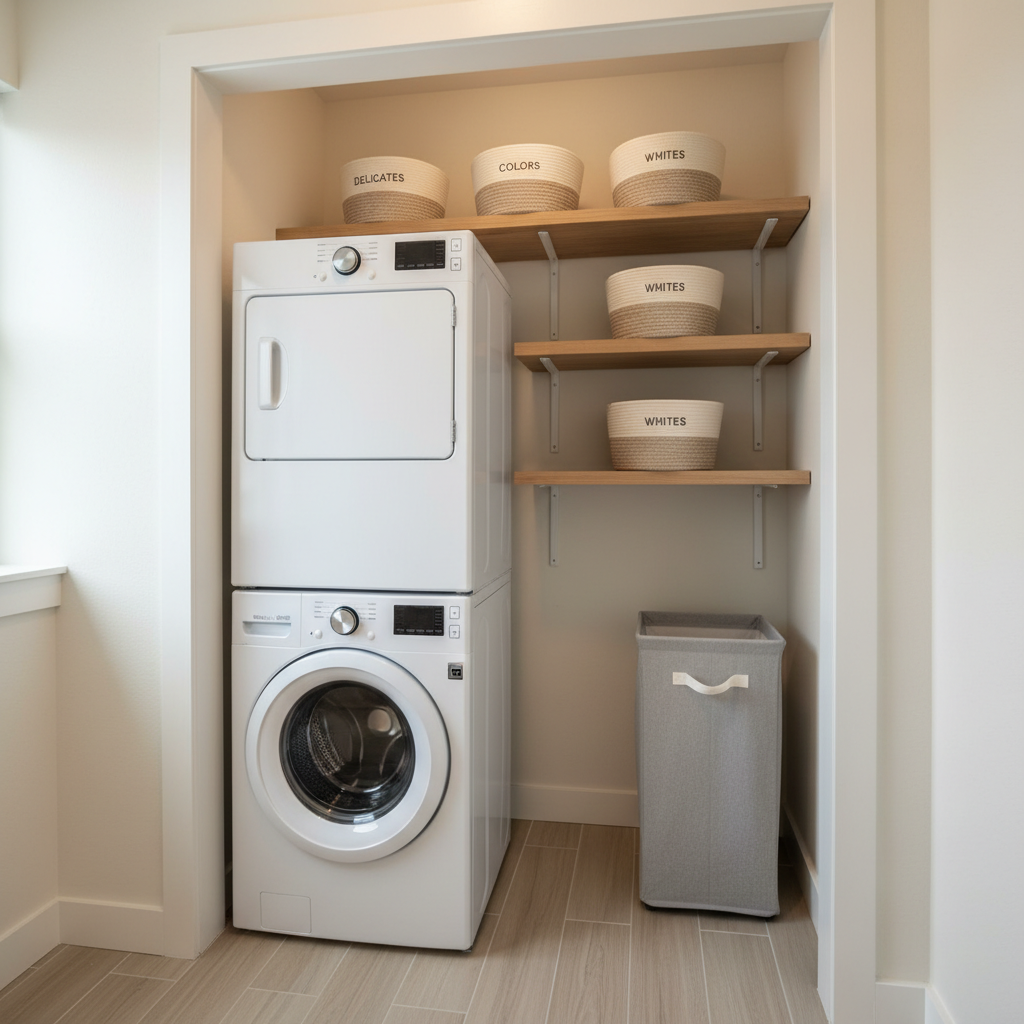
- Stacked washer/dryer: usually the best for a closet or hallway niche, but plan for reach height and service access.
- Compact side-by-side: easier loading and maintenance, often better if you fold in place, but needs more width.
- All-in-one combo: helpful where venting is hard, though cycles can be longer and capacity varies by model.
- Laundry in the bathroom/kitchen: common in small homes, but moisture management and storage become even more important.
According to ENERGY STAR, choosing efficient appliances and using appropriate settings can reduce energy use, which matters more when your laundry runs more often in a smaller household routine.
A quick self-check: what’s actually making your laundry area feel “too small”?
If you diagnose the bottleneck, your changes become obvious. Use this list and circle the top two problems, not ten.
- You have no folding surface, so clean clothes land on the bed or couch.
- Detergent, stain sprays, and dryer sheets live on the floor or on top of machines.
- Baskets block doors, or you constantly bump elbows passing through.
- You sort on the fly, so you end up re-washing or running tiny loads.
- Humidity lingers, towels smell musty, or you see condensation around the area.
- Lint builds up because access to the trap or vent path is awkward.
Small space laundry room ideas should target those friction points, because “more storage” won’t help if the workflow stays broken.
Storage that works in inches, not feet
In compact laundry rooms, storage wins when it’s narrow, vertical, and easy to grab one-handed. Deep cabinets look nice, but they often turn into clutter caves.
High-impact storage moves
- Wall-mounted shelves above machines for daily items, keep the bottom shelf at a reachable height.
- Over-the-door rack for ironing board, lint roller, mesh bags, and small tools.
- Magnetic side caddies (if your machines allow) for stain stick, measuring cup, and microfiber cloths.
- Pull-out slim cart (4–8 inches wide) for detergents and backups.
- One “dirty zone” bin plus one “clean zone” bin to stop the pile migration.
A practical rule: anything used weekly should be visible and reachable, anything used monthly can go higher or behind a door.
Make a folding spot without sacrificing the walkway
Most people don’t need a big counter, they need a reliable place that appears when needed and disappears after. That’s the difference between “tiny but usable” and “always messy.”
- Fold-down wall table: ideal for a closet laundry, just confirm studs and weight rating.
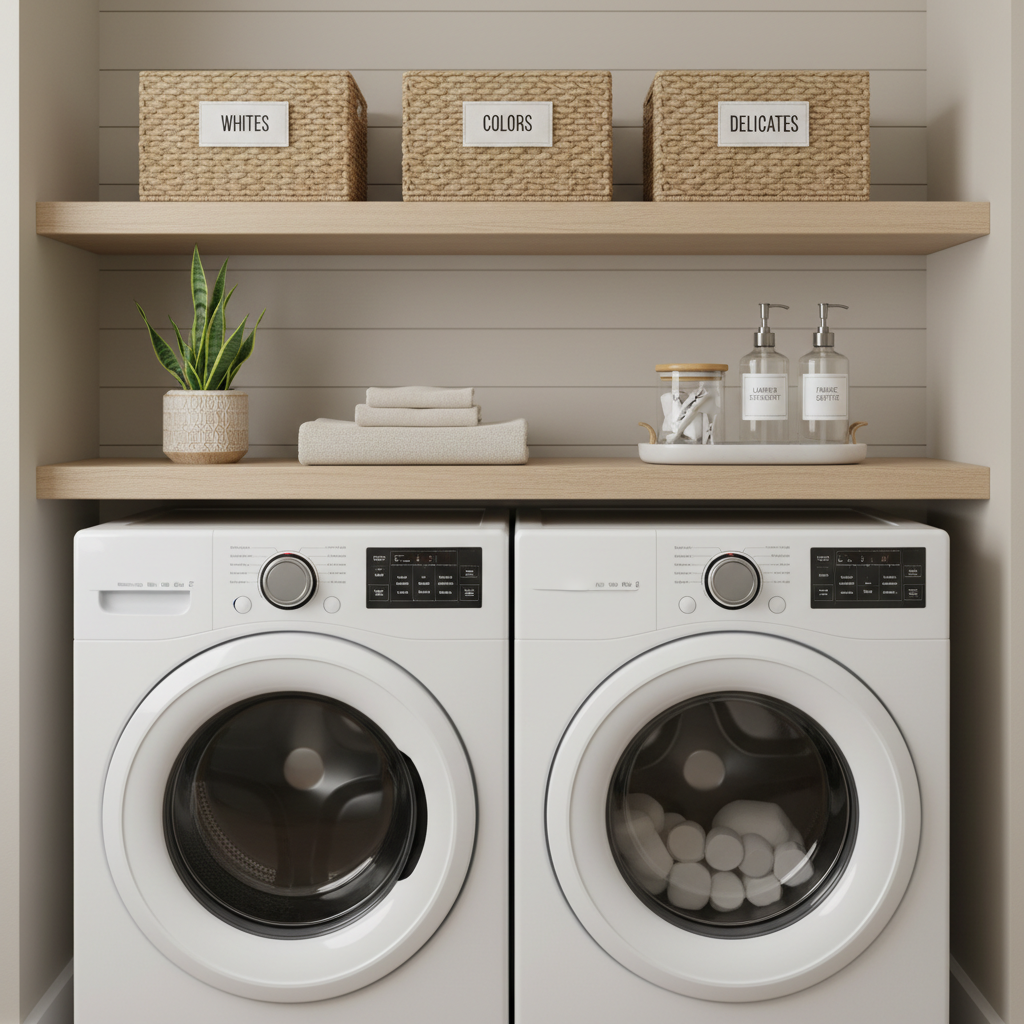
- Countertop over front-load machines: works well if vibration is controlled and the counter is properly supported.
- Rolling fold cart: doubles as a transport station, useful if you fold in another room.
- Dryer-top mat + tray system: not glamorous, but prevents bottles tipping and gives a defined fold zone.
If you already have top-load machines, a nearby narrow console table can sometimes outperform trying to “make the washer a counter.”
2026-friendly upgrades that feel small but change everything
Not every trend earns space in a compact home. These usually do, because they reduce steps and visual noise.
| Upgrade | Why it helps in small spaces | Watch-outs |
|---|---|---|
| Stacking kit + anti-vibration pads | Reclaims floor area and steadies the tower | Use manufacturer-approved parts to avoid instability |
| Detergent decanting (labeled bottles) | Reduces bulky packaging clutter | Store safely away from kids/pets, keep original instructions |
| Under-shelf LED lighting | Makes a closet laundry feel larger and cleaner | Choose damp-rated lighting if humidity is high |
| Hanging rod or retractable clothesline | Air-dry delicates without taking over the room | Plan drip control and clearance for doors |
| Multi-sort hamper (2–3 sections) | Pre-sorting prevents micro-loads and rework | Don’t oversize it if it blocks the path |
According to the U.S. Consumer Product Safety Commission (CPSC), dryer lint and improper venting can contribute to fire risk, so upgrades should never block access to lint traps and vent connections.
Safety, moisture, and venting: the unglamorous part that matters
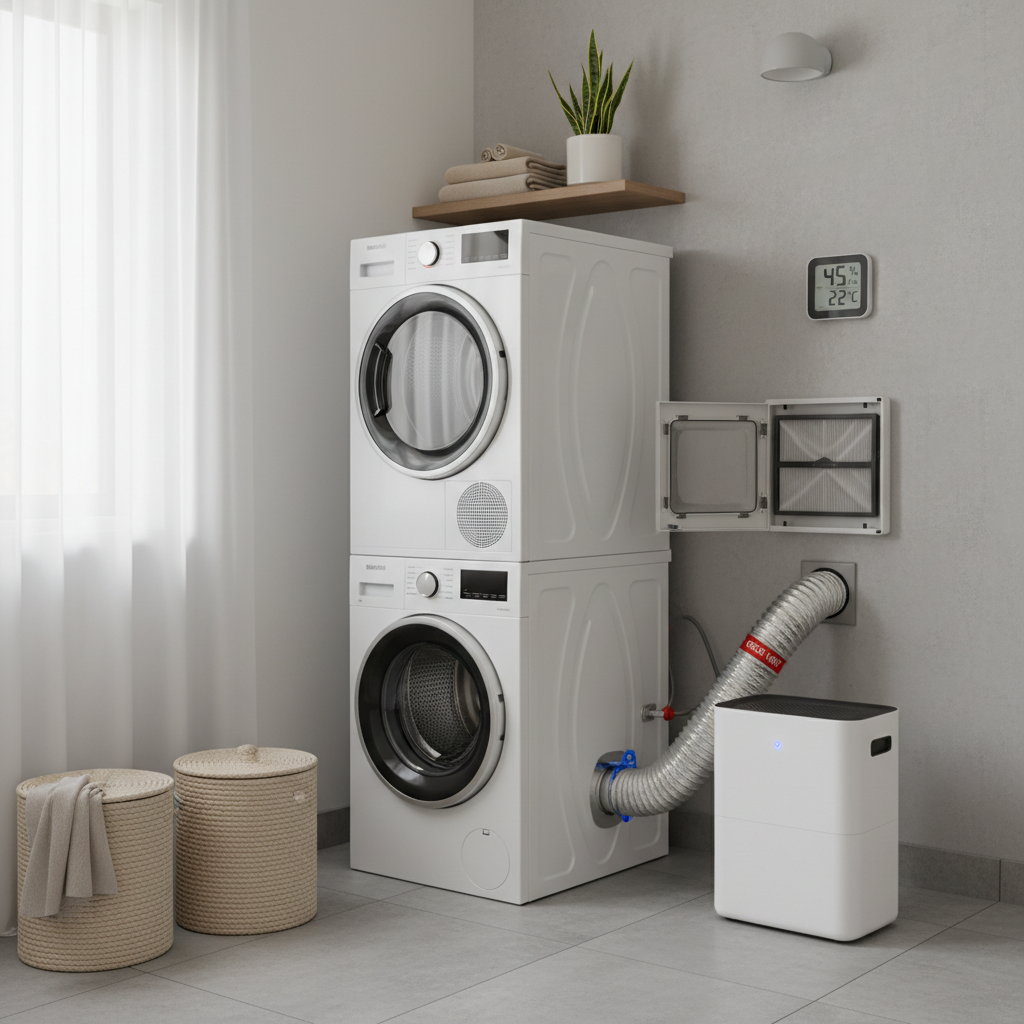
Small laundry areas often sit in closets, bathrooms, or interior rooms, so heat and humidity can build up faster than you expect. If you notice persistent dampness, it’s worth taking seriously.
- Keep clear access to the dryer vent connection and the lint filter, make cleaning routine and easy.
- Check door gaps in closet installs, some setups need louvered doors or ventilation paths.
- Use a drain pan where leaks would damage floors below, especially in condos or upstairs installs.
- GFCI outlets are common in laundry locations, but requirements vary, a licensed electrician can confirm what’s appropriate.
If your setup involves gas, unusual vent routing, or you smell gas or notice backdrafting, stop and contact a qualified professional. This is not a “DIY your way through it” category.
Practical setup plan: a 60-minute reset you can do this weekend
If you want quick wins, do one focused reset instead of buying ten organizers. This approach works for most tight laundry nooks.
- Clear the tops of machines, put everything in one box so you can decide with a clean slate.
- Define three zones: supplies, dirty, clean. If an item doesn’t fit a zone, it probably doesn’t belong there.
- Mount or place one primary storage solution, typically a shelf plus two bins, or a slim cart plus a door rack.
- Add a folding solution that matches your reality, fold-down table if you fold there, rolling cart if you fold elsewhere.
- Set a lint and wipe routine: keep a small cloth and a mini trash container nearby so it’s frictionless.
Key point: the best small space laundry room ideas are the ones you keep using after the first week, not the ones that look perfect for photos.
Conclusion: keep it compact, but make it intentional
A small laundry area can feel surprisingly “full-size” when the layout makes sense, storage stays vertical, and you always have a place to fold. If you do nothing else, pick one bottleneck from the self-check and solve it cleanly, that’s usually the tipping point.
If you want an easy next step, measure your available width and depth, then choose one upgrade that reduces daily friction, like a fold-down table or a slim pull-out cart.
FAQ
- What are the best small space laundry room ideas for a closet laundry?
Stacked machines, a fold-down wall table, and door-mounted storage usually outperform bulky cabinets. Keep the floor clear so the closet doesn’t feel like a storage locker. - How do I add storage to a tiny laundry room without remodeling?
Start with one shelf above the machines and one slim cart or bin system. You’ll get most of the benefit without opening walls or building custom cabinetry. - Is it okay to put a countertop over a front-load washer and dryer?
Often yes, but support and vibration control matter. If the counter wobbles or blocks service access, it becomes a headache, not an upgrade. - How can I make my small laundry space look less cluttered?
Decant a few core supplies into labeled containers and store backups elsewhere. Visual calm usually comes from fewer shapes and fewer half-used bottles on display. - Do all dryers need exterior venting in small spaces?
Many traditional dryers vent outside, while some ventless models avoid exterior ducting. Because requirements depend on model and local code, confirm with the manufacturer instructions and consider professional guidance for tricky installs. - What’s the simplest folding solution for a narrow laundry nook?
A wall-mounted fold-down table is usually the most space-efficient if you fold in place. If you fold in another room, a rolling cart can be more flexible. - How often should I clean lint and check the vent?
Lint trap cleaning is commonly done every load, and vent inspection/cleaning frequency varies by use and vent length. If drying time increases or you notice excess heat, it’s a signal to check sooner.
If you’re planning a refresh and want a more “built-in” feel without a full renovation, it can help to start with a simple measurement sketch and a short shopping list, one vertical storage piece, one folding surface, and one sorting system, then refine after a week of real use.